The short answer
- Works, with limits: cider vinegar traps for fruit flies once the breeding source is gone; beer or yeast-water traps for slugs and snails; soapy water sprayed directly on soft-bodied pests or used as a drowning bucket.[31][35][21][28][34]
- Works when used as a labeled product: boric acid and diatomaceous earth. Both act slowly and need dry, undisturbed spots.[7][6][23]
- Mixed results: plant-oil sprays and repellents sold as 'minimum risk' products. EPA exempts them from registration, so no one is required to test whether they work, and tests show some do and many don't, or don't last.[1][12][13][11]
- Doesn't work, or is unsafe: mothballs used outside a sealed container, ultrasonic and electronic repellers, coffee grounds or eggshells for slugs, garlic or vitamin B against mosquitoes, and baking soda as an insecticide.[9][15][21][40][17]
- For anything that carries disease, such as ticks and mosquitoes, or for a pest that keeps coming back, use a registered product or the full guide for that pest.[3][12]
Pests people most often try home remedies on
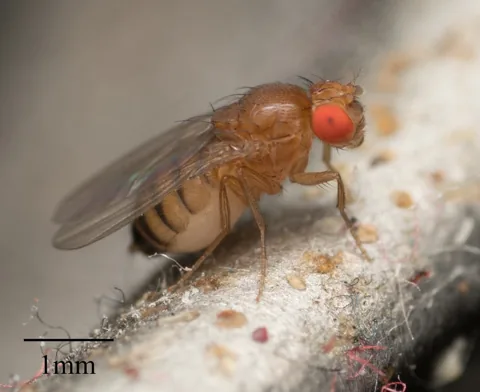 Fruit Fly
Drosophila melanogaster
Fruit flies, also called vinegar or pomace flies, are tiny flies drawn to ripe and fermenting fruits and vegetables. They can show up any time of year, but they are most common from summer into fall.
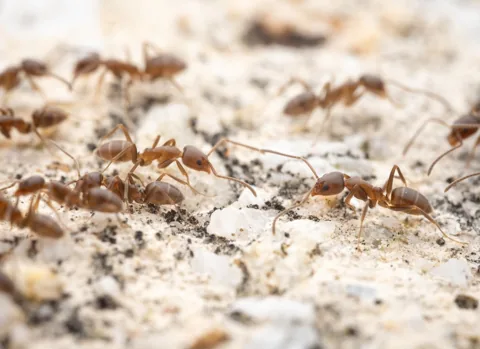 Argentine Ant
Linepithema humile
The Argentine ant is the most common ant in and around homes in California; its nests are linked into huge multi-queen supercolonies. It is native to Argentina and Brazil. Texas A&M says it was discovered in New Orleans in 1891, is now established in many places in the southern United States, and has been found in Arizona, California, Illinois, Maryland, Missouri, Oregon, Texas and Washington.
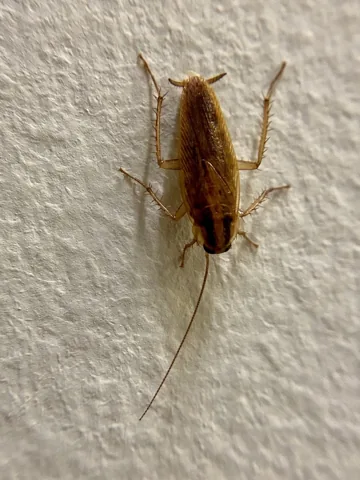 German Cockroach
Blattella germanica
The German cockroach is the most common cockroach living indoors in California and perhaps worldwide, especially in apartment buildings, and it has the fastest reproductive cycle of the common pest cockroaches. Penn State and Kentucky call it the most common cockroach in homes, apartments and other buildings, and Kentucky says it does not live outdoors.
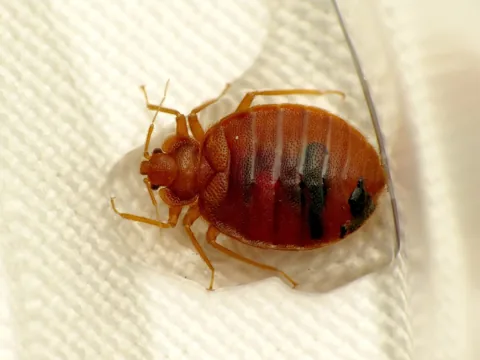 Bed Bug
Cimex lectularius
Bed bugs are wingless, blood-feeding insects that feed on sleeping or resting people, mostly at night; they have resurged worldwide and now turn up even in the finest hotels. CDC says they turn up in five-star hotels and resorts, and how clean a place is does not determine whether bed bugs are present.
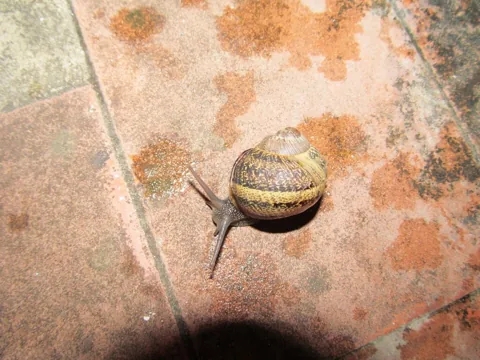 Snails and Slugs
Cornu aspersum (brown garden snail), Deroceras reticulatum (gray garden slug) and related species
Snails and slugs are garden mollusks that hide by day and feed at night, chewing holes in leaves, flowers and low fruit. Slugs are built and behave like snails, just without the external spiral shell, so this page covers both.
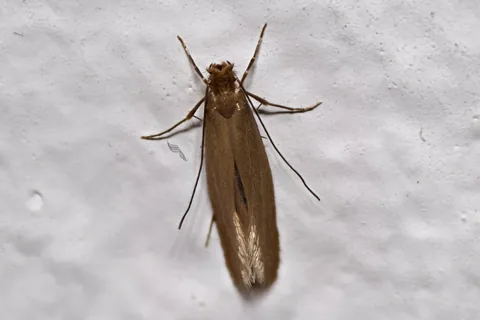 Webbing Clothes Moth
Tineola bisselliella
The webbing clothes moth is probably the most commonly encountered clothes moth in the United States. Its larvae feed on wool, fur, feathers and other animal fibers in hidden spots, and the moths are seldom seen because they avoid light.
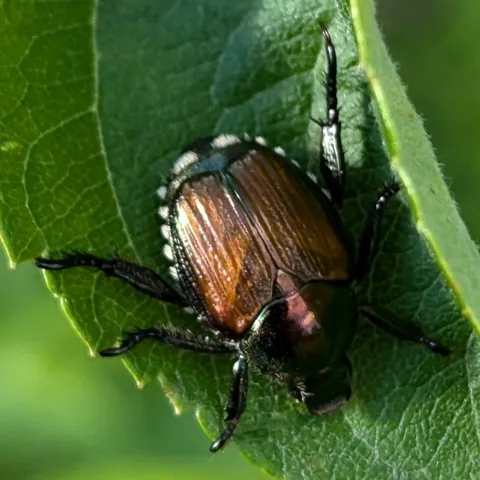 Japanese Beetle
Popillia japonica
The Japanese beetle damages landscapes twice: metallic green adults chew the leaves, flowers and fruit of hundreds of plants in early summer, and their white grubs feed on grass roots underground. A review of its biology calls it the most widespread and destructive insect pest of turf, landscapes and nursery crops in the eastern United States.
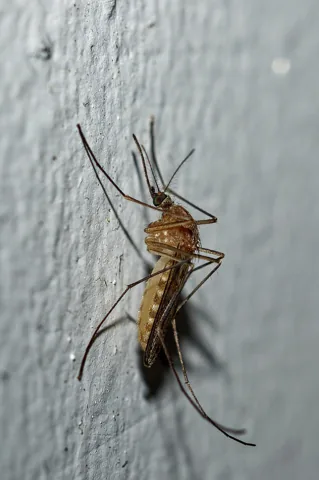 Mosquito
Culicidae (shown: Culex pipiens complex)
Mosquitoes are small, delicate flies whose females feed on blood and can pass on viruses such as West Nile; the control that works best goes after the larvae in standing water.
What 'natural' and 'minimum risk' mean on a label
Many products sold as natural pest control are minimum risk pesticides, sometimes called 25(b) products after the section of federal regulation that covers them. EPA has decided their ingredients pose little or no risk to people or the environment, so it exempts them from the registration that every other pesticide sold in the United States must go through.[1][5][4]
That exemption covers safety, not performance. CDC researchers point out that efficacy testing is not required for these products, and that EPA registration of a tick product indicates that it is both safe and effective.[12][13]
- Only listed active ingredients are allowed. The list includes castor oil, cedarwood oil, cinnamon, citric acid, citronella, cloves, corn gluten meal, garlic, geraniol, lemongrass oil, peppermint, rosemary, sodium chloride (salt), sodium lauryl sulfate, soybean oil, thyme and zinc metal strips, among others.[4][2][5]
- Vinegar and baking soda are not on the active list. The regulation allows vinegar (up to 8% acetic acid) and sodium bicarbonate only as inert ingredients, so neither can be sold as the pest-killing ingredient in a minimum risk product.[4]
- The label must list every ingredient, name the company, and make no false or misleading claims.[3][5]
- No disease claims. A minimum risk label may say it controls ticks or mosquitoes, but not that it controls ticks that carry Lyme disease or mosquitoes that spread West Nile virus, and it can't claim to disinfect.[3][5]
- States can still require registration. NPIC says many states do, and EPA notes that states regulate these products.[5][1]
- Natural doesn't mean harmless. NPIC says all pesticides should be used with care no matter how natural, that plant oils can harm the eyes, and that some people are allergic to them.[5]
Vinegar
Vinegar's one well-supported pest use is as bait. The University of Kentucky's fruit fly trap is a jar with a few ounces of cider vinegar and a funnel rolled from notebook paper, and Texas A&M notes that fruit flies are drawn to vinegar and almost any decaying fruit. Both say the trap only mops up adults: removing the overripe fruit, spills or other breeding source is what ends the problem.[31][35]
Beyond that the evidence is thin. For ant trails, UC IPM suggests soapy water or window cleaner to wipe away the scent trail rather than anything stronger. As a garden weed killer, Illinois Extension says kitchen vinegar, typically around 5% acetic acid, doesn't work well, and the 10 to 20% solutions that do can cause irreversible damage to skin and eyes. None of the sources reviewed here show vinegar killing an ant colony, cockroaches or bed bugs.[22][30]
Dish soap and soapy water
Soap does kill some insects. Colorado State says insecticidal soaps work only on contact, with no residual effect, against small soft-bodied pests such as aphids, young scales, whiteflies, mealybugs and mites, while larger insects such as caterpillars, sawflies and beetle larvae are generally immune. The spray has to wet the insect, so aphids inside curled leaves survive.[28][27]
Whether to use dish soap instead of a product made for plants is where extension sources split:[28][27][32]
- Colorado State says home remedies made from household liquid soaps or cleaning products should not be used as pesticides. Insecticidal soaps are tested for efficacy and selected to limit plant injury; homemade mixes aren't consistently formulated or tested, dish soaps carry detergents that can injure plants, and household soaps used as pesticides are of questionable legality because they don't qualify as minimum risk products.[28]
- University of California Cooperative Extension says household liquid soaps and dish detergents can work and cost less, but carry more risk of burning plants, that dry dish soaps and all laundry detergents are too harsh, and that many soaps are poor insecticides.[27]
- The University of Kentucky suggests insecticidal soap or plain liquid dish soap at 2 tablespoons per gallon of water as a direct spray on clover mites on outside walls, while noting it leaves no residual control.[32]
- Soapy water as a drowning bucket is uncontroversial: Kentucky suggests shaking Japanese beetles into it in the early morning, and UC IPM lists a bucket of soapy water for hand-picked snails and slugs.[34][21]
- If you spray plants with any soap, test a small area a day or two first, as both Colorado State and UC advise.[28][27]
Essential oils and plant-oil products
Peppermint, clove, cinnamon, rosemary, thyme, cedarwood and similar oils are the backbone of minimum risk products. UC IPM describes peppermint oil as an insecticide that may repel insects, mites or vertebrate pests and can kill insects and mites by blocking their breathing openings. What the tests show depends heavily on the product:[4][20]
- Bed bugs: Rutgers researchers tested nine essential-oil products and two detergents. Only two products, both combining plant oils with sodium lauryl sulfate, killed more than 90% of nymphs in direct-spray and forced-contact tests, and both did significantly worse than two conventional insecticides when the bugs could choose where to walk. Only one had much effect on eggs. The bed bug guide covers what does work.[11]
- Ticks, on skin: CDC scientists tested 11 minimum risk tick repellents against two DEET products. On average 63% of ticks were repelled in the first 1.5 hours, falling to 3% from 2.5 to 6.5 hours, while the DEET products stayed at 97% or better throughout. Neither the label claims nor the ingredients predicted how long a product lasted.[12]
- Ticks in the yard: a CDC review found minimum risk products for killing host-seeking blacklegged ticks varied widely, with some about as effective as conventional pesticides and others having little effect.[13]
- Mosquitoes and ticks, single oils: in a New Mexico State lab study of 20 minimum-risk ingredients, 10% lotions of clove oil or cinnamon oil gave the longest protection, complete protection for longer than one hour. That is a formulated lotion in a lab, not a few drops of oil.[14]
- For protection from disease-carrying ticks and mosquitoes, use an EPA-registered repellent; the repellent guide compares them.[12][3]
Diatomaceous earth
Diatomaceous earth (DE) is a real insecticide with real limits. NPIC says it kills insects by absorbing the oils and fats from the outer layer of their skeleton so they dry out, its sharp edges speeding that up, and that it keeps working only while it stays dry and undisturbed. It is sold in more than 150 registered pesticide products.[6][23]
Moisture and quality both matter. UC IPM says a dry DE band around a garden bed can stop slugs but loses its effect once damp. Rutgers researchers found a short burst of steam cut the effect of three insecticide dusts on bed bugs, one of them mostly DE, and that one to two months of humid aging weakened a silica gel dust. A French lab study found that DE sold for litter conditioning and DE bought at a supermarket did not kill bed bugs, while DE supplied by a pest management company did about as well as the best dust tested, so the grade and product matter. The insecticide dust guide covers where and how thinly to apply it.[21][16][17]
Breathing the dust can irritate the nose, NPIC says, and very large amounts can cause coughing and shortness of breath; see the DE and pets page before using it around animals.[6]
Boric acid and borax
Boric acid works, slowly. NPIC says it kills insects that eat it by disrupting their stomach, and UC IPM says boric acid powders in wall voids, under appliances and other undisturbed hiding places are very effective against cockroaches if they stay dry. UC IPM adds that roach baits can take 7 days or longer to show results.[7][23]
For ants, UC IPM calls borate baits the most effective ones available to consumers for Argentine ants. It recommends low-strength liquid borate, 0.5 to 1% in sugar water, in refillable stations for heavy infestations, because the usual 5.4% prepackaged stations kill foragers before they carry bait home. Use a labeled product: NPIC notes exposures happen when products are within reach of children or pets, and eating boric acid has caused vomiting, stomach aches and diarrhea in people.[22][7]
Baking soda
There's little evidence baking soda kills insects. In a 2024 French lab study of dusts against bed bugs, sodium bicarbonate was ineffective, along with talc and green clay. Colorado State does list baking soda, with talc baby powder, DE and cornstarch, as a dust that may form a barrier clover mites won't cross at windows.[17][29]
Where baking soda does earn its place is skunk odor. Penn State and UC IPM give the same recipe for people and pets: 1 quart of 3% hydrogen peroxide, 1/4 cup of baking soda and 1 teaspoon of liquid soap, mixed fresh and never bottled or stored.[39][26]
Mothballs, and cedar
Mothballs are registered pesticides, not home remedies, and using them as one is the most common misuse on this list. NPIC says they are almost pure naphthalene or paradichlorobenzene, meant to work only inside airtight containers where the fumes build up and kill clothes moths. Using them to repel insects or animals is not allowed unless the label describes that use, and NPIC says they have little or no effect as repellents anyway.[9][10]
Field results agree. Mothballs failed in tests on black rat snakes, UC IPM says scattering them does not keep snakes away, and UC IPM reports they have not worked against raccoons. Scattered in the open, they release vapor that can cause headaches, nausea, vomiting and coughing, and NPIC warns small children may eat stray mothballs because they look like candy; naphthalene can cause hemolytic anemia.[38][25][24][9][8]
Cedar is weaker than its reputation. The University of Kentucky says cedar closets and chests seldom deter clothes moths because they don't seal tightly enough to hold the oil at effective levels. Federal rules exempt plain cedar blocks, chips and chests only when they are labeled solely to repel arthropods other than ticks or to retard mildew; cedar oil products don't get that exemption.[33][4]
Ultrasonic and electronic repellers
A Cochrane review found 10 field studies of electronic mosquito repellers, and all 10 found no difference in mosquito bites with or without the device. The Federal Trade Commission warned more than 60 makers and sellers in 2001 that claims for ultrasonic pest devices need scientific support, and Iowa State Extension says no research supports claims that they eliminate rodents or insects. The bug zapper guide covers the full evidence.[15][41]
Garden and yard folk remedies
- Beer traps for slugs: they work, but UC IPM says each trap attracts slugs from only a few feet away and needs fresh bait every few days. A sugar-water and yeast mix works too, because the fermentation is what draws them.[21]
- Crushed eggshells and coffee grounds: UC IPM says neither has been shown to deter slugs or snails.[21]
- Garlic or vitamin B for mosquitoes: UW-Madison Extension says research has not found evidence that either works.[40]
- Garlic, pepper and herb sprays or sachets for Japanese beetles: in a University of Kentucky field test, garlic extract was ineffective and badly damaged linden leaves. Bags of crushed red pepper, fennel seed, cedar shavings or osage orange fruit hung near roses didn't reduce beetles and sometimes drew more.[19][18]
- Boiling water on fire ant mounds: Texas A&M says very hot water kills the colony about 60% of the time and also kills the grass it touches. Its FAQ gives about 3 gallons per mound; its Two-Step page says 2 to 3 gallons.[36][37]
- Kitchen vinegar or salt as weed killer: Illinois Extension says kitchen vinegar is too weak, and salt moves through soil and can damage nearby plants.[30]
By pest: the remedy worth trying, and where to go next
- Fruit flies: cider vinegar trap after you remove the source (fruit fly and drain fly guide).[31][35]
- Slugs and snails: beer or yeast traps, handpicking, copper bands; skip eggshells and coffee grounds (slug and snail guide).[21]
- Ants: wipe trails with soapy water, then use a slow sweet bait such as a low-strength borate bait (ants in the house guide).[22]
- Cockroaches: boric acid dust in dry voids and baits, not sprays (cockroach gel bait and insecticide dust guides).[23][7]
- Bed bugs: plant-oil sprays and baking soda fall short in tests; DE quality varies (bed bug guide).[11][17]
- Aphids, mites and whiteflies on plants: insecticidal soap sprayed directly on them (aphid guide).[28][27]
- Clothes moths: sealed storage of clean items; cedar alone is unreliable (clothes moth guide).[33][10]
- Snakes, raccoons and other wildlife: no mothballs; exclusion and habitat changes instead (snake and raccoon guides).[38][24]
- Mosquitoes and ticks: EPA-registered repellents; skip garlic, vitamin B and electronic repellers (repellent guide).[40][15][12]
Before you mix your own
Illinois Extension does not recommend homemade pesticides, because the mix can come out wrong and its long-term effects on plants and soil are unknown, and it suggests registered products with label directions instead. NPIC's point about mothballs applies to every pesticide, store-bought or natural: the label says exactly where and how it may be used, and other uses can put you and others at risk. Keep all pesticides out of the reach of children and pets, and call Poison Control at 800-222-1222 after an exposure.[30][9][7]
Common questions
- Does vinegar kill bugs?
- Not in any test reviewed here. It works as bait in a fruit fly trap, and soapy water does the same trail-cleaning job for ants. EPA allows vinegar in minimum risk products only as an inert ingredient.[31][22][4]
- Is dish soap safe to spray on plants?
- Sometimes. UC Cooperative Extension says dish soap can work but burns plants more often than insecticidal soap, and Colorado State advises against household soaps as pesticides. Test a small area first.[27][28]
- Do essential oils keep bugs away?
- Some formulated products do for a short time. In CDC tests most minimum risk tick repellents faded within about 2.5 hours, while DEET lasted the whole 6.5 hours tested.[12][14]
- Can I put mothballs in the yard to keep animals away?
- No. Mothballs may be used only as the label directs, typically in airtight containers, and NPIC says they have little or no effect as animal repellents.[9][10][38]
- Does diatomaceous earth really work?
- Yes, if it stays dry and undisturbed and the product is a pesticide grade labeled for the pest. Moisture cuts its effect, and some store-bought DE failed against bed bugs in a lab test.[6][16][17]
- Do plug-in ultrasonic repellers work?
- No. A Cochrane review of 10 field studies found no effect on mosquito bites, and the FTC has warned sellers about unsupported claims for ultrasonic pest devices.[15][41]
Photo credits
- Fruit Fly: Jesse Rorabaugh, public domain (CC0), via iNaturalist
- Argentine Ant: Philipp Hoenle, public domain (CC0), via iNaturalist
- German Cockroach: (c) Sandra H Statner, some rights reserved (CC BY) — via iNaturalist, CC BY 4.0
- Bed Bug: (c) Katja Schulz, some rights reserved (CC BY) — via iNaturalist, CC BY 4.0
- Snails and Slugs: (c) zebedeugalinha, some rights reserved (CC BY) — via iNaturalist, CC BY 4.0
- Webbing Clothes Moth: (c) David Kleuker, some rights reserved (CC BY) — via iNaturalist, CC BY 4.0
- Japanese Beetle: (c) Emmett Collins-Sussman, some rights reserved (CC BY) — via iNaturalist, CC BY 4.0
- Mosquito: (c) Donald Davesne, some rights reserved (CC BY) — via iNaturalist, CC BY 4.0
Sources
- U.S. Environmental Protection Agency, “Minimum Risk Pesticides Exempted from FIFRA Registration.” www.epa.gov/minimum-risk-pesticides (accessed 2026-11-10)
- U.S. Environmental Protection Agency, “Active Ingredients Allowed in Minimum Risk Pesticide Products.” www.epa.gov/minimum-risk-pesticides/active-ingredients-allowed-minimum-risk-pesticide-products (accessed 2026-11-10)
- U.S. Environmental Protection Agency, “Conditions for Minimum Risk Pesticides.” www.epa.gov/minimum-risk-pesticides/conditions-minimum-risk-pesticides (accessed 2026-11-10)
- Electronic Code of Federal Regulations, “40 CFR 152.25, Exemptions for pesticides of a character not requiring FIFRA regulation (paragraphs (e) natural cedar and (f) minimum risk pesticides).” www.ecfr.gov/current/title-40/chapter-I/subchapter-E/part-152/subpart-B/section-152.25 (accessed 2026-11-10)
- National Pesticide Information Center, “Minimum Risk Pesticides.” npic.orst.edu/ingred/ptype/minrisk.html (accessed 2026-11-10)
- National Pesticide Information Center, “Diatomaceous Earth General Fact Sheet.” npic.orst.edu/factsheets/degen.html (accessed 2026-11-10)
- National Pesticide Information Center, “Boric Acid General Fact Sheet.” npic.orst.edu/factsheets/boricgen.html (accessed 2026-11-10)
- National Pesticide Information Center, “Naphthalene General Fact Sheet.” npic.orst.edu/factsheets/naphgen.html (accessed 2026-11-10)
- National Pesticide Information Center, “Can I use mothballs to repel insects or animals?.” npic.orst.edu/faq/mothball.html (accessed 2026-11-10)
- National Pesticide Information Center, “Mothballs: Naphthalene and Paradichlorobenzene.” npic.orst.edu/ingred/ptype/mothball/index.html (accessed 2026-11-10)
- Journal of Economic Entomology (Rutgers University), “Singh N, Wang C, Cooper R. Potential of Essential Oil-Based Pesticides and Detergents for Bed Bug Control. J Econ Entomol. 2014;107(6):2163-2170.” doi.org/10.1603/EC14328 (accessed 2026-11-10)
- Parasites & Vectors (CDC Division of Vector-Borne Diseases; PubMed 38303091), “Burtis JC, Ford SL, Parise CM, Eisen RJ, Eisen L. Efficacy of unregulated minimum risk tick repellent products evaluated with Ixodes scapularis nymphs in a human skin bioassay. Parasit Vectors. 2024;17(1):50.” pubmed.ncbi.nlm.nih.gov/38303091/ (accessed 2026-11-10)
- Emerging Infectious Diseases (CDC; PubMed 38146965), “Eisen L. Efficacy of Unregulated Minimum Risk Products to Kill and Repel Ticks. Emerg Infect Dis. 2024;30(1):1-7.” pubmed.ncbi.nlm.nih.gov/38146965/ (accessed 2026-11-10)
- Scientific Reports (New Mexico State University; PubMed 36717735), “Luker HA et al. Repellent efficacy of 20 essential oils on Aedes aegypti mosquitoes and Ixodes scapularis ticks in contact-repellency assays. Sci Rep. 2023;13(1):1705.” pubmed.ncbi.nlm.nih.gov/36717735/ (accessed 2026-11-10)
- Cochrane Database of Systematic Reviews (PubMed 17443590), “Enayati AA, Hemingway J, Garner P. Electronic mosquito repellents for preventing mosquito bites and malaria infection. Cochrane Database Syst Rev. 2007;(2):CD005434.” pubmed.ncbi.nlm.nih.gov/17443590/ (accessed 2026-11-10)
- Journal of Economic Entomology (Rutgers University; PubMed 32491179), “Ranabhat S, Wang C. Effect of Moisture on Efficacy of Selected Insecticide Dusts Against the Common Bed Bug. J Econ Entomol. 2020;113(4):1933-1939.” pubmed.ncbi.nlm.nih.gov/32491179/ (accessed 2026-11-10)
- Parasite (PubMed 39052011), “Oumarou HA et al. Bed bug control with various dusts: Efficacy comparison between silicon dioxide, diatomaceous earth, and Sommieres earth. Parasite. 2024;31:41.” pubmed.ncbi.nlm.nih.gov/39052011/ (accessed 2026-11-10)
- Journal of Economic Entomology (University of Kentucky; PubMed 12650348), “Held DW, Gonsiska P, Potter DA. Evaluating companion planting and non-host masking odors for protecting roses from the Japanese beetle. J Econ Entomol. 2003;96(1):81-87.” pubmed.ncbi.nlm.nih.gov/12650348/ (accessed 2026-11-10)
- Journal of Economic Entomology (University of Kentucky; PubMed 17461070), “Baumler RE, Potter DA. Knockdown, residual, and antifeedant activity of pyrethroids and home landscape bioinsecticides against Japanese beetles on linden foliage. J Econ Entomol. 2007;100(2):451-458.” pubmed.ncbi.nlm.nih.gov/17461070/ (accessed 2026-11-10)
- University of California Statewide IPM Program, “Home and Landscape Pesticide Active Ingredients Database: peppermint oil.” ipm.ucanr.edu/home-and-landscape/pesticide-active-ingredients-database/active-ingredient-details/?uaiKey=46 (accessed 2026-11-10)
- University of California Statewide IPM Program, “Snails and Slugs (Pest Notes, Home and Landscape).” ipm.ucanr.edu/home-and-landscape/snails-and-slugs/ (accessed 2026-11-10)
- University of California Statewide IPM Program, “Ants: Pest Notes for Home and Landscape.” ipm.ucanr.edu/home-and-landscape/ants/ (accessed 2026-11-10)
- University of California Statewide IPM Program, “Cockroaches (Pest Notes, Home and Landscape).” ipm.ucanr.edu/home-and-landscape/cockroaches/ (accessed 2026-11-10)
- University of California Statewide IPM Program, “Raccoons (Pest Notes, Home and Landscape).” ipm.ucanr.edu/home-and-landscape/raccoons/ (accessed 2026-11-10)
- University of California Statewide IPM Program, “Rattlesnakes (Pest Notes, Home and Landscape).” ipm.ucanr.edu/home-and-landscape/rattlesnakes/ (accessed 2026-11-10)
- University of California Statewide IPM Program, “Skunks (Pest Notes, Home and Landscape).” ipm.ucanr.edu/home-and-landscape/skunks/ (accessed 2026-11-10)
- University of California Cooperative Extension, Central Sierra, “Soap Sprays as Insecticides (Scott Oneto).” ucanr.edu/sites/default/files/2015-05/212467.pdf (accessed 2026-11-10)
- Colorado State University Extension, “Insect Control: Insecticidal Soap.” extension.colostate.edu/resource/insect-control-insecticidal-soap/ (accessed 2026-11-10)
- Colorado State University Extension, “Clover Mites and Other Mites of Turfgrass, Fact Sheet 5.505.” extension.colostate.edu/topic-areas/insects/clover-and-other-mites-of-turfgrass-5-505/ (accessed 2026-11-10)
- University of Illinois Extension, “Home Horticultural Remedies (Good Growing, May 22, 2020).” extension.illinois.edu/blogs/good-growing/2020-05-22-home-horticultural-remedies (accessed 2026-11-10)
- University of Kentucky Entomology, “ENTFACT-621: Fruit Flies.” entomology.mgcafe.uky.edu/ef621 (accessed 2026-11-10)
- University of Kentucky Entomology, “ENTFACT-627: Clover Mites.” entomology.mgcafe.uky.edu/ef627 (accessed 2026-11-10)
- University of Kentucky Entomology, “ENTFACT-609: Clothes Moths.” entomology.ca.uky.edu/ef609 (accessed 2026-11-10)
- University of Kentucky Entomology, “ENTFACT-451: Japanese Beetles in the Urban Landscape.” entomology.ca.uky.edu/ef451 (accessed 2026-11-10)
- Texas A&M AgriLife Extension, “Indoor Flies and Their Control.” agrilifeextension.tamu.edu/library/insects/indoor-flies-and-their-control/ (accessed 2026-11-10)
- Texas A&M AgriLife Texas Imported Fire Ant Research and Management Project, “Fire Ant FAQ.” fireant.tamu.edu/manage/faq/ (accessed 2026-11-10)
- Texas A&M AgriLife Texas Imported Fire Ant Research and Management Project, “The Two-Step Method.” fireant.tamu.edu/controlmethods/twostep/ (accessed 2026-11-10)
- Mississippi State University Extension Service, “Reducing Snake Problems Around Homes.” extension.msstate.edu/publications/reducing-snake-problems-around-homes (accessed 2026-11-10)
- Penn State Extension, “Skunks - Solutions to Common Problems.” extension.psu.edu/skunks (accessed 2026-11-10)
- University of Wisconsin-Madison Extension, Wisconsin Horticulture, “Making Informed Mosquito Control Decisions.” hort.extension.wisc.edu/articles/making-informed-mosquito-control-decisions/ (accessed 2026-11-10)
- Iowa State University Extension, “Ultrasonic Pest Control - Buyer Beware (reprints FTC release of May 3, 2001).” yardandgarden.extension.iastate.edu/article/2001/8-24-2001/ultrasonic.html (accessed 2026-11-10)