The short answer
- Start before it gets cold. Clemson says temperatures of 50°F or lower can damage many tropical plants and suggests moving them in while outdoor and indoor temperatures are about the same, before the heat is turned on. Minnesota says damage can start below 45 to 50°F depending on the species; Illinois Extension says to bring them in when temperatures drop below 55°F.[6][1][2]
- Inspect leaves, stems, the pot and the soil. Clemson says to check the undersides of leaves, where pests are most often found, and to slide plants out of their pots to see whether anything crawled in through the drainage holes.[7][6]
- Wash the foliage with a strong stream of water, then flush or soak the pot to drive out soil insects. Illinois and North Carolina extension both say this pushes out ants, earwigs, pill bugs and similar pests.[2][4][5]
- Treat what's left with insecticidal soap while the plants are still outside, and repot plants that have ants in the soil, using fresh potting soil.[6][4]
- Once they're inside, keep them apart from your other houseplants for a while and check them every time you water.[7][1]
Pests that ride in on houseplants
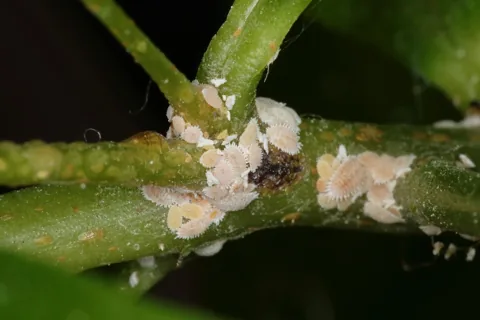 Mealybugs
Planococcus citri
Mealybugs are soft, oval insects covered in white wax that suck sap from houseplants and outdoor plants. They thrive indoors and where winters are mild, and their wax and hiding habits make them hard to reach with sprays.
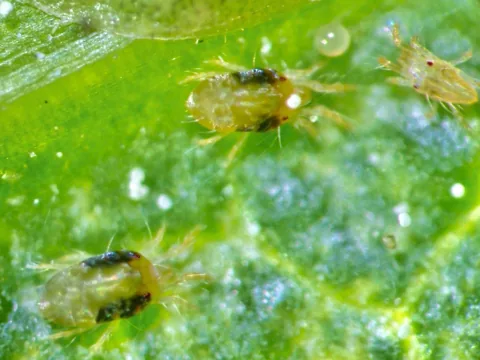 Spider Mites
Tetranychus urticae
Spider mites are tiny arachnids, relatives of spiders and ticks, that live in colonies on leaf undersides and suck out plant cells. The twospotted spider mite is the most important species in yards and gardens and on house plants, and Minnesota says it can infest over 200 species of plants.
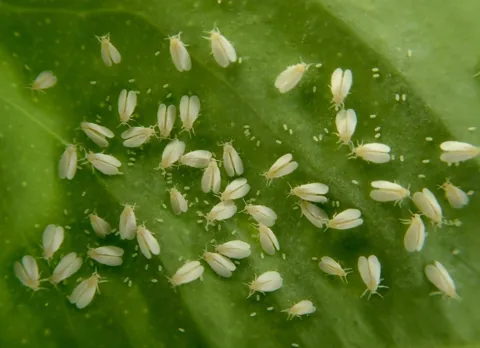 Whiteflies
Trialeurodes vaporariorum
Whiteflies are tiny sap-sucking insects that build large colonies on leaf undersides, especially in warm weather. Outbreaks usually follow disruption of their natural enemies, and heavy infestations are hard to control, so prevention matters most.
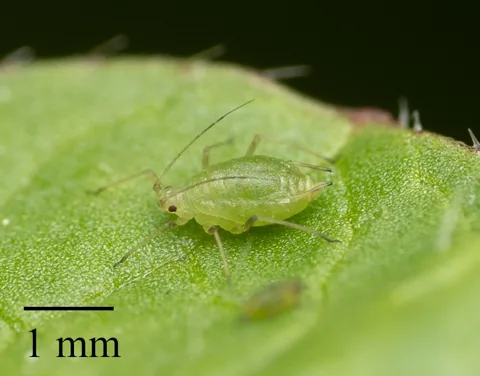 Aphids
Myzus persicae
Aphids are small, soft-bodied insects that pierce tender stems and leaves and suck out plant sap. Almost every plant hosts at least one aphid species, but established plants usually tolerate them, treating aphids for the plant's health is usually unnecessary, and natural enemies often bring numbers down.
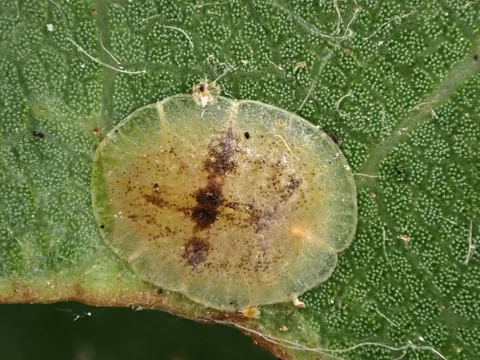 Scale Insects
Superfamily Coccoidea (representative: brown soft scale, Coccus hesperidum)
Scales are small sap-sucking insects that settle on the bark, leaves or fruit of trees, shrubs and houseplants and rarely look like insects at all. Most plants tolerate low to moderate numbers, but heavy infestations cause yellowing, leaf drop and dieback, and the soft scales drip sticky honeydew.
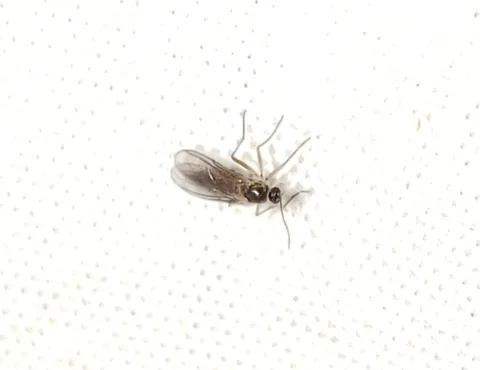 Fungus Gnat
Bradysia and related species
Fungus gnats are small flies whose larvae live in moist potting mix and organic matter. Indoors the adults emerge from houseplants and become a nuisance; they don't bite, and Colorado State calls the larvae minor pests of houseplants.
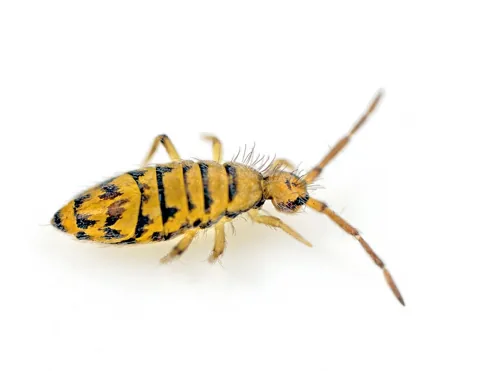 Springtail
Collembola (shown: Entomobrya sp.)
Springtails are tiny jumping creatures that sometimes appear in large numbers in moist spots indoors. They don't bite or sting and don't damage furniture or food; their presence indoors points to a moisture problem.
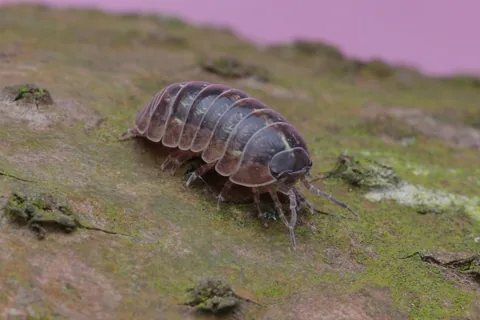 Common Pillbug
Armadillidium vulgare
Sowbugs and pillbugs are land-living crustaceans, more closely related to shrimp and crayfish than to insects, that feed mostly on decaying plant matter. They are harmless indoors, and finding many inside usually points to dampness, a large population outdoors or a gap at a door or window.
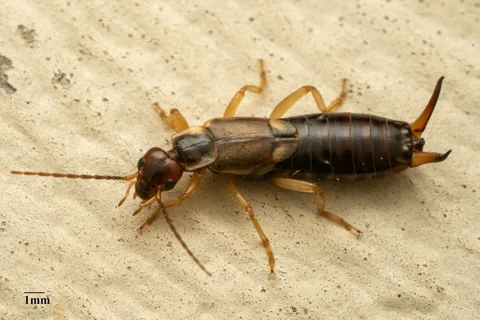 European Earwig
Forficula auricularia
The European earwig, introduced from Europe in the early 1900s, is a familiar garden insect that feeds at night and hides in dark, moist places by day; it damages seedlings and soft fruit but also eats aphids. Clemson says it is the most common earwig pest around homes, and Minnesota says it was first noticed there in the early 1990s.
When to start
Sources give slightly different cutoffs. Clemson's fact sheet on moving houseplants says 50°F or lower can damage many tropical plants. Minnesota Extension says temperatures dipping below 45 to 50°F can cause damage, depending on the species, and suggests bringing plants in when nights start to cool in late September. Illinois Extension says to bring them in when temperatures drop below 55°F.[6][1][2]
The more useful rule is to finish before the furnace runs. Clemson says plants need to readjust to indoor life before the heat is turned on, and an Illinois Extension horticulture educator advises bringing them in before the furnace kicks on and before cold weather arrives, setting a date so you aren't hauling pots in the night of the first frost. Leave enough time for the pest steps below, which take several days outdoors.[6][3]
Step 1: Inspect the plant, the pot and the root ball
Minnesota Extension says to examine all plant parts and containers thoroughly before bringing plants indoors for the winter. Clemson's houseplant pest fact sheet says pests most often come into the home on newly purchased plants or on plants that spent the summer outside, and that a plant sitting on the ground may have pests that crawled in through the drainage holes.[10][7]
- Leaves and stems: Clemson says pests are most often found on the undersides of leaves and that a 10X magnifying lens makes small pests and immature stages easier to see. Aphids are usually on new growth or leaf undersides (Clemson); Minnesota says aphids are small, often green, and found on leaf undersides.[7][1]
- Webbing and stippling: fine webbing points to spider mites. Clemson notes the adults are under 1/16 inch long and hard to see without a magnifying lens.[7]
- Bumps and sticky leaves: Illinois Extension's photo of a schefflera leaf shows yellow scale insects and dark sooty mold as examples of what to watch for when bringing plants indoors. Colorado State says soft scales excrete sticky honeydew as they feed.[2][9]
- Caterpillar eggs: Clemson says butterflies and moths lay eggs on the undersides of leaves of plants that have been outdoors.[7]
- The root ball: Clemson's moving guide says to take plants out of their pots to see if anything has crawled through the drainage holes. North Carolina's Carteret County office names ants, pill bugs and fungus gnats as repeat offenders in containers.[6][5]
Step 2: Clean up and cut back
Illinois Extension suggests deciding first which plants are worth bringing back, then removing dead foliage, outdoor litter and weeds that sprouted in the pots. Summer growth can make a plant too big for its indoor spot, so this is also the time to prune, pinch or divide it. Minnesota Extension says some plants will have outgrown their pots and may need repotting, pruning or separating.[3][4][1]
If a plant is heavily infested, Illinois Extension says it may be prudent to dispose of it rather than risk the rest of your collection.[2]
Step 3: Wash the leaves
Illinois Extension recommends a steady or forceful stream of water on the foliage before resorting to insecticides, covering both upper and lower leaf surfaces. Clemson says to wash the leaves and stems gently with the hose. Minnesota Extension says spraying with water removes outdoor dust and soft-bodied insects from plants too big to dunk in a bucket.[2][3][6][1]
Sources differ on adding dish soap. Minnesota Extension says some experts recommend bathing or soaking plants in a bucket of water with mild dishwashing soap, or washing the tops and undersides of leaves with soapy water and then rinsing. Kentucky gives one teaspoon of mild detergent or soap in a gallon of water for washing broadleaved plants with a soft brush or cloth. Colorado State cautions that dishwashing detergents and hand soaps have insecticidal effects but can injure plants. If you use household soap, keep it dilute, rinse afterward and try it on a few leaves first.[1][8][9]
Step 4: Flush or soak the pot
Insects that moved into the potting mix won't come off with a leaf wash. Illinois Extension says flushing the pot with lots of water usually drives out insects that came in through the drainage holes. North Carolina's Carteret County office says to soak the roots and container in water to force out insects living in the container, before the plant comes inside.[3][4][5]
Illinois Extension lists earwigs, pill bugs and ants among what moves into the soil of potted plants over summer, and sow bugs, spiders and earwigs among the outdoor visitors you're likely to find. Minnesota Extension adds a step most people skip: wash the outside of the pots to remove dirt and any pests on them.[2][4][3][1]
Step 5: Spray insecticidal soap outdoors if pests remain
If the water treatment doesn't clear them, Illinois Extension says insecticidal soaps can be used on soft-bodied insects, following label instructions. Clemson's method: let the washed plant dry, spray the whole plant (upper and lower leaf surfaces), the soil and the pot with insecticidal soap, leave the plant outside for several days, spray again, and bring it in two to three days later. North Carolina's Carteret County office recommends insecticidal soap for mealybugs, aphids and spider mites found during scouting.[2][6][5]
Spider mites need follow-up. An Illinois Extension educator says two or three repeated treatments are needed to break their life cycle, and that it's much easier to do outdoors than to deal with mites in the house later. Clemson's pest fact sheet and Minnesota's indoor plant guide both favor treating outdoors when possible, which keeps overspray off furniture, drapes and carpet.[3][7][10]
Check the plant first. Clemson says some plants hold soap on their leaves and can be burned, so check that the plant is listed on the label or test a small area; symptoms may take seven to ten days to appear. Clemson also says to treat outdoors only in mild weather and bring plants back in after the spray has dried completely. Product choices, label limits and systemic insecticides are covered in the houseplant pests guide.[6][7]
Step 6: Repot when the soil is the problem
Ants are the main reason to repot. Illinois Extension says that if you've found ants, you may need to repot by shaking all the soil off the roots, leaving the ants behind, and resetting the plant in fresh potting soil. Minnesota's indoor plant guide says repotting with new potting soil eliminates soil-borne pests, and for root-feeding pests it says to wash the soil off the roots and repot in a clean container with fresh soil.[4][2][10]
Use bagged potting mix, not garden soil. Clemson says commercially prepared potting soil is better than soil from outdoors, which can be a source of pests. Kentucky warns to take care not to transfer insects during repotting. UC IPM notes a few mealybug species feed on roots and that ground mealybugs generally aren't seen until roots are exposed, which is one more reason to look at the root ball while it's out of the pot.[7][8][12]
Step 7: Keep them apart once they're inside
Even a careful cleanup can miss eggs and a few insects. Minnesota Extension says to check summered plants at each watering after they come in and treat with insecticidal soap if pests show up. Extension isolation periods are written for newly bought plants, and they vary: one to two weeks (Minnesota), at least three weeks (Colorado State), 30 days (Kentucky) and six weeks (Clemson). Clemson notes pests arrive on summered plants as well as new ones, so the same caution makes sense for plants coming back in.[1][10][9][8][7]
- Where: a separate room or a spot well away from the plants that stayed indoors all summer (Colorado State says a separate area of the household).[9]
- How often: Clemson suggests examining isolated plants about once a week.[7]
- Monitoring: yellow sticky cards catch adult whiteflies (Colorado State) and adult fungus gnats (UC IPM), so one stuck in the pot gives early warning.[9][11]
- If something turns up, isolate that plant and treat it before it rejoins the others, as Kentucky and Clemson both advise for any infested plant.[8][7]
Leaf drop after the move is usually light, not bugs
Yellow leaves in the first weeks indoors are expected. North Carolina's Carteret County office says to move plants into more shade each week until they're in mostly shade before bringing them in, which reduces leaf yellowing and drop. Clemson and Illinois describe about a week of moving plants into progressively deeper shade; Illinois then suggests the brightest, sunniest window indoors and says added humidity and supplemental light can reduce leaf drop. Minnesota says abrupt moves can cause yellow leaves, wilt, dieback or death.[5][6][2][1]
Water less once they're in. Illinois Extension says plants grow more slowly indoors and need less water, and to let the soil dry slightly between waterings. That also helps with pests: UC IPM says fungus gnats thrive in moist potting soil and recommends avoiding overwatering, and springtails are drawn to moist houseplant soil too.[2][3][11][13]
Common hitchhikers and where to go next
These are the pests extension sources name most often on plants coming back inside. Each has its own guide on this site.[5][2][4]
- Aphids, whiteflies, scale and spider mites: Illinois Extension lists them as pests commonly found on outdoor plants. Colorado State says the twospotted spider mite survives year-round outdoors there, so houseplants that summered outside are a likely source, while the greenhouse whitefly can't overwinter outdoors in Colorado and usually arrives on infested plants. See the spider mite and whitefly guides.[2][9]
- Mealybugs: UC IPM says they are often brought into indoor areas on new plants or on tools or pots. See the mealybug guide.[12][5]
- Fungus gnats: small dark flies whose larvae live in moist potting mix (UC IPM); North Carolina names them a repeat offender in containers. See the fungus gnat guide.[11][5]
- Springtails: tiny jumping creatures that show up in the soil of houseplants and other moist spots (UC IPM). UC IPM calls them mainly a nuisance and says the key is reducing moisture in plant pots. See the springtail guide.[13]
- Ants, earwigs, pill bugs and sow bugs: they shelter in pots, especially pots set on the ground, and flushing or repotting usually removes them (Illinois, North Carolina).[4][3][5]
- Not sure what it is? Clemson's houseplant pest fact sheet covers mealybugs, whiteflies, scales and spider mites among the common houseplant pests; the tiny white bugs guide helps sort the small pale ones by where you see them.[7]
Common questions
- Should I soak houseplants in soapy water before bringing them in?
- Minnesota Extension says some experts recommend a soak in a bucket of water with mild dish soap, getting the soapy water into the soil as well. Colorado State cautions that dish detergents can injure plants. Plain water flushing (Illinois) or a labeled insecticidal soap spray (Clemson) avoids that risk.[1][9][4][6]
- How long should I keep summered plants away from my other houseplants?
- Extension advice for new plants ranges from one to two weeks (Minnesota) to at least three weeks (Colorado State), 30 days (Kentucky) and six weeks (Clemson). Check them weekly, and at every watering, during that time.[10][9][8][7]
- Why are bugs flying around my plants a few weeks after I brought them in?
- Small, dark, delicate flies around the soil are usually fungus gnats, which lay eggs in moist potting soil (UC IPM). Tiny white insects on the leaves may be whiteflies, whose nymphs feed on leaf undersides (Colorado State). Let the soil dry between waterings and see the fungus gnat or whitefly guide.[11][9][2]
- My plant is dropping leaves since I brought it inside. Is it pests?
- Usually not. Clemson, Illinois and North Carolina extension all say leaf yellowing or drop is a common response to lower indoor light. Check leaf undersides for insects or webbing to be sure.[6][2][5][7]
Photo credits
- Mealybugs: (c) Carlos Alexandre Mattos Raposo, some rights reserved (CC BY) — via iNaturalist, CC BY 4.0
- Spider Mites: (c) Mike Bowie, some rights reserved (CC BY) — via iNaturalist, CC BY 4.0
- Whiteflies: (c) Mike Bowie, some rights reserved (CC BY) — via iNaturalist, CC BY 4.0
- Aphids: Jesse Rorabaugh, public domain (CC0), via iNaturalist
- Scale Insects: (c) Grey Smith, some rights reserved (CC BY) — via iNaturalist, CC BY 4.0
- Fungus Gnat: (c) aispinsects, some rights reserved (CC BY) — via iNaturalist, CC BY 4.0
- Springtail: AJ Cann, public domain (CC0), via iNaturalist
- Common Pillbug: (c) Carlos Alexandre Mattos Raposo, some rights reserved (CC BY) — via iNaturalist, CC BY 4.0
- European Earwig: Jesse Rorabaugh, public domain (CC0), via iNaturalist
Sources
- University of Minnesota Extension, “When to bring houseplants inside for the winter.” extension.umn.edu/yard-and-garden-news/bringing-houseplants-back-inside (accessed 2026-11-10)
- University of Illinois Extension, “Bring houseplants indoors before the first frost.” extension.illinois.edu/news-releases/bring-houseplants-indoors-first-frost (accessed 2026-11-10)
- University of Illinois Extension, “Houseplants Going Back Inside (Over the Garden Fence).” extension.illinois.edu/blogs/over-garden-fence/2017-09-18-houseplants-going-back-inside (accessed 2026-11-10)
- University of Illinois Extension, “Time to Bring In The Houseplants (Over the Garden Fence).” extension.illinois.edu/blogs/over-garden-fence/2015-09-21-time-bring-houseplants (accessed 2026-11-10)
- N.C. Cooperative Extension, Carteret County Center, “Bringing Houseplants Indoors.” carteret.ces.ncsu.edu/2022/09/bringing-houseplants-indoors/ (accessed 2026-11-10)
- Clemson Cooperative Extension Home and Garden Information Center, “Moving Houseplants Indoors & Outdoors (HGIC 1454).” hgic.clemson.edu/factsheet/indoor-plants-moving-plants-indoors-outdoors/ (accessed 2026-11-10)
- Clemson Cooperative Extension Home and Garden Information Center, “Common Houseplant Insects & Related Pests.” hgic.clemson.edu/factsheet/common-houseplant-insects-related-pests/ (accessed 2026-11-10)
- University of Kentucky Entomology, “Houseplant Insect Control (ENTFACT-406).” entomology.mgcafe.uky.edu/ef406 (accessed 2026-11-10)
- Colorado State University Extension, “Managing Houseplant Pests.” extension.colostate.edu/resource/managing-houseplant-pests/ (accessed 2026-11-10)
- University of Minnesota Extension, “Managing insects on indoor plants.” extension.umn.edu/product-and-houseplant-pests/insects-indoor-plants (accessed 2026-11-10)
- University of California Statewide IPM Program, “Fungus Gnats (Pest Notes).” ipm.ucanr.edu/home-and-landscape/fungus-gnats/ (accessed 2026-11-10)
- University of California Statewide IPM Program, “Pest Notes: Mealybugs.” ipm.ucanr.edu/home-and-landscape/mealybugs/ (accessed 2026-11-10)
- University of California Statewide IPM Program, “Pest Notes: Springtails.” ipm.ucanr.edu/home-and-landscape/springtails/ (accessed 2026-11-10)