The short answer
- Identify the roach first. Small (about 1/2 inch), light brown roaches in the kitchen or bathroom are most likely German cockroaches, by far the most common roach in homes, and they live and breed only indoors. Large roaches (1 inch or more) are usually American, Oriental, smokybrown or wood roaches that live mostly outdoors and wander in.[2][1][4]
- For roaches breeding indoors, the plan is cleanup, sealing hiding spots, and baits (gels or bait stations) placed where the roaches hide, checked with sticky traps. For outdoor roaches coming in, the plan is to close the way in and deal with damp hiding places around the house.[1][2][3]
- Skip bug bombs. UC IPM, Kentucky, Texas A&M and NPIC all say total-release foggers don't reach the cracks where roaches hide, and Kentucky and NPIC add that they can drive roaches deeper into hiding.[1][2][4][5]
- Baits are slow on purpose. Kentucky says a roach that eats bait usually dies within 1 to 3 days, with a clear drop in numbers within a few weeks. If Texas A&M's 2 to 3 weeks pass without control, switch to a bait with a different active ingredient.[2][4]
Cockroach profiles
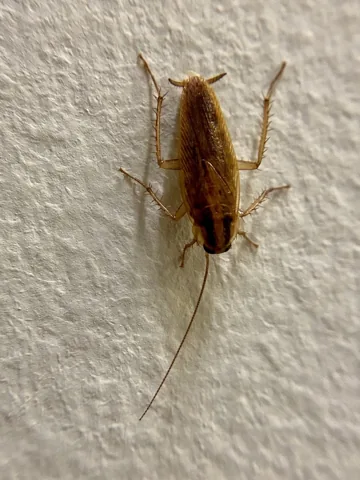 German Cockroach
Blattella germanica
The German cockroach is the most common cockroach living indoors in California and perhaps worldwide, especially in apartment buildings, and it has the fastest reproductive cycle of the common pest cockroaches. Penn State and Kentucky call it the most common cockroach in homes, apartments and other buildings, and Kentucky says it does not live outdoors.
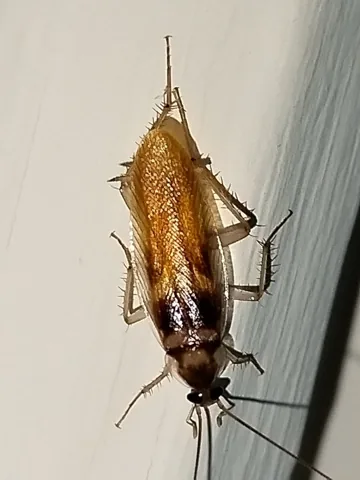 Brownbanded Cockroach
Supella longipalpa
The brownbanded cockroach is a small indoor species that prefers warmer, drier spots than the German cockroach. It hides around appliances, behind wall decorations, in furniture and often near the ceiling, rather than mainly in kitchens and bathrooms.
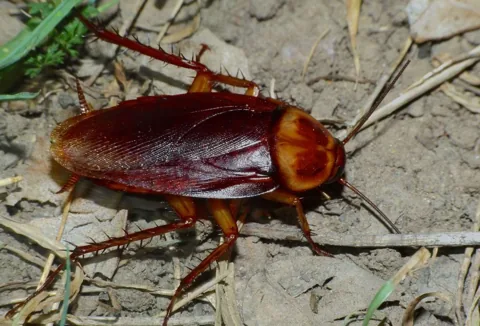 American Cockroach
Periplaneta americana
The American cockroach is the largest of the common pest cockroaches. It prefers warm, humid places and readily lives outdoors, in sewers, storm drains and water meter boxes, coming indoors to forage. Kentucky, Penn State and Minnesota all describe it as the largest cockroach commonly found in buildings.
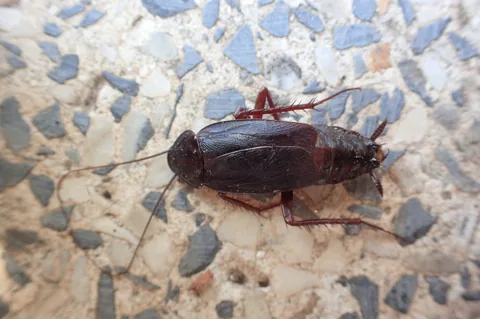 Oriental Cockroach
Blatta orientalis
The oriental cockroach, often called a water bug and sometimes a black beetle, lives in cool, dark, damp places such as basements, crawl spaces, drains and water meter boxes. It usually lives outdoors or in those damp spots and wanders into buildings at night, mostly staying at ground level.
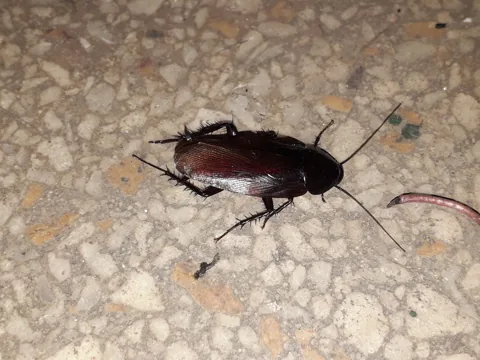 Smokybrown Cockroach
Periplaneta fuliginosa (now also placed in Validiblatta)
The smokybrown cockroach is a large, dark, winged roach of the humid South. It is the most common cockroach in suburban Southern neighborhoods with mature hardwood trees, where it lives in tree holes, attics, crawl spaces and sheds and comes out at night.
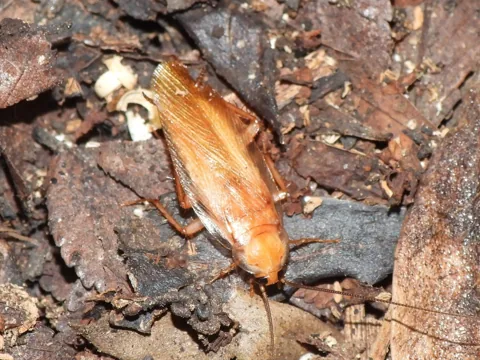 Turkestan Cockroach
Blatta lateralis (Periplaneta lateralis, Shelfordella lateralis)
The Turkestan cockroach is an invasive species that lives mostly outdoors, in water meter boxes, cracks between concrete blocks, compost, leaf litter, potted plants and sewers. In urban areas of the Southwest it is rapidly replacing the Oriental cockroach.
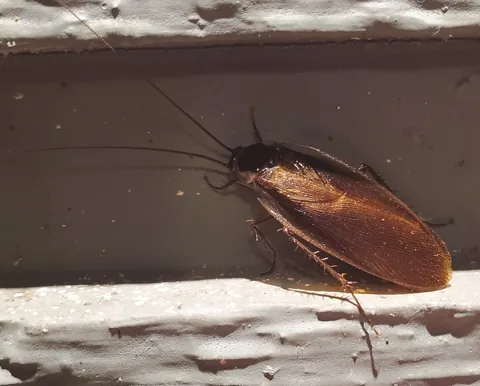 Wood Cockroaches
Parcoblatta species (e.g., P. pennsylvanica)
Wood cockroaches are native species of forest leaf litter, logs and other damp places full of decaying material. They come indoors only by accident, dry out and die within days, and don't feed or breed inside, so they are a nuisance only.
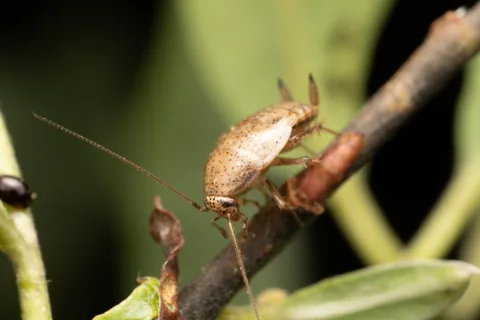 Tawny cockroach
Ectobius pallidus
The tawny cockroach, Ectobius pallidus, which the Connecticut Agricultural Experiment Station calls the spotted Mediterranean cockroach, is a small European woodland cockroach introduced to North America. It occasionally wanders into homes in New England, but it does not breed indoors.
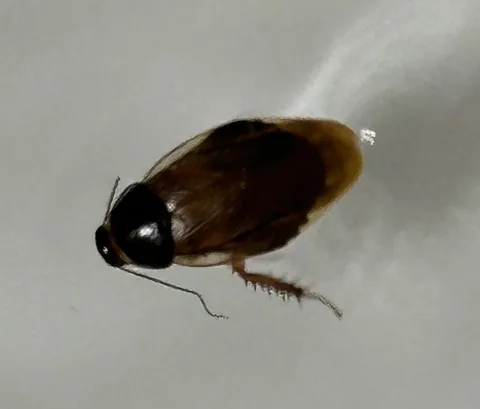 Surinam Cockroach
Pycnoscelus surinamensis
The Surinam cockroach is a burrowing roach that lives in loose soil and feeds mostly on plants and roots. Outside the warm Southeast it arrives in the soil of potted plants and turns up in greenhouses, malls and indoor plantings.
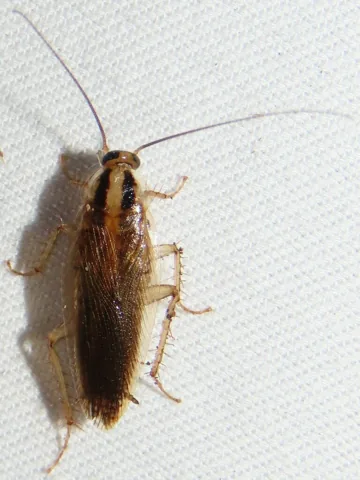 Asian Cockroach
Blattella asahinai
The Asian cockroach is a close relative of the German cockroach that lives outdoors in leaf litter, mulch and grassy areas. It flies well and is drawn to lights at dusk, so it shows up indoors in the evening, but treating inside the house doesn't control it.
Step 1: Which cockroach is it?
Kentucky Extension counts 69 cockroach species in North America and says only a handful infest buildings. Catch one on a sticky trap, which UC IPM recommends for identification, and compare it with the types of cockroaches guide. The quick sort below is enough to pick a plan.[2][1]
- German cockroach: light brown, about 1/2 inch long, with two dark stripes on the shield behind the head (Kentucky). Rutgers gives 1/2 to 5/8 inch and says it lives only in buildings. Mostly in kitchens and bathrooms.[2][3]
- Brown-banded cockroach: about the size of a German roach but without the two stripes. Kentucky describes a dark bell-shaped mark behind the head and two yellowish bands across the wings, and says it often turns up in rooms other than the kitchen,, high on walls and cabinets, behind picture frames and inside furniture.[2][3]
- American cockroach: Kentucky calls it the largest roach commonly found in homes, about 1 1/2 inches, reddish brown with a pale yellow band around the shield behind the head. Rutgers gives 1 1/2 to 2 inches and notes it's also called a palmetto bug. Usually basements, drains and crawl spaces.[2][3]
- Oriental cockroach: shiny black or dark brown, about 1 inch long, with short wings (Kentucky). It favors cool, damp spots such as floor drains, crawl spaces and basements and comes in under doors and through vents. Rutgers says it's also called a water bug.[2][3]
- Smokybrown cockroach: University of Tennessee describes it as 1 to 1.5 inches, slightly smaller than an American cockroach, a nuisance often seen at night and drawn to lights. Texas A&M lists it with the roaches that live mostly outdoors.[8][4]
- Wood cockroach: brownish and about 1 inch long; Kentucky says the males fly well and both sexes come to lights. They live outdoors under loose bark and in woodpiles and arrive in spring and summer or in firewood.[2][3]
Step 2: Is it breeding inside, or just wandering in?
This decides how much work you're facing. UC IPM says German and brown-banded cockroaches live and breed entirely indoors, while American, Oriental and Turkestan cockroaches live outdoors and invade for a while. Texas A&M puts the smokybrown cockroach in the outdoor group too.[1][4]
UC IPM is blunt about the stray: indoor insecticide use is warranted only when a population is established, not for one or two intruders. One big roach on the bathroom floor usually means a gap or a drain to fix, not a whole-house treatment.[1]
- Daytime sightings: Texas A&M says that seeing roaches during the day usually means there are a lot of them, and Rutgers says daytime German cockroach activity typically indicates a severe infestation.[4][3]
- Droppings, skins and egg cases: EPA's school and child care IPM training lists droppings, shed skins, egg cases and dead roaches as the signs to look for. Kentucky says the droppings look like pepper specks where roaches gather.[6][2]
- Small nymphs: young roaches are wingless and smaller than the adults. UC IPM says nymphs are usually the most plentiful stage in a population, and Kentucky says they live in the same places as the adults, so nymphs in cabinets or on traps mean roaches are living there.[1][2]
- Smell: Penn State says German cockroaches give off odorous secretions, and in heavy infestations the area can take on a characteristic odor.[7]
- Trap counts: set sticky traps for several days (see Step 4). Roaches caught again and again in the same spots show where they live; a single catch near an outside door suggests an invader.[1][4]
Step 3: Go to the plan for your roach
Each of these has its own guide. What follows is only the reason the plans differ, so you can pick the right one.[1][2]
- German cockroaches: the main indoor problem. A Rutgers survey of about 1,500 low-income New Jersey apartments in 2018 and 2019 found cockroaches in 36% of them, and German cockroaches made up 97.8% of the finds. They come in with grocery bags, beverage cartons and furniture, Kentucky says, and travel between apartments through shared walls. Plan: the German cockroach guide, plus the gel bait guide.[3][2]
- Brown-banded cockroaches: use the German cockroach plan, but Rutgers says to extend it beyond the kitchen and bathroom to wherever you see activity. UC IPM warns that this species is especially hard to control with baits, so trap first to find where they are.[3][1]
- American, Oriental, smokybrown and Turkestan cockroaches: these breed outdoors or in sewers and damp utility areas. Rutgers says American cockroaches often come from hundreds of feet away, such as sewer lines or broken plumbing, so the fix is sealing gaps, plumbing openings and drains and cleaning up damp debris outside. Plan: the American, Oriental and smokybrown cockroach guide.[3][1][4]
- Wood cockroaches: Kentucky says they cannot survive indoors, and Rutgers says they rarely breed inside. Plan: the wood cockroach guide, which is mostly about firewood, lights and door gaps.[2][3]
- Spotted Mediterranean (tawny) cockroach: a small, light yellow, spotted roach in the Northeast. Rutgers says adults fly to buildings and come in through doors, windows and vents but very rarely reproduce inside; seal gaps, trap or vacuum the ones that get in.[3]
- Surinam cockroach: Rutgers says this burrowing roach is common outdoors in the Southeast, from North Carolina to Texas and Florida, and farther north it gets indoors in the soil of potted plants. Remove the infested plant or use a cockroach bait.[3]
- Not sure it's a roach at all? UC IPM notes that people sometimes confuse cockroaches with beetles, though adult roaches lack a beetle's hard wing covers. The look-alike guide covers beetles, water bugs, crickets and others.[1]
Step 4: Put out sticky traps before you treat
UC IPM calls sticky traps the best way to detect and monitor cockroaches. Place them where floors meet walls, in every corner of the room, behind large kitchen appliances and inside cabinets, and number them so you can track each one. Check daily for several days; UC IPM says many traps catch roaches within the first 24 hours.[1]
Texas A&M suggests extra traps next to doors, behind laundry appliances and under the stove and refrigerator when you don't know where roaches are getting in. Texas A&M says traps give some control, especially of outdoor species, but are most useful for monitoring, and traps alone won't control a well-established infestation.[4]
Keep counting after treatment starts. UC IPM uses the before-and-after trap counts to judge whether the plan is working. Throw used traps away sealed in a plastic bag.[1]
Step 5: Cut off food, water and hiding places
This step matters for every species. UC IPM says even crumbs or liquid trapped in cracks can feed roaches, and that baits work more slowly when roaches have other food. Kentucky adds that roaches will eat soap, toothpaste, glue and hair as well as human food, and that even clean homes can become infested.[1][2]
- Food: store it in glass jars or resealable containers, wipe up spills right away, and don't leave dishes or pet food out overnight (UC IPM, Kentucky).[1][2]
- Trash and clutter: use cans with tight lids, keep them away from doors, and get rid of stacked paper bags, boxes and newspapers that make hiding places.[1][2]
- Water: fix plumbing leaks and improve ventilation where condensation collects. Texas A&M says to fix leaks to remove moisture sources.[1][4]
- Vacuum: a vacuum removes roaches, shed skins, egg cases and crumbs from cracks and from under the stove and behind the refrigerator. UC IPM and Texas A&M both recommend a HEPA filter, because roach droppings and skins carry allergens that can be stirred into the air.[1][4]
Step 6: Seal cracks and entry points
UC IPM says an adult German cockroach can hide in a crack 1/16 inch wide and that roaches prefer tight spaces that touch them on both sides. Texas A&M suggests a good caulk or sealant around sinks and plumbing, in walls and along kitchen backsplashes.[1][4]
Kentucky recommends sealing where pipes and wires pass through walls and floors with caulk, foam or copper mesh, which it says is especially useful in apartments to slow roaches moving between units.[2]
For roaches coming in from outside, UC IPM recommends door sweeps and weather stripping, and Texas A&M says to check door threshold seals and make sure roof soffits are screened. Look over boxes, used furniture and appliances before bringing them in; UC IPM says egg cases can be glued to the undersides.[1][4]
Step 7: Use baits, not sprays, for roaches living indoors
UC IPM calls baits the primary insecticide tool against cockroaches, and Kentucky says most householders will get better results from baits than from other insecticides. A bait mixes a slow-acting insecticide with food; roaches eat it and go back to their hiding places to die, and Kentucky notes that other roaches can pick up a lethal dose from the saliva and droppings of roaches that fed.[1][2][4]
Roaches don't smell bait from across the room. Both UC IPM and Kentucky say they find it while foraging, so placement decides whether it works. The gel bait guide covers amounts and placement in detail; the short version follows.[1][2]
- Put bait stations flush against the corners and edges of cabinets and counters, not in open space, Kentucky says, and slide them into the wall-floor joint behind the stove and refrigerator.[2]
- Gel bait goes in many small dabs in cracks and corners rather than a few large ones. Kentucky says more than a dozen placements may be needed just under a kitchen sink. UC IPM suggests placing bait next to roach droppings, which contain an aggregation pheromone.[2][1]
- Don't spray or dust near the bait. Texas A&M says roaches avoid contaminated baits. Replace dried-out gel and keep stations stocked.[4][1]
- Be patient. UC IPM says it may take 7 days or longer to see fewer roaches. If there's no control after 2 to 3 weeks, Texas A&M says to switch to a bait with a different active ingredient.[1][4]
Why sprays and bug bombs let you down
UC IPM says sprays give quick knockdown but no long-term control, can scatter roaches into other parts of the building, and are up against roaches that have become resistant to many common spray ingredients. Kentucky says roaches spend little time on baseboards, floors and counters, so spraying those surfaces does little.[1][2]
Total-release foggers are worse. NPIC says the mist lands on exposed surfaces and doesn't reach the voids, cracks and crevices where roaches hide, and that repellent ingredients can drive pests deeper into hiding. Kentucky and NPIC both warn that fogger contents can catch fire. The bug bomb article covers fogger injuries and safer choices.[5][2][1]
Outdoor roaches are the exception for targeted treatment. UC IPM says harborage sites for Oriental, Turkestan and American cockroaches may need insecticide treatment when numbers are high and roaches are moving in, and University of Tennessee lists perimeter treatments and granular baits among the options for smokybrown cockroaches. Those details are on the outdoor roach guide.[1][8]
Dusts: boric acid in hidden places only
Boric acid dust works when it stays dry and undisturbed, UC IPM and Kentucky say, and roaches pick it up on their bodies and swallow it while grooming. It is slow; UC IPM says a week or more can pass before it has a clear effect.[1][2]
- Apply a film so light it's barely visible. Kentucky says roaches avoid heavy piles of powder, and UC IPM says thick layers cake and stop working.[2][1]
- Put it in voids and cracks: under appliances, behind kick panels, around pipe openings and under the sink. Never on countertops or shelves where food, dishes or people touch it, and not into electronics, which Kentucky says it can damage.[1][2][4]
- Indoors only: UC IPM says boric acid is not recommended outdoors because it is toxic to plants.[1]
Cleaning up after roaches
Roach droppings and shed skins can trigger allergies and asthma. Kentucky says asthma triggered by cockroaches is especially common among children in crowded housing, and EPA's child care IPM training says cockroaches can make asthma worse in sensitive people. UC IPM and Texas A&M recommend a vacuum with a HEPA filter for cleaning out hiding spots. The cockroach allergen article covers what the research says about cleaning.[2][6][1][4]
Follow up so they don't come back
UC IPM's advice once numbers drop is to keep monitoring with traps, keep up sanitation and sealing, and if roaches persist, look for other sources, move or add bait, or change products. If severe infestations keep coming back, it suggests remodeling the worst areas to remove hiding spots.[1]
When to call a professional
UC IPM says serious indoor infestations and other large or complex problems often need a professional, and that in some cases you can manage cockroaches on your own. Kentucky says that with good bait placement it's possible to get results comparable to professional treatment.[1][2]
If you hire someone, Kentucky's advice is that the technician should inspect at each visit and apply insecticide into cracks and hiding places rather than along baseboards. It also says eliminating cockroaches shouldn't take a full year of service, especially in a single-family home, and that the products professionals use usually last for months without monthly reapplication.[2]
Common questions
- Does seeing one cockroach mean I have an infestation?
- Not always. Large roaches such as American, Oriental and wood roaches often wander in from outside, and UC IPM says indoor insecticide isn't warranted for one or two intruders. A small tan roach in the kitchen is different: German cockroaches breed indoors, so set sticky traps to find out how many there are.[1][2]
- Why do I have roaches if my house is clean?
- Kentucky says German cockroaches are often carried in with grocery bags, beverage cartons and furniture, and that in apartments they move between units through shared walls, so even clean homes can become infested. Outdoor roaches come in through gaps around doors, windows, vents and pipes.[2]
- How long does it take to get rid of cockroaches?
- Kentucky says a roach usually dies within 1 to 3 days of eating bait and the overall infestation should drop noticeably within a few weeks. UC IPM says it may be a week or longer before you see fewer roaches. If baits haven't worked in 2 to 3 weeks, Texas A&M says to try a bait with a different active ingredient.[2][1][4]
- Do bug bombs kill cockroaches?
- Not reliably. NPIC says fogger mist settles on open surfaces and doesn't reach the cracks where roaches hide, and Kentucky says the ingredients tend to drive roaches deeper into walls. Foggers can also catch fire.[5][2]
Photo credits
- German Cockroach: (c) Sandra H Statner, some rights reserved (CC BY) — via iNaturalist, CC BY 4.0
- Brownbanded Cockroach: Sinaloa Silvestre, public domain (CC0), via iNaturalist
- American Cockroach: (c) Steve Kerr, some rights reserved (CC BY) — via iNaturalist, CC BY 4.0
- Oriental Cockroach: (c) Jorge Íñiguez, some rights reserved (CC BY) — via iNaturalist, CC BY 4.0
- Smokybrown Cockroach: (c) Eduardo Luis Beltrocco, some rights reserved (CC BY) — via iNaturalist, CC BY 4.0
- Turkestan Cockroach: (c) Sam Kieschnick, some rights reserved (CC BY) — via iNaturalist, CC BY 4.0
- Wood Cockroaches: (c) Whitney Mattila, some rights reserved (CC BY) — via iNaturalist, CC BY 4.0
- Tawny cockroach: (c) Jack Forrester, some rights reserved (CC BY) — via iNaturalist, CC BY 4.0
- Surinam Cockroach: (c) Ashwin Srinivasan, some rights reserved (CC BY) — via iNaturalist, CC BY 4.0
- Asian Cockroach: kcthetc1, public domain (CC0), via iNaturalist
Sources
- University of California Statewide IPM Program, “Pest Notes: Cockroaches (Publication 7467).” ipm.ucanr.edu/home-and-landscape/cockroaches/ (accessed 2026-11-10)
- University of Kentucky Entomology, “ENTFACT-614: Cockroach Elimination in Homes and Apartments.” entomology.mgcafe.uky.edu/ef614 (accessed 2026-11-10)
- Rutgers Cooperative Extension, “FS1327: Cockroach Species in New Jersey and Their Control Strategies.” extension.rutgers.edu/fs1327 (accessed 2026-11-10)
- Texas A&M AgriLife Extension, “ENTO-037: Cockroaches: Biology and Management.” extensionentomology.tamu.edu/wp-content/uploads/sites/3/2017/12/Cockroach-Biol-and-Mngmt_ENTO-037_2017.pdf (accessed 2026-11-10)
- National Pesticide Information Center, “Total Release Foggers.” www.npic.orst.edu/ingred/ptype/fogger.html (accessed 2026-11-10)
- U.S. Environmental Protection Agency, “Integrated Pest Management for Child Care Settings, Module 6: Managing Cockroaches in Child Care Centers.” www.epa.gov/sites/default/files/documents/Module06.pdf (accessed 2026-11-10)
- Penn State Extension, “German Cockroaches.” extension.psu.edu/german-cockroaches (accessed 2026-11-10)
- University of Tennessee Entomology and Plant Pathology, “Smokybrown Cockroach (Vol. 3, Issue 10).” epp.tennessee.edu/wp-content/uploads/sites/267/2023/11/2022-10SmokybrownV3I10.pdf (accessed 2026-11-10)