The short answer
- Check the law before you buy a trap. Contact your state wildlife agency to find out who may trap, which species, how often traps must be checked and where a caught animal may go.[1][7][8]
- Have a plan for the catch. The Pennsylvania Game Commission lists skunks, raccoons, bats, groundhogs, foxes and coyotes as rabies vector species that shouldn't be relocated, so a homeowner who catches one has to either release it or dispatch it.[7]
- Check traps every day they're set, weekends and holidays included. Florida's rule requires visiting live traps at intervals of no more than 24 hours.[2][7][8]
- Protect yourself: wear sturdy leather gloves, long sleeves and long pants, and cover at least half of a wire cage trap with a cloth.[2]
- Watch for young. A trapped mother that's nursing can leave young behind to starve; where a den holds young, the Game Commission advises letting them leave, often by fall, before you close it off.[5][7]
- If a trapped animal bites or scratches anyone, wash the wound with soap and water for 15 minutes, then call a doctor or your local health department right away. CDC says rabies care has to start before symptoms appear.[11][10][12]
Animals people most often trap
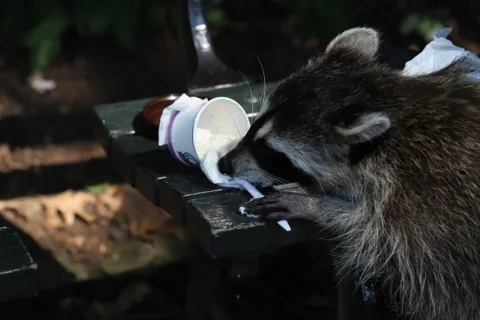 Raccoon
Procyon lotor
Raccoons are masked, ring-tailed mammals that adapt very well to towns and suburbs. They raid garbage and gardens, den in attics, chimneys and under decks, and can carry rabies and raccoon roundworm.
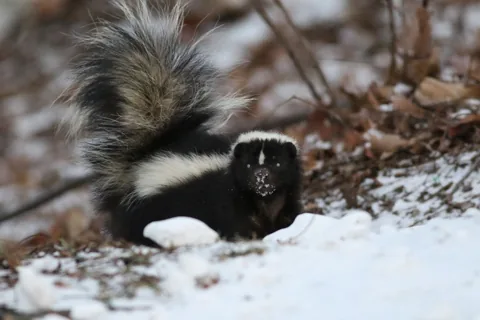 Striped skunk
Mephitis mephitis
The striped skunk is a cat-sized, black and white mammal that often lives under porches, decks and sheds. It digs lawns for grubs, sprays pets that corner it, and is one of the main wildlife carriers of rabies.
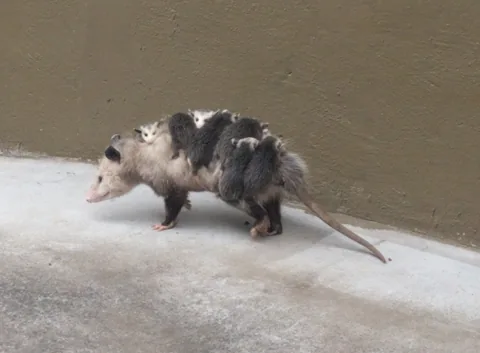 Virginia opossum
Didelphis virginiana
The Virginia opossum is North America's only marsupial, a cat-sized animal with a pointed face and a long, hairless tail. Around homes it raids pet food, garbage and fruit and dens under decks, sheds and houses.
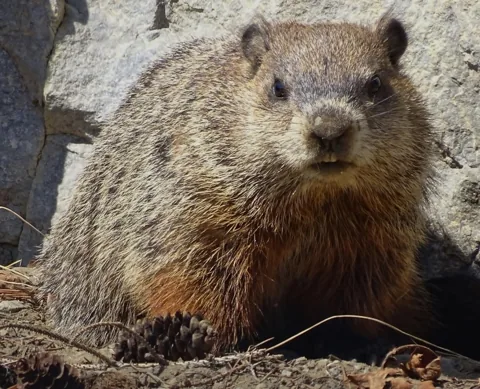 Groundhog (woodchuck)
Marmota monax
The groundhog, or woodchuck, is a burrowing member of the squirrel family found across eastern and central North America. It feeds on garden vegetables and clover by day and digs extensive burrows that can undermine foundations, sidewalks and pools.
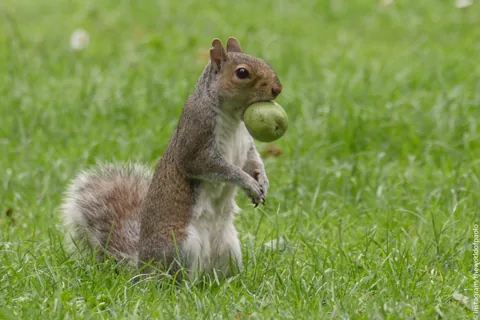 Tree squirrels (eastern gray and fox squirrels)
Sciurus species (shown: eastern gray squirrel, S. carolinensis)
Tree squirrels such as the eastern gray squirrel and fox squirrel are bushy-tailed, daytime rodents. Around homes they raid fruit, nuts and bird feeders, dig up lawns and gardens, and chew their way into attics.
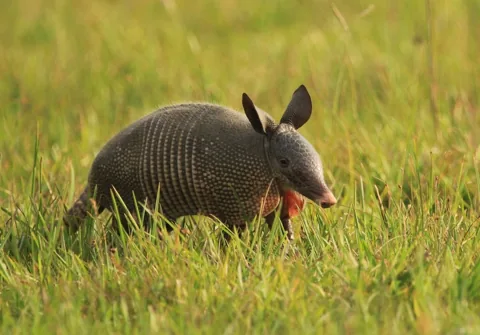 Nine-banded armadillo
Dasypus novemcinctus
The nine-banded armadillo is an armored, insect-eating mammal that has colonized much of the southern United States in the last 200 years. It roots through lawns, gardens and flower beds for insects and earthworms, and it digs burrows under foundations, slabs, driveways and pools.
Before you set a trap
The Pennsylvania Game Commission suggests five questions. Are you prepared to dispatch the trapped animal? Do you know how to dispose of a carcass properly? Do you know how to release a trapped animal? Do you know what bait will catch the species you're after? Do you know how often you must check the trap?[7]
The Game Commission says exclusion works for some species, including rabbits, bats, squirrels, raccoons, chipmunks and groundhogs, though it isn't a cure-all because animals sometimes adjust to get back in. Where raccoons are an area-wide problem, UC IPM says live trapping and relocating them only makes it worse.[7][5]
For homeowners who haven't trapped raccoons before, UC IPM advises hiring a professional wildlife control operator, who has the right equipment, can tell whether a trapped female is nursing young and can euthanize the animal where release isn't allowed. Some counties run trapping programs for nuisance animals, and some city or county health departments provide trappers for skunks.[5][6]
Know your state's rules
Who can set traps, for which animals and under what conditions is set by law. ICWDM says to contact your state wildlife agency before trapping, and notes that local rules can be stricter than state rules, and state rules stricter than federal ones, but never less strict.[1][3]
- Pennsylvania: landowners and homeowners may not trap beavers, bobcats, migratory birds, big game, or threatened or endangered species, and should contact the Game Commission region office for their county before trapping nuisance wildlife. Traps must be checked daily. Wildlife taken alive may not be kept, sold or given away, and any wildlife killed must be reported to the Game Commission.[7]
- Pennsylvania release rules: troublesome rabbits and squirrels can be relocated, and live wildlife may be released in a natural setting, but rabies vector species should not be relocated.[7]
- Florida: property owners may take most nuisance wildlife on their own land. The exceptions include black bears, deer, bobwhite quail, wild turkeys and species listed in Chapter 68A-27 of the state's rules; migratory birds need U.S. Fish and Wildlife Service authorization; bats may be taken only under the rule's exclusion-device conditions; and a bobcat may be taken only when it's causing or about to cause property damage or threatens public safety, and a live-caught bobcat must be released, not euthanized. Live traps and snares must be visited at intervals of no more than 24 hours.[8]
- Florida release rules: a captured animal must be released or euthanized within 24 hours, and any non-target animal released immediately where it was caught. Release is allowed only on the same contiguous property, or, for a native species, on a property of at least 40 contiguous acres in the same county with the owner's written permission. Euthanasia must be humane by American Veterinary Medical Association or American Association of Zoo Veterinarians standards.[8]
- Florida transport rules: a live-caught nuisance animal may be moved only to be released or euthanized as the rule allows, and that permission doesn't override a rabies alert or area quarantine issued by a county health department or county animal services.[8]
- California: state regulations prohibit relocating raccoons, skunks and other wildlife without written permission from the California Department of Fish and Wildlife, and the prevalence of rabies in skunks is one of the main reasons relocation requests are denied.[5][6]
Why moving animals is restricted
UC IPM points out that released animals may return or become a problem for someone else, that the animal in your trap may itself have been released near you, and that releasing animals is a major factor in spreading diseases to other animals, pets and people.[5]
Rabies shows how it happens. Skunks were the main animal reservoir of rabies in the United States from 1961 to 1989, until raccoons replaced them during an outbreak in the mid-Atlantic and northeastern states. That outbreak is believed to have started in the late 1970s with the translocation of infected animals from a southeastern focus of the disease. Moving infected coyotes out of south Texas is likewise believed to have carried that area's rabies variant to dogs in Alabama in 1993 and Florida in 1994.[9][17]
A 2008 review led by a USDA Wildlife Services biologist lists unintended consequences of moving wildlife: more stress and death among the relocated animals, harm to animals already living at the release site, more conflicts with people, and the spread of disease. It names three rabies variants, in Texas gray foxes, coyotes and raccoons, that translocation carried well beyond their range, and notes that moving animals can undercut programs to control rabies in raccoons, coyotes and foxes.[17]
Choosing, baiting and setting the trap
- Cage or box: wire-walled cage traps and solid-walled box traps both hold the animal inside. Solid walls greatly reduce the chance of being scratched or bitten but hold urine and feces, and box traps hold heat, so use them with more care in warm months to keep the animal from overheating.[2]
- Safety features: mesh of 1/2 by 1 inch makes it significantly harder for an animal to reach through than 1-by-1-inch mesh, and large handle guards (over 4 by 6 inches) and tall handles (over 3 inches) keep your hand farther from the animal.[2]
- Size for raccoons: UC IPM calls for a sturdy single-door trap at least 10 by 12 by 32 inches, and says 15 by 15 by 36 inches is even better. Cover the rear with 1/2-inch wire mesh so a raccoon can't reach in from outside to steal the bait, and anchor or weight the trap so the animal can't tip it over. ICWDM gives the same 10 by 12 by 32 inch minimum and also calls for 1/2-inch or smaller mesh on the back of the trap.[5][16]
- Bait for raccoons: canned tuna or fish-flavored cat food work well but also attract cats and dogs. To avoid catching cats, UC IPM suggests marshmallows, grapes, prunes, peanut butter or sweet rolls, with small pieces leading along a path to the trap. ICWDM's raccoon baits are fish-flavored cat food, sardines, fish or chicken.[5][16]
- Clear the ground around a raccoon trap. ICWDM warns that a caged raccoon pulls in whatever it can reach within about 12 inches, including shingles, grass, dirt, siding and garden hose, and that trapped raccoons have moved and flipped traps, so secure the trap and keep it away from things you don't want damaged. Mesh of 1/2 by 1 inch, especially low on the trap, helps.[16]
- Timing: for night-active animals such as raccoons, set traps at night and close them in the morning to avoid catching other animals. For animals active by day, closing the trap before sunset and resetting it in the morning makes catching a skunk less likely, since skunks are rarely out in daylight.[5][4]
- Height: a trap set at least 18 inches off the ground is less likely to catch a skunk. For raccoons, opossums and other climbers, ICWDM describes securing the trap on a wooden platform on a fence, with a 5-inch landing in front of the door and bait trailed down the fence.[4]
- Learn your trap's door before you set it. ICWDM says to understand your equipment before you start trapping, and to wire shut the door of a gravity-door trap before moving a trapped animal.[2]
- If you catch a neighbor's dog or cat in a cage trap, open the door and let it go. The Game Commission notes that anyone setting one of these traps has to be ready to catch something unexpected, especially a skunk.[7]
Protecting yourself
The risks of cage trapping are bites and scratches from an animal reaching through the wire, skunk spray, infections from sharp trap edges contaminated with urine and feces, and fleas, ticks, lice, worms and other parasites moving from the animal to you.[2]
- Wear sturdy leather gloves, a long-sleeved shirt, long pants and shoes that cover your feet completely, and use an insect repellent such as DEET.[2]
- Cover at least half of a wire cage trap with a cloth; solid box traps don't need it.[2]
- Check traps every day they're set, including weekends and holidays.[2]
- Keep your tetanus shots current; CDC recommends a booster for adults every 10 years. ICWDM adds that if you become ill within 6 weeks of trapping, you should tell your doctor you were working with wildlife.[15][2]
- Raccoons are strong and can be vicious when trapped or cornered.[5][16]
If a trapped animal bites or scratches you
Rabies spreads mainly through the bites and scratches of an infected animal, and CDC says it is deadly if a person doesn't get medical care before symptoms start. The care given after an exposure, called post-exposure prophylaxis, is nearly 100% effective when it's given soon enough.[10][11]
- Wash the wound right away. CDC says to wash with soap and water for 15 minutes to flush out any virus; Texas's health department adds rinsing well and using a disinfectant such as alcohol or iodine.[11][12]
- Get medical advice right away. CDC says to talk with a healthcare or public health professional about your risk, tell them what kind of animal it was, and mention it if the animal wasn't acting normally. Texas says to see a doctor right after washing the wound; the doctor decides whether you need treatment.[11][12]
- Report it. New Jersey's health department asks anyone bitten by an animal, or exposed to its saliva, to notify the local health department where the animal is, and Texas says to report the bite to the local health officer and animal control.[13][12]
- The animal may have to be tested. Texas's health department says biting skunks, bats, foxes, coyotes and raccoons must be tested for rabies, and that the test is a laboratory exam of brain tissue. The ten-day observation used for a biting dog, cat or ferret isn't valid for other animals.[12]
- Bites and cuts from trapping also raise tetanus concerns. CDC says to see a healthcare provider about wounds that are deep or puncture wounds, or that contain dirt, soil, feces or saliva, as an animal bite does.[14]
- Skunk spray is unpleasant but doesn't carry rabies: Texas's health department says you can't get rabies from being sprayed by a skunk.[12]
Letting a skunk go
Skunks are less likely to spray what they can't see and more likely to spray if a trap is shaken or banged. UC IPM prefers solid plastic box traps for skunks, because the enclosed trap lowers the risk of being sprayed while you move it; with a wire trap, cover the back end with a cloth when you set it, keeping the cloth clear of the trigger.[4][6]
- Approach quietly from the covered end, holding a large cloth in front of you, and drape it over the whole trap. Use a durable cloth such as a towel, canvas or denim that you don't mind throwing away.[4]
- Gravity-door trap: from a distance, use a fully extended painter's pole to push the trap over gently onto its roof, which lets the door fall open.[4]
- Spring-loaded door: with the skunk at the far end, quickly open the door and prop it open at least 5 inches with a brick or similar object that won't block the exit, then back away quietly with the blanket held open between you and the trap.[4]
- Give it time. Keep people and pets away; a skunk rarely bolts and may stay in the covered part of the trap until nightfall. In warm weather, a gentle spray from a garden hose can encourage it to move on.[4]
- Read the warning signs: a skunk thumping its front feet is likely to spray. Crouch down to look less threatening; if it keeps posturing, drape the blanket with a pole, or hire a professional.[4]
- Drowning is not an acceptable or legal way to euthanize a skunk.[6]
Nursing mothers and young
- Raccoon young are generally born in April or May, though earlier and later litters aren't unusual. UC IPM stresses that you don't want to trap a nursing female and leave the young behind to starve. ICWDM likewise warns anyone removing or excluding raccoons in spring and summer that young may also be present.[5][16]
- The Game Commission advises letting young skunks, raccoons, squirrels and groundhogs leave a maternity den before you block it, and says waiting until fall is a good bet.[7]
- Don't exclude bats from an attic in summer, when they use it as a maternity colony; bats trapped inside may make their way into the living space looking for a way out.[7]
Common questions
- Can I relocate a raccoon I trapped?
- Often not. California requires written permission from its Department of Fish and Wildlife, Pennsylvania lists raccoons among rabies vector species that shouldn't be relocated, and Florida allows release only on the same property or, for native species, on at least 40 acres in the same county with the owner's written permission.[5][7][8][17]
- How often do I have to check a live trap?
- At least once a day, every day it's set. Pennsylvania requires daily checks, and Florida requires visits at intervals of no more than 24 hours.[2][7][8]
- What bait won't attract cats?
- For raccoons, UC IPM suggests marshmallows, grapes, prunes, peanut butter or sweet rolls instead of tuna or fish-flavored cat food.[5]
- What should I do if I catch a skunk by mistake?
- Approach quietly from the covered end and drape a large cloth over the trap, then open the door from a distance or prop it open and back away. Keep people and pets clear, and let the skunk leave in its own time.[4]
- What should I do if an animal in my trap bites or scratches me?
- Wash the wound with soap and water for 15 minutes, then contact a doctor or your local health department right away and tell them what animal it was. Texas's health department says a biting raccoon, skunk, fox, coyote or bat must be tested for rabies.[11][12][13]
- Can I get rabies if a trapped skunk sprays me?
- No. Texas's health department says rabies spreads through saliva, most often in a bite, and you can't get it from skunk spray.[12]
Photo credits
- Raccoon: (c) Steven Bodzin, some rights reserved (CC BY) — via iNaturalist, CC BY 4.0
- Striped skunk: (c) Richard Poort, some rights reserved (CC BY) — via iNaturalist, CC BY 4.0
- Virginia opossum: (c) Millie Basden, some rights reserved (CC BY) — via iNaturalist, CC BY 4.0
- Groundhog (woodchuck): (c) cornwallcen, some rights reserved (CC BY) — via iNaturalist, CC BY 4.0
- Tree squirrels (eastern gray and fox squirrels): (c) Paolo Zucca, some rights reserved (CC BY) — via iNaturalist, CC BY 4.0
- Nine-banded armadillo: (c) Leo Lagos, some rights reserved (CC BY) — via iNaturalist, CC BY 4.0
Sources
- Internet Center for Wildlife Damage Management, “Traps and Trapping.” icwdm.org/management/trapping/ (accessed 2026-11-11)
- Internet Center for Wildlife Damage Management, “Trapping Safely: Cage Traps.” icwdm.org/management/trapping/trapping-safely/ (accessed 2026-11-11)
- Internet Center for Wildlife Damage Management, “Legal Issues: Wildlife Control Laws and Regulations.” icwdm.org/management/legal-issues/ (accessed 2026-11-11)
- Internet Center for Wildlife Damage Management, “Releasing Skunks from Cage/Box Traps (adapted from Vantassel, UNL Extension, 2014).” icwdm.org/species/additional-resources/release-skunk/ (accessed 2026-11-11)
- University of California Statewide IPM Program, “Pest Notes: Raccoons.” ipm.ucanr.edu/home-and-landscape/raccoons/ (accessed 2026-11-11)
- University of California Statewide IPM Program, “Pest Notes: Skunks.” ipm.ucanr.edu/home-and-landscape/skunks/ (accessed 2026-11-11)
- Pennsylvania Game Commission, “Nuisance Wildlife.” www.pa.gov/agencies/pgc/wildlife/nuisance-wildlife.html (accessed 2026-11-11)
- Florida Fish and Wildlife Conservation Commission (via Cornell LII), “Fla. Admin. Code R. 68A-9.010, Taking Nuisance Wildlife.” www.law.cornell.edu/regulations/florida/Fla-Admin-Code-Ann-R-68A-9-010 (accessed 2026-11-11)
- Emerging Infectious Diseases (CDC), “Rupprecht, Smith, Fekadu and Childs (1995), The Ascension of Wildlife Rabies: A Cause for Public Health Concern or Intervention?, Emerging Infectious Diseases 1(4):107-114.” wwwnc.cdc.gov/eid/article/1/4/95-0401_article (accessed 2026-11-11)
- Centers for Disease Control and Prevention, “About Rabies.” www.cdc.gov/rabies/about/index.html (accessed 2026-11-11)
- Centers for Disease Control and Prevention, “Rabies Prevention and Control.” www.cdc.gov/rabies/prevention/index.html (accessed 2026-11-11)
- Texas Department of State Health Services, “Rabies.” www.dshs.texas.gov/rabies (accessed 2026-11-11)
- New Jersey Department of Health, Communicable Disease Service, “Rabies.” www.nj.gov/health/cd/topics/rabies.shtml (accessed 2026-11-11)
- Centers for Disease Control and Prevention, “About Tetanus.” www.cdc.gov/tetanus/about/index.html (accessed 2026-11-11)
- Centers for Disease Control and Prevention, “Tetanus Vaccination.” www.cdc.gov/tetanus/vaccines/index.html (accessed 2026-11-11)
- Internet Center for Wildlife Damage Management, “Raccoon Damage Prevention and Control Methods.” icwdm.org/species/carnivores/raccoons/raccoon-damage-prevention-and-control-methods/ (accessed 2026-11-11)
- Developments in Biologicals, via PubMed, “Chipman, Slate, Rupprecht and Mendoza (2008), Downside risk of wildlife translocation, Developments in Biologicals 131:223-232.” pubmed.ncbi.nlm.nih.gov/18634483/ (accessed 2026-11-11)