Disease Vector Exclusion = Permanent Fix DIY Very Effective

Rodents

Mus musculus (house mouse) ยท Rattus norvegicus (Norway rat) ยท Rattus rattus (roof rat)

Trapping kills individual mice. Exclusion โ€” sealing every entry point โ€” is the only permanent solution. A mouse can enter through a hole the size of a dime. A rat through a hole the size of a quarter. Find the holes first.

Mouse EntryGap as small as 1/4 inch
Rat EntryGap as small as 1/2 inch
ReproductionMouse: 10 litters/yr, 6 pups each
Range InsideMouse: 10โ€“30 ft; Rat: 100โ€“150 ft
Mouse vs. Rat โ€” Key Differences
Size
Mouse: 2โ€“4 inchesRat: 7โ€“10 inches
Droppings
Mouse: rice-sizedRat: olive-sized
Entry Size
Mouse: 1/4 inchRat: 1/2 inch
Nests
Walls, attics, drawersBurrows, under slabs
Behavior
Curious โ€” inspects new objectsNeophobic โ€” avoids new objects
Best Bait
Peanut butterPeanut butter + wait 2 days
Trap
Classic snap trapLarge snap or T-Rex
Diseases
Hantavirus, SalmonellaLeptospirosis, Rat-bite fever
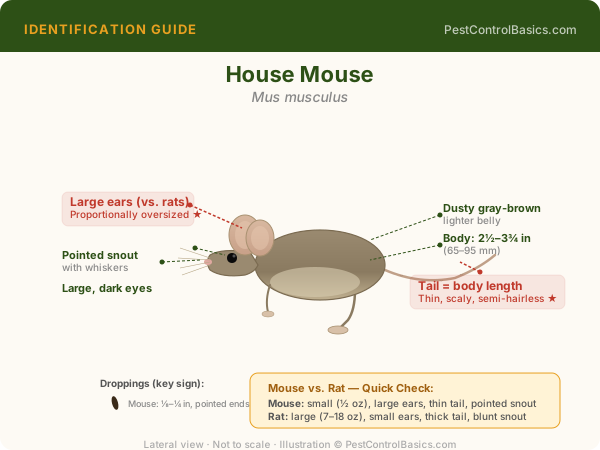
๐Ÿ“ FIELD GUIDE ILLUSTRATION
House mouse (Mus musculus) identification illustration with labeled anatomical features โ€” PestControlBasics.com

Original illustration by PestControlBasics.com. Use anatomical labels above to confirm your identification. For photo references, see the identification section below.

Signs of Infestation

Confirm you have rodents โ€” and which species

Rodents are nocturnal and secretive. By the time most people see one, there are already dozens behind the walls. These are the definitive signs to check for immediately.

Droppings โ€” The #1 Confirmation

Fresh droppings are dark and moist. Old droppings are gray and crumble when touched. Mouse droppings: 1/8 to 1/4 inch, rod-shaped, pointed ends โ€” like a small dark grain of rice. Rat droppings: 1/2 to 3/4 inch, blunt ends โ€” like a dark olive pit. Find droppings along walls, in cabinet corners, under sinks, in pantries, and near any food storage.

Gnaw Marks

Rodents gnaw constantly โ€” their incisors grow continuously and must be worn down. Look for gnawed food packaging, gnawed wood along baseboards and cabinet corners, and gnawed electrical wires. Chewed wiring is a serious fire hazard โ€” any wire damage requires an electrician's inspection.

Runways and Grease Marks

Rats follow the same paths repeatedly, leaving dark grease marks along walls from their oily fur. You'll see dark smudges along baseboards, in gaps under pipes, and at entry points. Mice leave similar but fainter marks. Placing white tissue paper along suspected runways and checking for footprints or grease transfer confirms active travel routes.

โš  Hantavirus โ€” A Real Danger When Cleaning

Hantavirus is carried in mouse droppings, urine, and nesting materials โ€” and becomes airborne when disturbed. Never sweep or vacuum rodent droppings dry. Always: wear gloves and N95 mask, spray droppings with a 1:10 bleach solution and let sit 5 minutes before wiping up with a damp paper towel. Double-bag all waste. Ventilate the area before working in it.

Exclusion โ€” The Only Permanent Solution

Seal the building. This ends the problem forever.

You can trap mice indefinitely โ€” and new ones will continue entering. Exclusion โ€” physically sealing every entry point โ€” is the only treatment that permanently ends a rodent problem. It is also completely DIY-able and inexpensive. A thorough exclusion job costs $50โ€“$200 in materials and a few hours of work.

The rule: mice can enter through any gap 1/4 inch or larger. Rats can enter through any gap 1/2 inch or larger. A mouse can collapse its skull and compress its body to fit through a gap the diameter of a ballpoint pen. If you can see daylight through a gap, a mouse can use it.

๐Ÿšถ
Utility Pipe Penetrations
Gap: Any opening around pipe
Gaps around water pipes, gas lines, electrical conduit where they enter the wall. Seal with steel wool packed tightly + foam sealant over top. Steel wool alone compresses over time.
๐Ÿšช
Door Gaps & Sweeps
Gap: Bottom door clearance
Exterior doors with more than 1/4 inch clearance at the bottom. Install door sweeps with metal reinforcement. Mice can compress under standard rubber sweeps over time.
๐ŸชŸ
Foundation Cracks
Gap: Any crack in concrete
Hairline cracks in block or poured foundations. Fill with hydraulic cement or polyurethane caulk. Check basement walls and window well edges carefully.
๐Ÿ›‰
Dryer Vents & Exhaust
Gap: Around vent housing
Gaps around vent housings where they exit the wall. Also check that vent flaps close properly โ€” mice climb through open flaps. Install rodent-proof vent covers.
๐Ÿ›Œ
Roof & Eave Gaps
Gap: Fascia & soffit gaps
Roof rats (R. rattus) enter through roofline gaps โ€” fascia board gaps, open soffits, and where utility lines enter the attic. Use hardware cloth (1/4 inch mesh) to seal.
๐Ÿ 
Garage Door Sides
Gap: Weatherstripping gaps
Gaps at the sides of garage doors and where the garage meets the house. Install door stops with metal backing. Mice routinely enter homes through garages.
๐Ÿญ Best Exclusion Materials

Steel wool + Great Stuff foam: Pack steel wool in the gap first, then spray foam over it. Steel wool prevents chewing through foam. Hardware cloth (1/4 inch galvanized mesh): For larger openings like crawlspace vents, eave gaps, and foundation openings. Fasten with screws, not staples. Metal door sweeps with steel reinforcement: Standard rubber sweeps are not rodent-proof. Copper mesh: An alternative to steel wool โ€” doesn't rust and packs more easily into irregular gaps.

Trapping Protocol

Trap placement is everything

Rodents travel along walls with their whiskers touching the surface โ€” they rarely cross open spaces. Place traps touching the wall, perpendicular to it with the trigger end facing the wall. This is the most important placement rule most homeowners get wrong.

๐Ÿ˜‘
Classic Snap Trap
Mice & Rats (different sizes)
The original and still the most effective per dollar. Victor and Tomcat are the leading brands. Use the mouse size for mice, rat size for rats โ€” do not substitute. Bait with a pea-sized amount of peanut butter on the trigger. Set perpendicular to wall, trigger side touching the wall surface. Set multiple โ€” mice home range is 30 feet, so set traps every 2โ€“3 feet along active runways.
๐Ÿ’ก Use 12+ traps at once โ€” more is dramatically better than fewer.
๐Ÿ“ธ
Electric Trap (Rat Zapper)
Mice & Rats
Delivers a high-voltage shock that kills instantly. More expensive upfront but reusable and kills cleanly with no mess. Good for households with pets or children where snap traps are a concern. Bait inside with peanut butter. Empty frequently โ€” sensor won't fire if dead rodent is present. Less effective in very cold temperatures (basement/garage).
๐Ÿ’ก Use where snap traps aren't practical โ€” inside cabinets, under sinks.
๐Ÿ“š
T-Rex Rat Trap
Rats
The most powerful mechanical rat snap trap available. Professional-grade. The strike bar speed is 30% faster than standard traps โ€” critical for neophobic rats that test traps before committing. For rats: leave unbaited and un-set for 2โ€“3 days before setting โ€” lets them get comfortable around it before you arm it. Then bait and set.
๐Ÿ’ก The 2-day pre-baiting trick dramatically increases catch rate for rats.
๐Ÿšซ
Rodenticide โ€” Last Resort
Use After Exclusion Only
Anticoagulant baits (brodifacoum, bromadiolone) are effective but have major drawbacks: rodents die inside walls (odor for weeks), secondary poisoning risk to pets and raptors, and no value before exclusion โ€” more rodents just enter. If used, place inside tamper-resistant bait stations only. Never use loose bait where children or pets can access.
โš  Not recommended until all entry points are sealed first.
Product Guide

What to buy and how to use it

๐Ÿงฟ
Snap Trap โ€” Best Value
Victor Easy Set Mouse Trap (M154) โ€” Pack of 12
The strategy: Buy in bulk. Most homeowners use 2โ€“4 traps โ€” professionals use 12โ€“20. The difference in catch rate is dramatic. Set traps every 2โ€“3 feet along walls where droppings are found. Bait with a pea-sized amount of peanut butter (not cheese โ€” that's a myth). Check daily. When catches drop to zero for 7 consecutive days, the active population has been eliminated.
โ˜…โ˜…โ˜…โ˜…โ˜…
Best Value
๐Ÿญ
Exclusion Material โ€” Most Important Purchase
Xcluder Rodent Control Fill Fabric (Stainless Steel Mesh)
What it is: A professional-grade combination of stainless steel mesh and poly fiber โ€” more durable than steel wool, doesn't rust, and fills irregular gaps perfectly. This is what pest control professionals use for exclusion. Pack tightly into every gap around pipes, vents, and foundation penetrations. Combine with foam sealant over the top. One roll covers most homes' exclusion needs.
โ˜…โ˜…โ˜…โ˜…โ˜…
Must Have
๐Ÿ“Œ
Tracking Powder โ€” Find Their Runways
Protecta LP Rat & Mouse Tracking Dust
How it works: Non-toxic fluorescent tracking powder placed in areas where rodents travel. Shine a UV blacklight 24โ€“48 hours later โ€” glowing footprints reveal every runway, harborage area, and entry point you didn't know about. Use before exclusion to identify gaps, then use snap traps along confirmed runways. This single step dramatically improves both trapping efficiency and exclusion thoroughness.
โ˜…โ˜…โ˜…โ˜…โ’ธ
Pro Technique
Prevention

After exclusion โ€” make it permanent

Food Storage

All dry goods in rodent-accessible areas (pantries, garages, basements) should be stored in sealed hard plastic or glass containers. Cardboard boxes and paper bags offer no barrier. Pet food is the #1 food source for residential rodents โ€” store in a sealed bin and do not leave out overnight.

Outdoor Habitat Reduction

Dense groundcover, wood piles, and debris piles within 20 feet of the structure provide nesting habitat and approach corridors. Maintain an 18-inch clear zone of gravel or bare soil around the foundation perimeter. This makes approach visible to predators and removes cover that mice use to reach your foundation walls.

Annual Inspection

Walk the full exterior perimeter every fall before temperatures drop โ€” that's when rodents actively seek winter shelter. Re-inspect and re-seal any gaps that have opened due to settling, weathering, or damage. Check door sweeps for wear. An hour of inspection each fall prevents an entire winter of infestation.

Snap Traps Year-Round

Professional pest control companies often recommend leaving 2โ€“4 snap traps permanently set in low-traffic areas (garage, basement, attic) even after eliminating an active infestation. They serve as monitoring devices โ€” if you catch something, you have a new entry point to find.

โš  Safety: Hantavirus Safety โ€” Never sweep dry droppings. The bleach protocol that eliminates transmission risk.

๐Ÿฐ New: Complete Rodent Control Hub โ€” all species, exclusion guide, hantavirus safety, and trapping protocols in one place.

DG
Derek Giordano
Certified Pest Control Operator ยท Former Business Owner
Derek ran his own pest control company in Florida for several years, servicing thousands of regular customers. All content is based on hands-on field experience and current EPA & university extension guidelines.

Related Resources

๐Ÿ“š Full Pest Library๐Ÿงช DIY vs. Pro Quiz๐Ÿ’ฐ Cost Guide๐ŸŒฟ IPM Guide๐Ÿ” Find a Pro
๐Ÿ”ฎ
Reviewed by Derek GiordanoContent on PestControlBasics.com is developed with input from certified pest management professionals and cross-referenced against EPA, CDC, and university extension guidance. Last reviewed: April 2026.
๐Ÿ“š Sources: CDC Rodent Control ยท EPA Rodenticide Safety
Published: Jan 1, 2025 ยท Updated: Apr 7, 2026

Utility penetrations as the single most important exclusion target

Across residential rodent control, the single most consistent finding during exclusion work is that the gaps around utility penetrations โ€” where pipes, conduits, cables, and vents enter the structure โ€” are the primary entry routes that rodents are using. These gaps exist on essentially every residential structure, they're often hidden behind siding or in mechanical closets where homeowners don't routinely look, and the construction techniques used in original installation rarely include rodent-proof sealing. A new utility installation by a plumber, electrician, or HVAC technician almost always leaves a gap, because their work is focused on the utility function rather than on the building envelope. The implication for rodent exclusion is that any thorough inspection has to include a systematic check of every penetration, including the ones in basements, crawlspaces, attic plates, and inside cabinets where supply lines enter walls. Sealing these gaps with appropriate materials โ€” copper mesh, steel wool, urethane foam over a metal substrate, or commercial rodent exclusion sealant โ€” typically eliminates the majority of entry routes and produces dramatic improvements in long-term rodent activity.

Annual pest control budgets: planning versus reactive spending

Most households treat pest control as an emergency expense rather than a line item, and the resulting spend is almost always higher than what a planned program would have cost. A property that allocates a modest annual budget toward inspections, preventive perimeter work, and one or two scheduled treatments at high-pressure times of year typically spends a fraction of what a comparable property spends on crisis response to a single major infestation. The math is straightforward: a moderate cockroach, rodent, or bed bug job typically costs more than a year of preventive service, and the labor and disruption costs to the household are not trivial either. Building a budget also forces the kind of structured thinking that catches problems early โ€” when a homeowner has already decided to allocate funds, they're more willing to call for an inspection at the first ambiguous sign, rather than waiting until the situation is unambiguous and more expensive. The shift from reactive to planned spending is one of the highest-leverage changes a household can make in this category.

Food source elimination as the primary control lever

Rodent infestation is, more than anything else, a function of available food, and trying to control rodent populations without addressing food sources is consistently less effective than addressing food sources and then dealing with what remains. The food sources homeowners commonly miss include bird seed in feeders and on the ground beneath them, pet food left in bowls overnight, compost without rodent-proof containment, fruit that drops from trees, and stored grain or feed in garages and outbuildings. Indoor food sources include pantry foods in non-rodent-proof packaging, grease accumulated behind stoves, food debris in cabinets and on counters overnight, and trash that's not in a sealed container. The behavioral shift required for rodent control is more demanding than for most pest categories โ€” it requires consistent practice rather than periodic action โ€” but it's the only approach that addresses the root condition rather than just the symptom. A property with consistent food source management supports a much smaller rodent population, and the trapping and exclusion that handle the remainder become tractable rather than overwhelming.

๐Ÿ—บ๏ธ US Distribution โ€” Rodent Control

Common Occasional Not Present
States Present
51
Occasional
0
Primary Region
All 50 states (indoor pest)
๐Ÿ“Š Source: University extension services, USDA, CDC vector data, and published entomological surveys.