The short answer
- Small round holes in the leaves of young plants: flea beetles. Seedlings cut off at the soil line: cutworms.[12][13][3]
- Leaves stripped from the top of the plant, with dark green or black droppings on the leaves or ground below: hornworms.[22][1]
- A hole at the stem end of green fruit leading to a wet cavity full of droppings: tomato fruitworm (also called corn earworm). Small pinholes with dry, shallow burrows: tomato pinworm.[7][6][9]
- Pinpricks on the fruit with pale or yellow, corky spots under the skin: stink bugs or leaffooted bugs.[10][2][20]
- Sticky leaves, black sooty mold, or curled leaves: aphids or whiteflies. Fine pale speckling with webbing underneath: spider mites. Greasy, bronze lower stems and leaves: tomato russet mite.[3][11][16]
- Yellowed or purplish, curled new growth and lots of very small fruit: potato (tomato) psyllid.[18][19]
- Hand-pick large pests, protect natural enemies, and use an insecticide only when a pest is actually doing damage. Check the label for tomatoes and the days-to-harvest interval before spraying.[1][4]
Tomato pest profiles
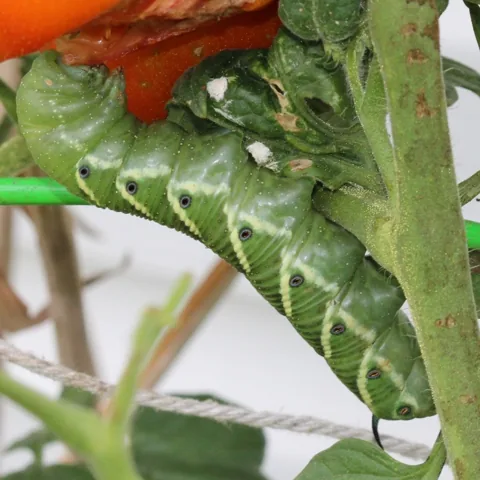 Tomato Hornworm
Manduca quinquemaculata
The tomato hornworm is one of the largest caterpillars in the vegetable garden, up to about 4 inches long, with a horn at its rear end. It chews leaves and fruit of tomato and related plants and can defoliate them quickly.
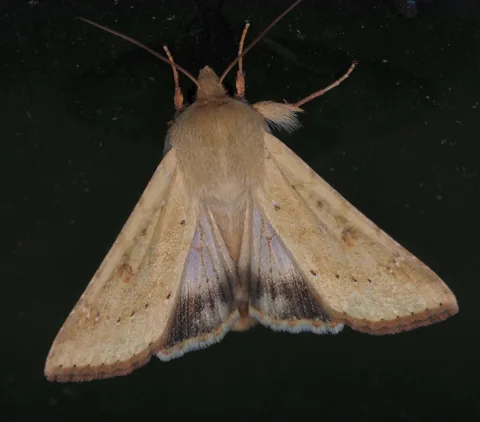 Corn Earworm (Tomato Fruitworm)
Helicoverpa zea
The corn earworm is the caterpillar usually found feeding at the tip of a sweet corn ear. The same species is called the tomato fruitworm when it bores into tomatoes, and the cotton bollworm in cotton, and it also feeds on peppers, beans, lettuce, okra, eggplant and other crops.
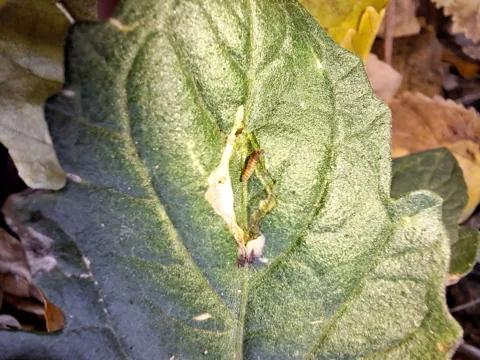 Tomato Pinworm
Keiferia lycopersicella
Tomato pinworm caterpillars mine tomato leaves, hide in folded leaves, then bore into the fruit near the stem, leaving a pinhole ringed with dark frass.
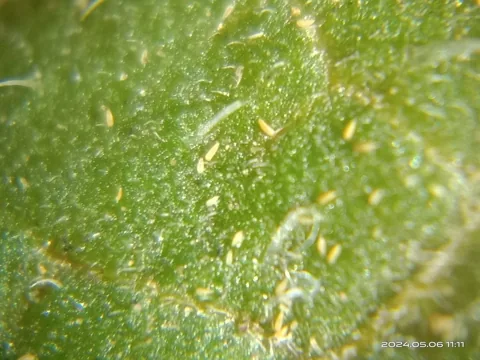 Tomato Russet Mite
Aculops lycopersici
The tomato russet mite is a microscopic, cone- or cigar-shaped yellowish to pink mite that makes tomato stems and leaves look greasy, then bronzed and dry, starting at the bottom of the plant and moving up.
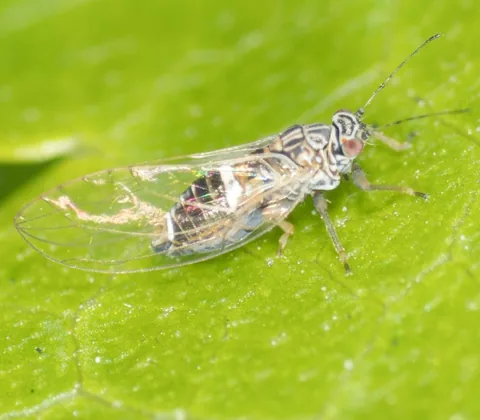 Potato/Tomato Psyllid
Bactericera cockerelli
The potato/tomato psyllid is the most damaging insect of tomatoes and potatoes in Colorado, mostly through its toxic saliva.
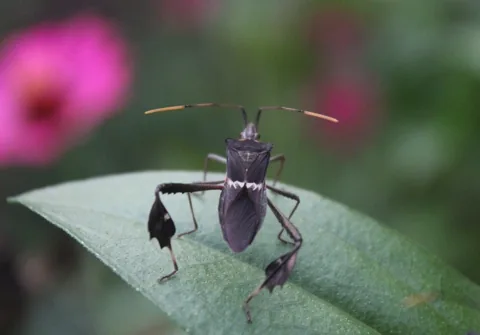 Leaffooted Bug
Leptoglossus zonatus
Leaffooted bugs are medium to large sap-feeding bugs named for the small leaf-like flaps on their hind legs. They pierce fruits, vegetables and nuts to feed, especially on the seeds, and gardeners most often find them on tomatoes and pomegranates.
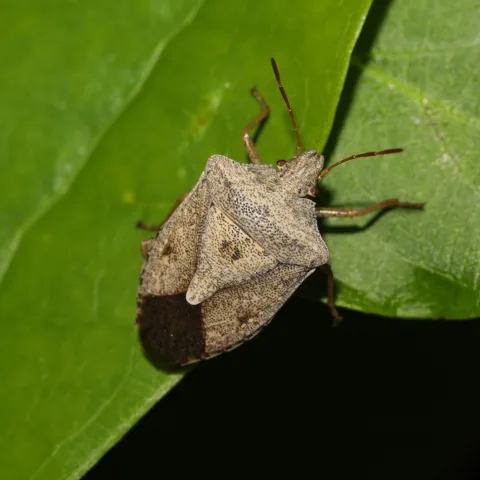 Brown Stink Bug
Euschistus servus
The brown stink bug is a native stink bug and often the first one to show up in Southern vegetable gardens, where it feeds on tomatoes, green beans and other crops. On farms it is a damaging pest of corn, cotton and soybeans, especially in the southeastern United States.
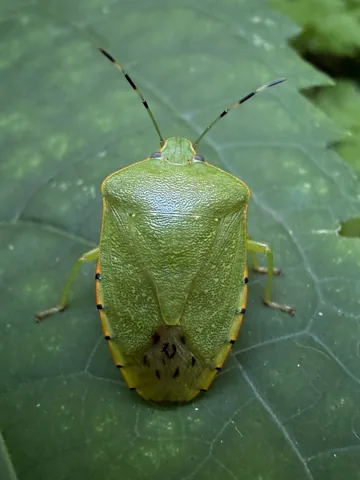 Green Stink Bugs
Chinavia hilaris (green stink bug) and Nezara viridula (southern green stink bug)
Two bright green stink bugs damage gardens and orchards in the U.S.: the green stink bug, a native of North America that feeds on a wide range of crops, and the southern green stink bug, one of the three most abundant stink bug pests in a North Florida tomato study. Both suck juices from developing fruit, seeds and shoots.
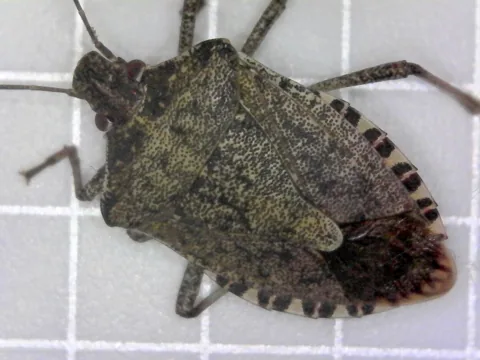 Brown Marmorated Stink Bug
Halyomorpha halys
The brown marmorated stink bug is an invasive insect from east Asia that damages fruit and vegetable crops and invades homes in fall looking for overwintering sites. Minnesota Extension says it feeds on about 200 plant species and, unlike the native stink bugs there, prefers to spend the winter in homes. Clemson notes that the bugs gather on outside walls before they move in.
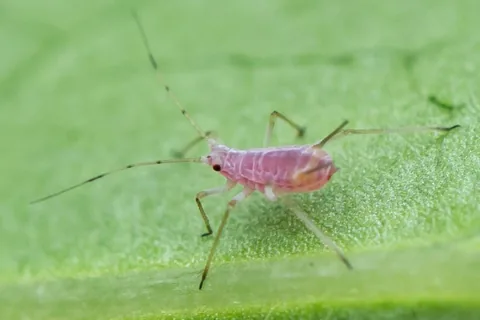 Potato Aphid
Macrosiphum euphorbiae
Potato aphids are common in home vegetable gardens, feeding on tomato, potato and many other crops and weeds.
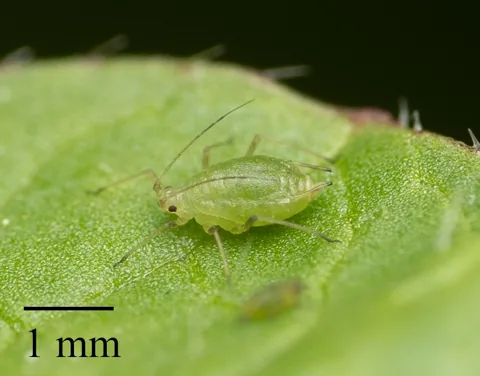 Green Peach Aphid
Myzus persicae
The green peach aphid is a small, pale green to yellowish aphid that overwinters on peach and other Prunus trees and spreads in summer to hundreds of vegetables, flowers and weeds. It carries many plant viruses and builds up so fast that it is a major greenhouse pest.
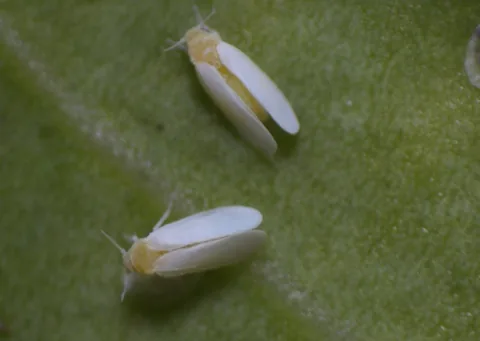 Silverleaf Whitefly
Bemisia tabaci (the B biotype is also called Bemisia argentifolii)
The silverleaf whitefly, also called the sweetpotato whitefly, is a tiny yellowish whitefly that can feed on more than 500 kinds of plants, from ornamentals to warm-season vegetables, weakening plants, coating leaves with honeydew and sooty mold, and spreading plant viruses.
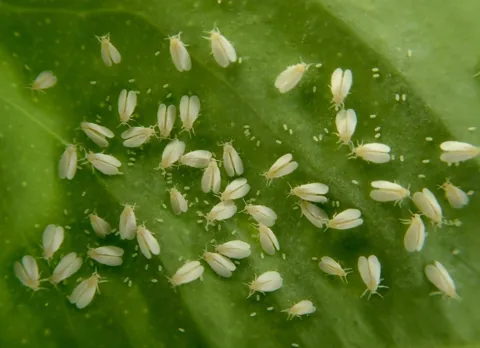 Whiteflies
Trialeurodes vaporariorum
Whiteflies are tiny sap-sucking insects that build large colonies on leaf undersides, especially in warm weather. Outbreaks usually follow disruption of their natural enemies, and heavy infestations are hard to control, so prevention matters most.
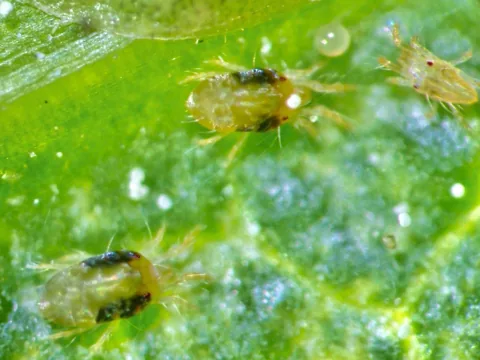 Spider Mites
Tetranychus urticae
Spider mites are tiny arachnids, relatives of spiders and ticks, that live in colonies on leaf undersides and suck out plant cells. The twospotted spider mite is the most important species in yards and gardens and on house plants, and Minnesota says it can infest over 200 species of plants.
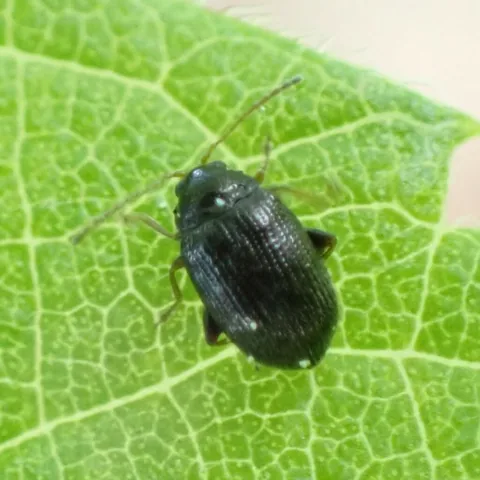 Potato flea beetle
Epitrix cucumeris
When eggplant, tomatoes or potatoes in the Northeast come up looking like they were hit with birdshot, the potato flea beetle is usually the one responsible. It overwinters in the leaf litter at the field edge, feeds on horse nettle and pokeweed in early spring, then moves into the crop and stays until August, with a second flush of summer adults from mid July to mid August. Potatoes and tomatoes often grow fast enough to outrun it; slow-starting eggplant seedlings do not, which is why UMass sets a threshold of just two beetles per newly set transplant.
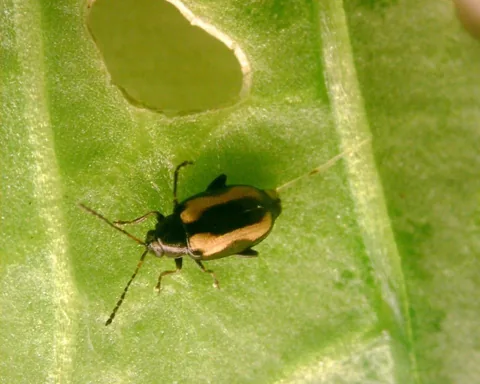 Flea Beetles
Phyllotreta striolata
Flea beetles are tiny, shiny beetles with enlarged hind legs that jump like fleas when disturbed. Adults chew small holes and pits in the leaves of radishes, cabbage and other crucifers, eggplant, potatoes, tomatoes and many other vegetables, and they do the most harm to seedlings in spring.
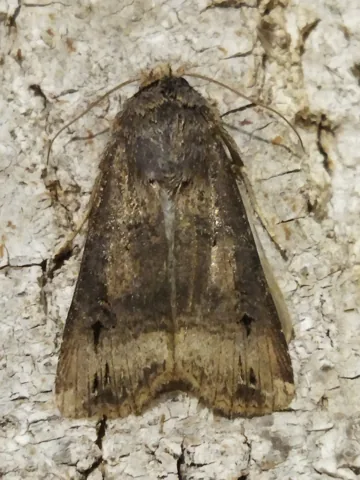 Cutworms
Several moth species, e.g., black cutworm (Agrotis ipsilon)
Cutworm is a general name for the caterpillars of dozens of moth species. They earned the name by cutting off young plants at or just below the soil line, and seedlings and fresh transplants suffer most.
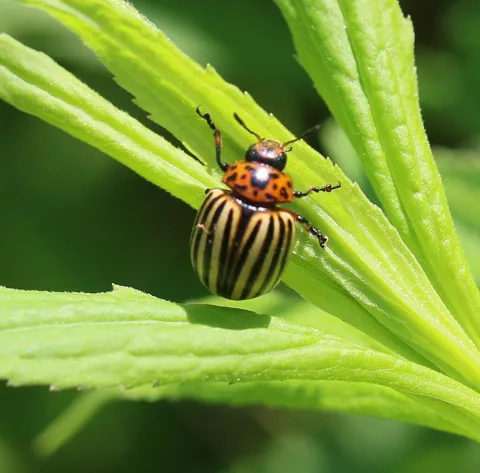 Colorado Potato Beetle
Leptinotarsa decemlineata
The Colorado potato beetle, the black and yellow-striped 'potato bug' of home gardens, is the most serious insect pest of potatoes. Adults and larvae eat the leaves of potatoes, eggplant and tomatoes and can strip plants completely.
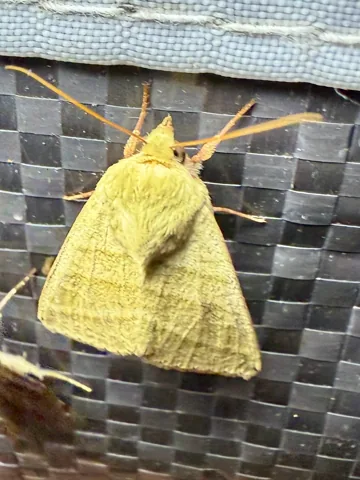 Tobacco Budworm
Chloridea virescens
Tobacco budworm caterpillars, also called geranium budworms, feed on the buds and petals of geranium, petunia, nicotiana and other garden flowers.
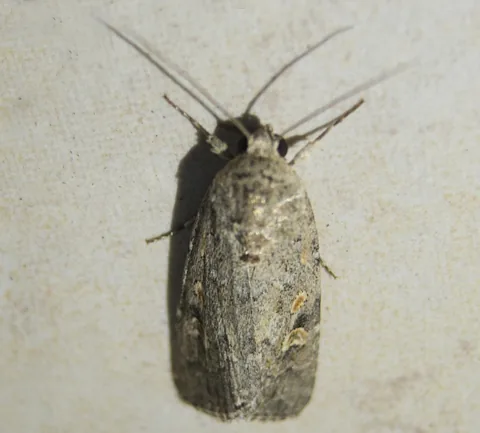 Beet Armyworm
Spodoptera exigua
Beet armyworm caterpillars hatch in groups from cottony egg masses, feed together near the egg cluster, then spread out; older larvae chew leaves and bore into fruit and lettuce heads.
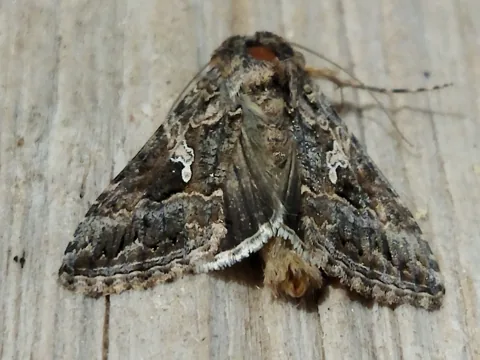 Cabbage Looper
Trichoplusia ni
The cabbage looper is the caterpillar of a gray-brown moth that flies mainly at night. It chews ragged holes in cabbage-family crops and many other vegetables and flowers, and it crawls by looping its body like an inchworm.
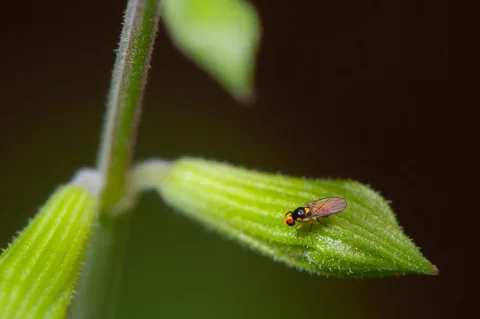 Vegetable Leafminer
Liriomyza sativae
The vegetable leafminer is a tiny fly whose maggots tunnel winding mines through the leaves of tomatoes, melons, beans and many other vegetables. It is native to the Americas and has spread to Africa, Asia and Oceania.
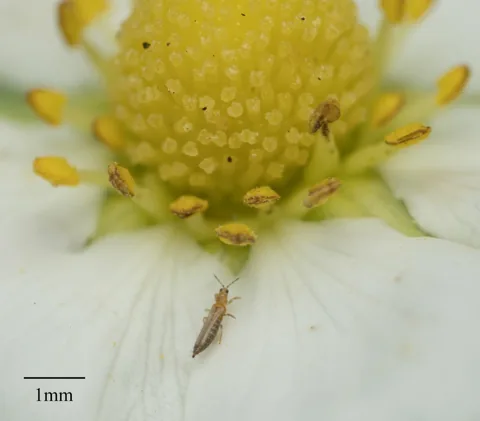 Western Flower Thrips
Frankliniella occidentalis
Western flower thrips are slender yellow to dark brown insects, about 1/16 inch long or smaller, that feed in flowers and buds and on fruit and leaves. Their feeding leaves silvery or pale scars and distorted growth, and they spread tospoviruses such as tomato spotted wilt and impatiens necrotic spot.
Damage key: what you see and what usually causes it
Start with where the damage is (seedling, leaves, stems or fruit) and what it looks like. More than one pest can be present, so confirm by finding the insect itself.[3][1]
- Tiny round holes in leaves, giving them a sieve-like look, mostly on seedlings and new transplants: flea beetles. UC IPM says flea beetle adults are 0.06 to 0.12 inch (1.5 to 3 mm) long and jump like fleas when disturbed.[12][3]
- Young plants cut off at or near the soil line overnight: cutworms. They hide in the soil or under debris by day; later in the season they also eat irregular holes in fruit touching the ground.[13][3]
- Leaves and stems stripped, often from the top down, with dark droppings below; occasionally large, open scars on the fruit surface: hornworms.[22][1][3]
- Leaves and growing tips eaten by rounded, striped beetles or their larvae: Colorado potato beetle, usually on newly set plants.[2][3]
- A hole near the stem end of green fruit and a messy, watery cavity with cast skins and droppings inside: tomato fruitworm.[7][6][1]
- Neat holes in the fruit surface with shallow, dry scars and usually no droppings: armyworms, according to UC IPM's damage guide.[6]
- Pinholes in fruit, usually entering through the calyx, with dry burrows that stay near the surface, plus blotch mines or folded leaves: tomato pinworm.[9][3]
- Dark pinpricks on fruit, each with a light, discolored area that stays yellow or light green when the fruit ripens, and corky tissue underneath: stink bugs. Leaffooted bugs cause similar damage.[10][2][21]
- Sticky, shiny leaves, black sooty mold, and curled or distorted new growth: aphids. If tiny white insects fly up when you shake the plant, whiteflies.[3][14][11]
- Fine pale stippling that turns leaves silvery, then pale; fine webbing on the undersides in heavy infestations, especially in hot, dry weather: twospotted spider mites.[3][23][1]
- Lower stems and leaves that look greasy, then dry out and turn bronze or russet, with the damage moving up the plant: tomato russet mite.[16][15][17]
- New growth that is yellowed or slightly purple, small and curled, plants stunted, and fruit that stays small and dull: psyllid yellows from potato (tomato) psyllid feeding.[18][19]
- Distorted, silvery leaves: thrips. NC State notes western flower thrips spread tomato spotted wilt virus.[3]
- Winding, threadlike trails in leaves: leafminers (vegetable leafminer larvae, up to 1/8 inch long, per NC State).[3]
When it isn't an insect
Several common tomato problems look like pest damage but are not. UC IPM lists blossom end rot, fruit cracks, sunscald and physiological leaf roll as environmental disorders of tomato, along with a long list of diseases such as early blight, Fusarium wilt and tomato spotted wilt.[5]
Insects can make those problems worse. Kentucky Extension notes that heavy aphid feeding can reduce leaf area and increase sunscald on fruit, and UC IPM says russet mite defoliation can expose fruit to sunburn. Penn State points out that wounds from insects and other injuries give disease organisms a way into the plant.[2][16][4]
Seedlings and new transplants
Flea beetles: Kentucky says they can be serious early in the season while plants are less than 4 to 6 inches tall, and that larger plants can withstand substantial feeding without yield loss. UC IPM puts the risk at plants younger than the 4- to 5-leaf stage, especially in hot, windy weather, and says treatment is not usually needed once plants have more than 4 true leaves. See our flea beetle guide.[2][12]
Cutworms: NC State describes fat gray, brown or black caterpillars 1 5/8 to 2 inches long when grown; UC IPM says most species reach 1 to 2 inches and curl up when disturbed. Damage is usually patchy, so UC IPM suggests treating or replanting only the affected areas. Our cutworm guide covers collars and other controls.[3][13]
Colorado potato beetle: Kentucky calls it an infrequent pest of newly set tomatoes, and says that once plants reach eight inches, beetle feeding does not reduce fruit yield however bad it looks. Size estimates vary: about half an inch (Kentucky) or up to 9/16 inch (NC State). See our Colorado potato beetle guide.[2][3]
Leaf-eating caterpillars: hornworms and others
Hornworms are the big green caterpillars with a horn on the rear end. The tomato hornworm has eight V-shaped marks on each side; the tobacco hornworm, which also feeds on tomato, has seven diagonal stripes. Clemson gives a full-grown length of 3 to 3 1/2 inches, NC State up to 3 1/2 inches, and Minnesota up to four inches.[1][3][22]
They blend in well, so the first clue is often missing leaves and the droppings underneath. Hornworms carrying small white cocoons on their backs have been parasitized by braconid wasps and have stopped feeding; Clemson, Penn State and Minnesota all advise leaving them so the wasps can emerge. Our tomato hornworm guide covers hand-picking and sprays.[22][1][4]
Cabbage loopers (pale green caterpillars named for their looping motion as they crawl) also chew tomato leaves. Kentucky says they rarely cause serious damage because they feed on foliage rather than fruit.[2]
Sap feeders: aphids, whiteflies and spider mites
Aphids: the potato aphid and green peach aphid are the two common on tomatoes in Kentucky. Potato aphids may be solid pink, green and pink mottled, or light green with a dark stripe, and are about 1/8 inch long. Kentucky says tomatoes can tolerate large numbers without yield loss, and UC IPM notes that lady beetles, lacewing larvae, syrphid larvae and parasites often bring them under control. See our aphid guide.[2][1][14]
Whiteflies: UC IPM describes adults as tiny (0.06 inch, 1.5 mm) yellowish insects with white wings, found mostly on leaf undersides. Feeding yellows and curls leaves, honeydew leads to sooty mold, and silverleaf (sweetpotato) whitefly can cause uneven ripening and spreads tomato yellow leaf curl virus. See our whitefly guide.[11][1]
Twospotted spider mites: NC State says females are about 1/64 inch long, so a hand lens helps. Clemson notes infestations usually start on the lower leaf surface, and Minnesota says outbreaks are most common in hot, dry summer weather. Check transplants before you buy them. See our spider mite guide.[3][1][23]
Fruit damage: stink bugs and leaffooted bugs
Stink bugs are shield-shaped and give off an odor when handled. Kentucky names the brown stink bug as the most serious species on tomato there; in California, UC IPM says the consperse stink bug is the most common statewide. Adults often move in from weedy areas when tomato plants start to decline.[2][10]
The damage is mostly to appearance, but Kentucky says the whitish-yellow corky spots under the skin make fruit unmarketable, and UC IPM adds that stink bugs can carry yeasts into the fruit that cause decay. A sign they are present is their brown liquid droppings, which dry into spots 0.06 to 0.12 inch across on leaves and fruit. See our stink bug guide.[2][10]
Tomato fruitworm (corn earworm)
The tomato fruitworm (Helicoverpa zea) is the same insect as the corn earworm and cotton bollworm. Clemson calls it the most damaging tomato insect pest in South Carolina, and Kentucky says it is potentially the most damaging tomato insect pest.[1][2][7]
Larvae vary from pale yellow or green to red, brown or nearly black, with pale stripes along the body. Clemson gives a full-grown length of about 1 1/2 inches; NC State says up to 1 3/4 inches. Their skin is covered with tiny spines that make it feel rough (Kentucky).[1][3][2][7]
Moths lay single eggs on the leaves, usually near flowers or fruit. The eggs are creamy white and develop a reddish-brown band before hatching. Young larvae enter green fruit at the stem end; UC IPM says they go into fruit 0.75 to 2 inches in diameter, and one larva may damage several fruits as it moves.[1][7][2]
Timing matters with this pest. Kentucky notes early generations attack silking corn, and tomatoes become the preferred egg-laying site once the corn silks turn brown and dry. UC IPM says damaging populations rarely occur before August in California.[2]
Control has to reach the larva before it gets inside the fruit, where sprays can't reach it. UC IPM recommends checking leaves for eggs and treating at hatch. Egg parasites (Trichogramma wasps) turn eggs black, and UC IPM advises checking for them before deciding to spray. UC IPM lists Bacillus thuringiensis and spinosad as acceptable for organic growers.[7][1]
Full profile: corn earworm (tomato fruitworm). Tobacco budworm looks very similar; NC State says mature budworms are somewhat smaller and more slender.[3]
Tomato russet mite
Tomato russet mites (Aculops lycopersici) are about 1/5 mm long, so you need at least a 14X hand lens to see them, and they usually go unnoticed until plants are damaged. They are conical, and yellowish, tan or pink.[16][15][17]
Damage starts near the ground and moves up the plant. Stems and leaves first look greasy, then dry out and turn bronze or russet; leaves may curl, yellow and fall. Fruit can develop cracks and bronzing. Untreated, the mites can kill plants. Damage is most likely in hot, dry weather, and UC IPM says it first shows mid- to late summer when plants are half-grown or larger.[16][15][17]
To confirm it, check the damaged leaves and the green leaves just above them, where UC IPM says hundreds of mites may be found. Don't confuse them with spider mites, which are rounder and larger, usually have two spots and often make webbing.[15][16]
UC IPM says sulfur dust and wettable sulfur are both effective, and Utah State lists sulfur and abamectin. Keep tomatoes away from petunias, potatoes and other nightshade-family plants that also host the mite, remove nightshade and morning glory weeds, and clean tools after working on infested plants. Utah State says the mites overwinter as adults in crop debris.[16][15][17]
Potato psyllid (tomato psyllid)
The potato or tomato psyllid (Bactericera cockerelli) is a tiny insect that looks like a miniature cicada, with white bands and stripes on a dark body, and jumps when disturbed. UC IPM gives the adult length as about 0.12 inch (3 mm); Colorado State says about 2 mm, the size of an aphid.[18][19]
The damage comes from toxic saliva, not from the sap the insects remove. The result, called psyllid yellows, shows as yellowing or slight purpling and curling of new growth, stunted plants, and either no fruit or many very small fruit. UC IPM says it can kill transplants. Colorado State adds that affected fruit is smaller, duller and less flavorful. A bacterium (Candidatus Liberibacter solanacearum) that the psyllid carries has also been associated with these symptoms in tomato.[19][18]
Look on the undersides of lower leaves for flat, oval, yellowish to green nymphs. They are easy to mistake for whitefly nymphs, but UC IPM says older psyllid nymphs have a hairy fringe and wing buds and will move if disturbed. Colorado State says their wax-covered excrement collects on leaves under the nymphs and looks like granulated salt or sugar ("psyllid sugar"), a very useful sign of an infestation.[18][19]
Colorado State calls it the most damaging insect of potatoes and tomatoes in that state, where it does not survive winter outdoors and arrives each year, usually in May or early June, from Texas and northern Mexico. Nymphs develop in 2 to 3 weeks, and Colorado State says four or more generations can occur in a season.[19][18]
Colorado State names spinosad as the most commonly available effective insecticide for gardeners, and says horticultural oils give some control of nymphs; both need thorough coverage of leaf undersides and repeat applications in outbreaks. UC IPM warns that carbaryl and other carbamates make psyllid problems worse, so avoid them where psyllids are present. Minute pirate bugs and damsel bugs are the most important predators (Colorado State).[19][18]
Leaffooted bugs
Leaffooted bugs are long, narrow brown bugs named for the flattened, leaf-like expansions on their hind legs. Sizes reported: about 13/16 inch (Clemson), about 3/4 inch (Texas A&M), and 0.75 to 1 inch for the three western Leptoglossus species (UC IPM). Nymphs are orange to reddish with dark legs and often feed in groups.[1][21][20]
UC IPM says Leptoglossus zonatus is the species gardeners most often report on tomatoes in California; Clemson names Leptoglossus phyllopus in the Southeast. Feeding on small tomatoes can make them drop, feeding on medium fruit leaves depressions or discolored spots, and on mature fruit UC IPM calls the slight surface discoloration no concern for home gardeners. Texas A&M describes the damage as similar to stink bug damage.[20][1][21]
Eggs are brown and laid end to end in a string along a stem or leaf midrib, usually 10-15 per mass (UC IPM). For gardens, UC IPM recommends checking plants often, hand-picking or brushing bugs into soapy water (wear gloves for the smell), and keeping nearby weedy areas mowed. Row covers keep them off but must go on before the bugs arrive.[20]
Don't kill assassin bug nymphs by mistake: UC IPM says young leaffooted bugs can be confused with nymphs of this beneficial predator, which have light-colored legs and antennae.[20]
Managing tomato pests in a home garden
Clemson and Penn State give the same basic advice: plant in well-prepared, fertile, mulched beds and water properly, because stressed plants tend to attract more pests. Hand-pick large pests such as hornworms. Natural enemies help control aphids, leafminers and hornworms, so use insecticides only when necessary.[1][4]
Check plants regularly from transplanting on. Seedling pests (flea beetles, cutworms) matter for the first few weeks; fruit feeders (fruitworms, stink bugs, leaffooted bugs) matter from fruit set to harvest, which is how Kentucky's tomato guide splits the season.[2][12][13]
If you do spray, match the product to the pest. Clemson lists insecticidal soap for aphids, whiteflies and spider mites; spinosad for caterpillars and thrips; and pyrethrins for aphids and caterpillars. UC IPM lists Bt (Bacillus thuringiensis) for fruitworms, hornworms and cutworms, and Minnesota notes small caterpillars are easier to kill than large ones. UC IPM lists sulfur for russet mites. Clemson notes that permethrin should not be used on tomato varieties whose fruit is less than one inch across.[1][7][8][13][22][16]
Clemson lists a pre-harvest interval (PHI) for each product: the number of days to wait between spraying and picking. Check it on the label before you spray ripening fruit. Go easy on broad-spectrum sprays: UC IPM warns that pyrethroids destroy the parasites that keep leafminers in check, and that carbamates promote psyllid populations.[1][10][18]
Common questions
- What is eating my tomato leaves overnight?
- If large sections of leaves are gone and there are dark green or black droppings below, look for hornworms; they blend in with the foliage. If seedlings are cut off at the base, it's cutworms. Tiny round holes are flea beetles.[22][13][12]
- What makes holes in green tomatoes?
- Most often the tomato fruitworm, which enters at the stem end and leaves a wet cavity with droppings. Armyworms leave neater, shallow dry holes, cutworms feed on fruit touching the ground, and tomato pinworm leaves pinholes.[6][7][9]
- Why do my tomatoes have cloudy or yellow spots under the skin?
- That is usually stink bug or leaffooted bug feeding: a pinprick with a pale or yellow area around it and corky tissue under the skin. UC IPM says light discoloration from leaffooted bugs on mature fruit is no concern for home gardeners.[2][10][20]
- Why are my tomato stems turning bronze?
- Greasy, then bronze lower stems and leaves, with the damage moving up the plant, point to tomato russet mite, especially in hot, dry weather. You need a 14X hand lens to see the mites.[16][17]
- Why is the top of my tomato plant yellow and curled with tiny fruit?
- Potato (tomato) psyllid is one likely cause: its toxic saliva produces psyllid yellows. Look for flat nymphs and sugar-like granules under the lower leaves before you treat.[18][19]
Photo credits
- Tomato Hornworm: (c) adam1420, some rights reserved (CC BY) — via iNaturalist, CC BY 4.0
- Corn Earworm (Tomato Fruitworm): (c) Rosario Douglas, some rights reserved (CC BY) — via iNaturalist, CC BY 4.0
- Tomato Pinworm: (c) cigazze, some rights reserved (CC BY) — via iNaturalist, CC BY 4.0
- Tomato Russet Mite: 余世文, public domain (CC0), via iNaturalist
- Potato/Tomato Psyllid: Jesse Rorabaugh, public domain (CC0), via iNaturalist
- Leaffooted Bug: (c) Ricard Busquets Reverte, some rights reserved (CC BY) — via iNaturalist, CC BY 4.0
- Brown Stink Bug: (c) Adrienne van den Beemt, some rights reserved (CC BY) — via iNaturalist, CC BY 4.0
- Green Stink Bugs: (c) Marc-Olivier Beausoleil, some rights reserved (CC BY) — via iNaturalist, CC BY 4.0
- Brown Marmorated Stink Bug: (c) Stan Rullman, some rights reserved (CC BY) — via iNaturalist, CC BY 4.0
- Potato Aphid: (c) Bill Keim, some rights reserved (CC BY) — via iNaturalist, CC BY 4.0
- Green Peach Aphid: Jesse Rorabaugh, public domain (CC0), via iNaturalist
- Silverleaf Whitefly: (c) Mike Bowie, some rights reserved (CC BY) — via iNaturalist, CC BY 4.0
- Whiteflies: (c) Mike Bowie, some rights reserved (CC BY) — via iNaturalist, CC BY 4.0
- Spider Mites: (c) Mike Bowie, some rights reserved (CC BY) — via iNaturalist, CC BY 4.0
- Potato flea beetle: (c) Cecil Smith, some rights reserved (CC BY) — via iNaturalist, CC BY 4.0
- Flea Beetles: 螯蝦, public domain (CC0), via iNaturalist
- Cutworms: (c) SteveM4560, some rights reserved (CC BY) — via iNaturalist, CC BY 4.0
- Colorado Potato Beetle: (c) Barry Cottam, some rights reserved (CC BY) — via iNaturalist, CC BY 4.0
- Tobacco Budworm: (c) Jane Weeden, some rights reserved (CC BY) — via iNaturalist, CC BY 4.0
- Beet Armyworm: (c) katunchik, some rights reserved (CC BY) — via iNaturalist, CC BY 4.0
- Cabbage Looper: (c) SteveM4560, some rights reserved (CC BY) — via iNaturalist, CC BY 4.0
- Vegetable Leafminer: (c) Federico Figueroa Cabezas, some rights reserved (CC BY) — via iNaturalist, CC BY 4.0
- Western Flower Thrips: Jesse Rorabaugh, public domain (CC0), via iNaturalist
Sources
- Clemson Cooperative Extension Home & Garden Information Center, “Tomato Insect Pests (HGIC 2218, updated May 23, 2025).” hgic.clemson.edu/factsheet/tomato-insect-pests/ (accessed 2026-11-10)
- University of Kentucky Entomology, “Tomato Insect IPM Guidelines, ENTFACT-313 (revised 11/19).” entomology.ca.uky.edu/files/ef313.pdf (accessed 2026-11-10)
- NC State Extension Publications, “Pests of Tomato.” content.ces.ncsu.edu/publication/pests-of-tomato (accessed 2026-11-10)
- Penn State Extension, “Tomato Insect Pests in the Home Garden.” extension.psu.edu/tomato-insect-pests-in-the-home-garden (accessed 2026-11-10)
- University of California Statewide IPM Program, “Tomato (Home and Landscape): pests and disorders.” ipm.ucanr.edu/home-and-landscape/tomato/ (accessed 2026-11-10)
- University of California Statewide IPM Program, “Tomato Pest Management Guidelines: Distinguishing Armyworm, Cutworm, and Fruitworm Damage.” ipm.ucanr.edu/agriculture/tomato/invertebrates-distinguishing-armyworm-cutworm-and-fruitworm-damage/ (accessed 2026-11-10)
- University of California Statewide IPM Program, “Tomato Pest Management Guidelines: Tomato Fruitworm.” ipm.ucanr.edu/agriculture/tomato/tomato-fruitworm/ (accessed 2026-11-10)
- University of California Statewide IPM Program, “Tomato Pest Management Guidelines: Hornworms.” ipm.ucanr.edu/agriculture/tomato/hornworms/ (accessed 2026-11-10)
- University of California Statewide IPM Program, “Tomato Pest Management Guidelines: Tomato Pinworm.” ipm.ucanr.edu/agriculture/tomato/tomato-pinworm/ (accessed 2026-11-10)
- University of California Statewide IPM Program, “Tomato Pest Management Guidelines: Stink Bugs.” ipm.ucanr.edu/agriculture/tomato/stink-bugs/ (accessed 2026-11-10)
- University of California Statewide IPM Program, “Tomato Pest Management Guidelines: Whiteflies.” ipm.ucanr.edu/agriculture/tomato/whiteflies/ (accessed 2026-11-10)
- University of California Statewide IPM Program, “Tomato Pest Management Guidelines: Flea Beetles.” ipm.ucanr.edu/agriculture/tomato/flea-beetles/ (accessed 2026-11-10)
- University of California Statewide IPM Program, “Tomato Pest Management Guidelines: Cutworms.” ipm.ucanr.edu/agriculture/tomato/cutworms/ (accessed 2026-11-10)
- University of California Statewide IPM Program, “Tomato Pest Management Guidelines: Potato Aphid.” ipm.ucanr.edu/agriculture/tomato/potato-aphid/ (accessed 2026-11-10)
- University of California Statewide IPM Program, “Tomato Pest Management Guidelines: Tomato Russet Mite.” ipm.ucanr.edu/agriculture/tomato/tomato-russet-mite/ (accessed 2026-11-10)
- University of California Statewide IPM Program, “Tomato Russet Mite (Home and Landscape).” ipm.ucanr.edu/home-and-landscape/tomato-russet-mite/ (accessed 2026-11-10)
- Utah State University Extension, Utah Plant Pest Diagnostic Lab and IPM Program, “Tomato Russet Mite.” extension.usu.edu/planthealth/ipm/notes_ag/veg-tomato-russet-mite.php (accessed 2026-11-10)
- University of California Statewide IPM Program, “Tomato Pest Management Guidelines: Tomato Psyllid (Potato Psyllid).” ipm.ucanr.edu/agriculture/tomato/tomato-potato-psyllid/ (accessed 2026-11-10)
- Colorado State University Extension, “Potato or Tomato Psyllids.” extension.colostate.edu/resource/potato-or-tomato-psyllids/ (accessed 2026-11-10)
- University of California Statewide IPM Program, “Leaffooted Bug (Pest Notes).” ipm.ucanr.edu/home-and-landscape/leaffooted-bug/ (accessed 2026-11-10)
- Texas A&M AgriLife Extension, via Internet Archive, “Leaffooted Bug, Field Guide to Common Texas Insects (archived April 11, 2026).” web.archive.org/web/20260411114732/texasinsects.tamu.edu/leaffooted-bug/ (accessed 2026-11-10)
- University of Minnesota Extension, “Tomato hornworms in home gardens.” extension.umn.edu/yard-and-garden-insects/tomato-hornworms (accessed 2026-11-10)
- University of Minnesota Extension, “Spider mites.” extension.umn.edu/yard-and-garden-insects/spider-mites (accessed 2026-11-10)