🐜
Ants
10 species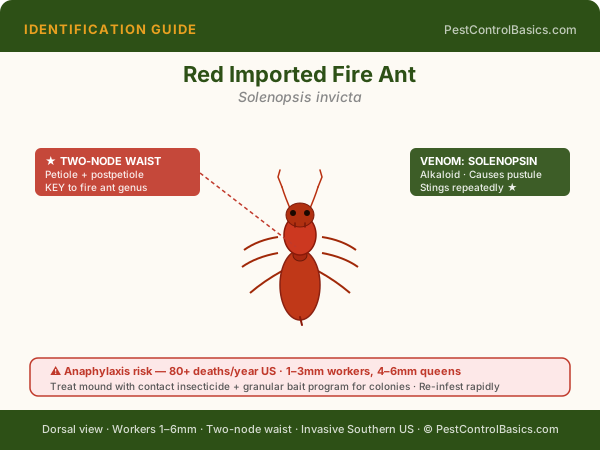
Red Imported Fire Ant
Solenopsis invicta
South America's most destructive ant export. 320M acres infested across 14 states. Dome mounds with no hole on top. Venomous sting forms white pustule in 24hrs. The Two-Step Method is the pro standard.
High Risk✓ Full Profile
→
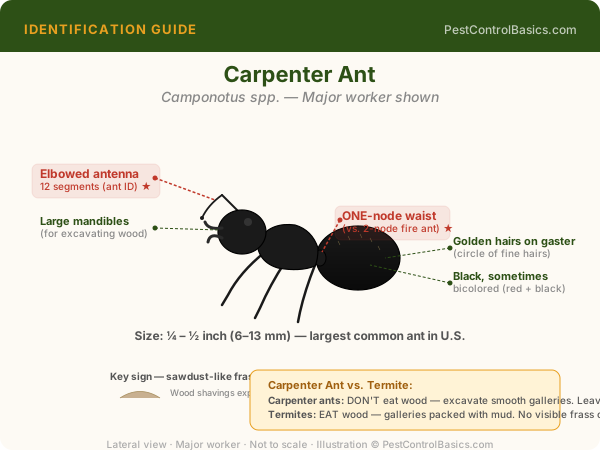
Carpenter Ant
Camponotus pennsylvanicus
Largest ant in N. America — up to 1 inch. Tunnels through moist wood, creating smooth galleries. Always indicates a moisture problem. Find the water leak first, then the colony. Night tracking with red flashlight.
Structural✓ Full Profile
→
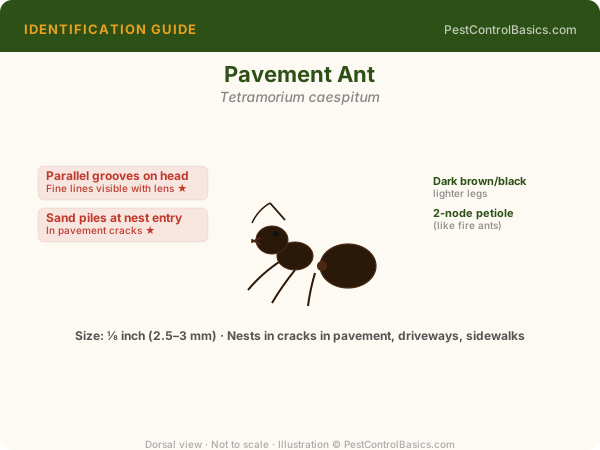
Pavement Ant
Tetramorium caespitum
Classic driveway ant — pushes sandy mounds through sidewalk cracks. 1/8 inch, dark brown. One of the most common home-invading ants in the Northeast and Midwest. Gel bait or perimeter treatment.
Low Risk✓ Ant Guide
→
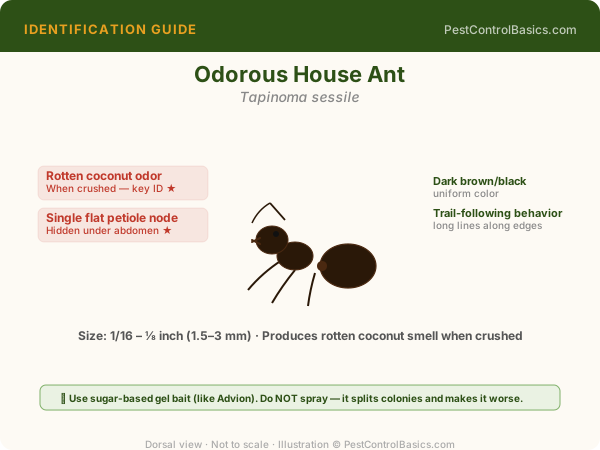
Odorous House Ant
Tapinoma sessile
Smells like rotten coconut when crushed — the best ID trick. Forms long foraging trails through kitchens. One of the most common indoor ants nationwide. Gel bait only — sprays cause colony splitting.
Nuisance✓ Ant Guide
→
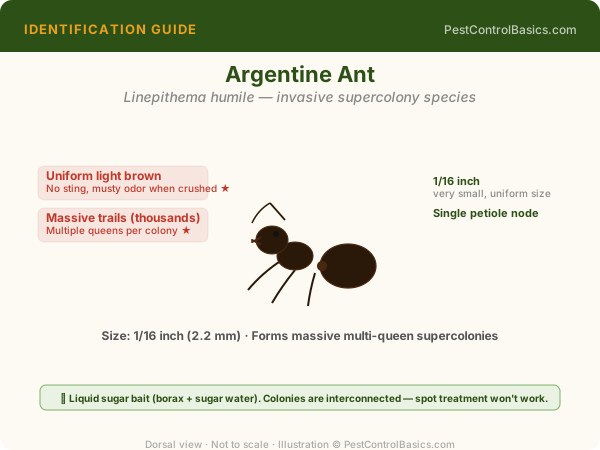
Argentine Ant
Linepithema humile
Supercolony with millions of workers — dominates coastal California and Gulf South. Never spray or the colony splits and multiplies. Slow-acting bait is the only effective strategy. Multiple queens.
Moderate✓ Ant Guide
→
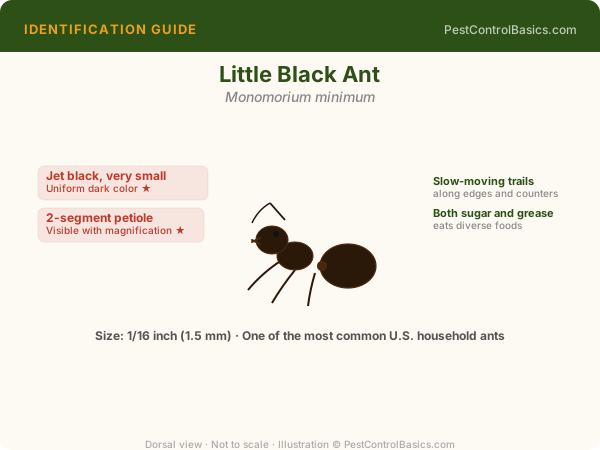
Little Black Ant
Monomorium minimum
Just 1/16 inch — among the smallest U.S. ants. Shiny black. Trails into kitchens and bathrooms. Found throughout the U.S. Terro liquid bait or Advion gel is the easiest fix.
Nuisance✓ Ant Guide
→
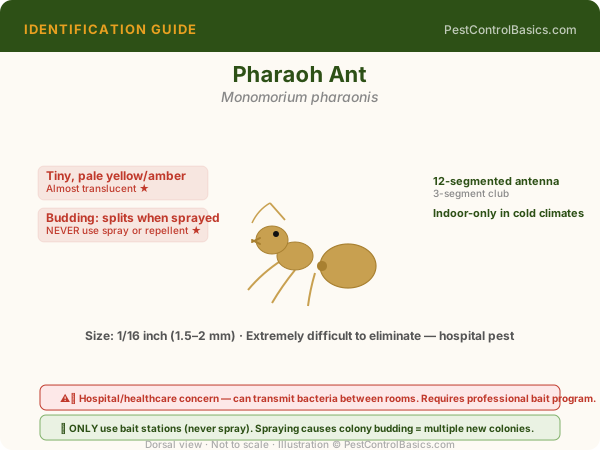
Pharaoh Ant
Monomorium pharaonis
Pale yellow, tiny (1/16 inch). Major hospital pest — spreads pathogens through sterile areas. Multiple queens. Spraying causes instant colony budding into dozens of new nests. Bait placement is the only option.
Medical Facility Risk✓ Ant Guide
→
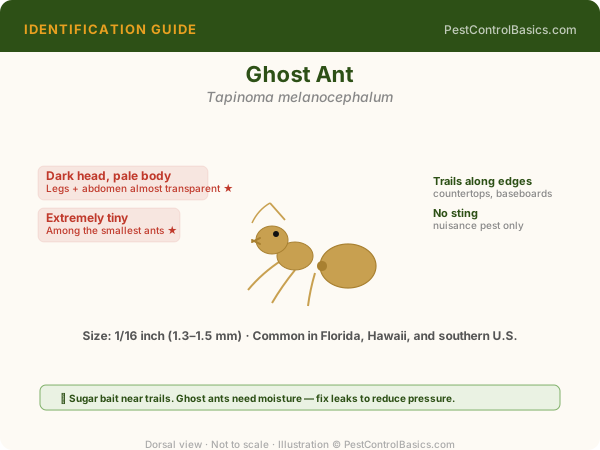
Ghost Ant
Tapinoma melanocephalum
Nearly invisible — dark head, pale translucent abdomen and legs. Very tiny. Tropical species established in Florida, Hawaii. Kitchen and bathroom trails. Multiple queens. Sweet bait effective.
Nuisance (FL)✓ Ant Guide
→
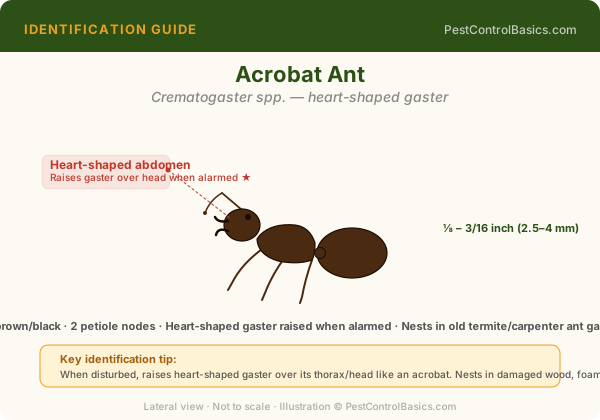
Acrobat Ant
Crematogaster species
Heart-shaped gaster held up over body when disturbed — the defining trait. Nests in rotted wood, foam insulation, and hollow doors. Often enters via pipes. Bites when threatened. Perimeter treatment.
Nuisance✓ Ant Guide
→
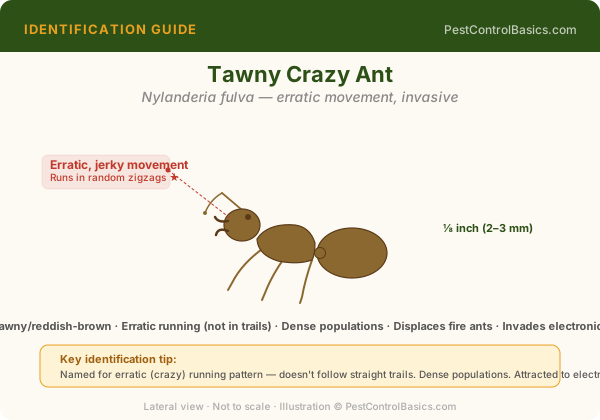
Tawny Crazy Ant
Nylanderia fulva
Moves in erratic, rapid patterns — hence "crazy." Invades electronics and causes short circuits. Mass invasions covering structures in Texas and Gulf Coast. No workers respond to bait well. Perimeter treatment critical.
Extreme (TX/Gulf)✓ Ant Guide
→
🪳
Cockroaches
7 species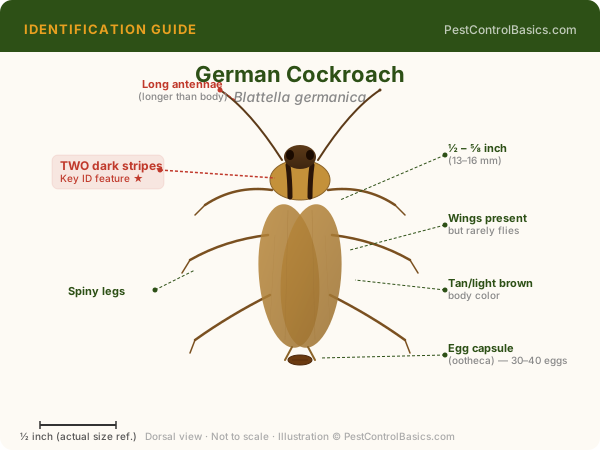
German Cockroach
Blattella germanica
Hardest roach to eliminate. 400,000 offspring per year per female. Two dark parallel stripes on pronotum. Sprays scatter the colony and make infestations worse — gel bait only. Never found outdoors.
High Risk✓ Full Profile
→
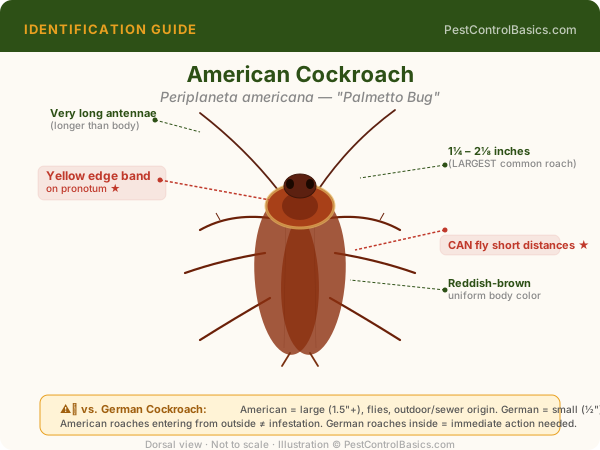
American Cockroach
Periplaneta americana
The "palmetto bug" — reddish-brown, 1.5–2 inches. Largest common U.S. roach. Outdoor species that wanders inside from sewers and drains. Very different treatment from German roach — perimeter exclusion is primary.
Moderate✓ Full Profile
→
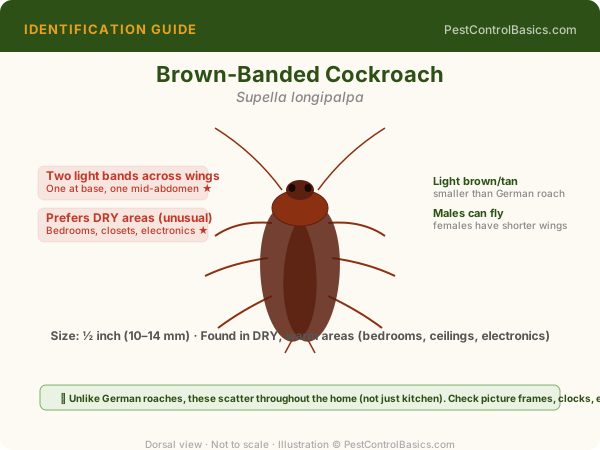
Brown-Banded Cockroach
Supella longipalpa
Two pale bands across wings. Unlike the German roach, spreads throughout the entire structure — bedrooms, electronics, upper wall areas. Requires whole-home treatment, not just kitchen-focused.
Moderate✓ Cockroach Guide
→
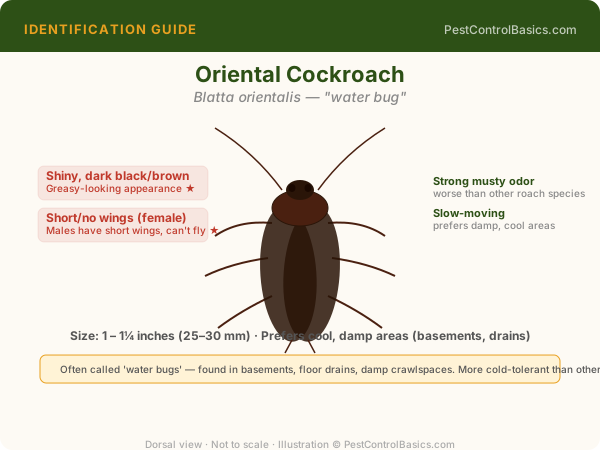
Oriental Cockroach
Blatta orientalis
Shiny black, 1 inch, slow-moving "water bug." Prefers cool damp basements — a moisture indicator. Enters via floor drains and utility conduits. Fix drainage first; exclusion is the primary solution.
Moderate✓ Cockroach Guide
→
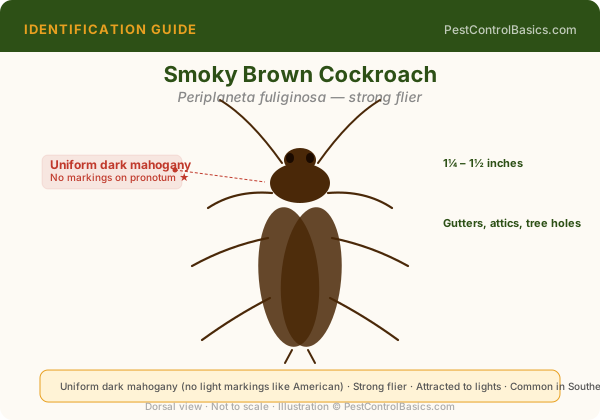
Smoky Brown Cockroach
Periplaneta fuliginosa
Uniform dark mahogany-brown, fully winged — excellent flier attracted to lights at night. Common in Southeast and Gulf Coast. Lives outdoors in gutters, mulch, tree holes. Drawn inside by lights.
Moderate (SE)✓ Cockroach Guide
→
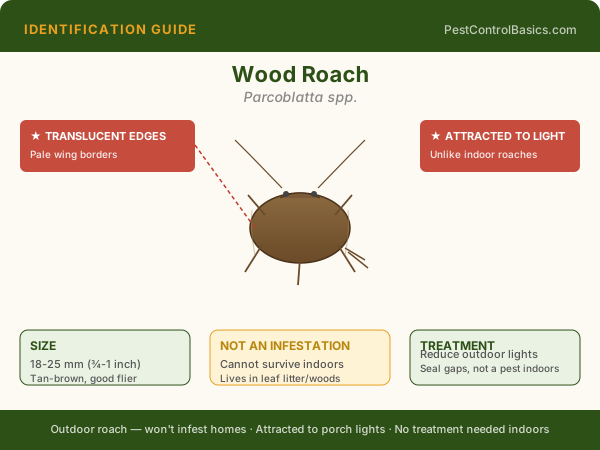
Florida Woods Cockroach
Eurycotis floridana
Large, dark, wingless Florida species. Secretes a foul defensive chemical when threatened. Primarily outdoor in compost and leaf litter. Slow-moving and easy to exclude — perimeter treatment effective.
Outdoor (FL)✓ Cockroach Guide
→
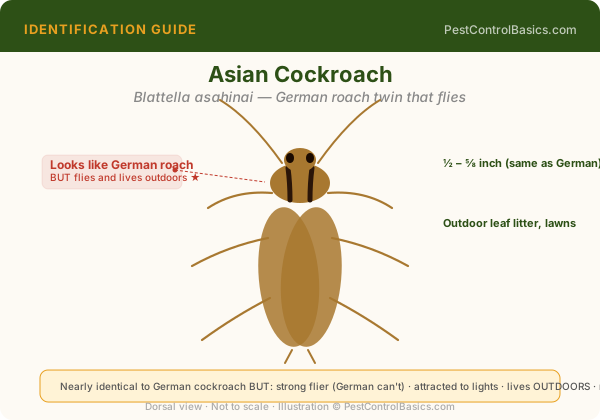
Asian Cockroach
Blattella asahinai
Nearly identical to German cockroach but FLIES and is attracted to lights. Found outdoors in Florida. If you see what looks like a German roach flying toward your porch light — it's an Asian cockroach. Perimeter treatment.
Outdoor (FL)✓ Cockroach Guide
→
🪲
Termites
6 species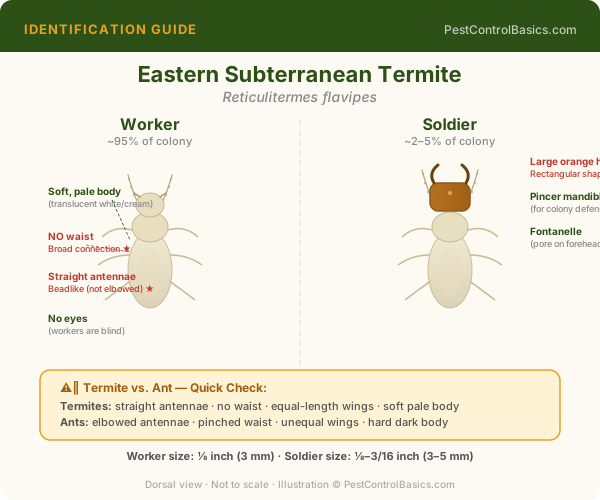
Eastern Subterranean Termite
Reticulitermes flavipes
Most common U.S. termite — present in 48 contiguous states. Builds pencil-width mud tubes along foundation. Swarms March–May. $5B+ annual damage. Termidor (fipronil) liquid treatment is the gold standard.
Structural✓ Full Termite Hub
→
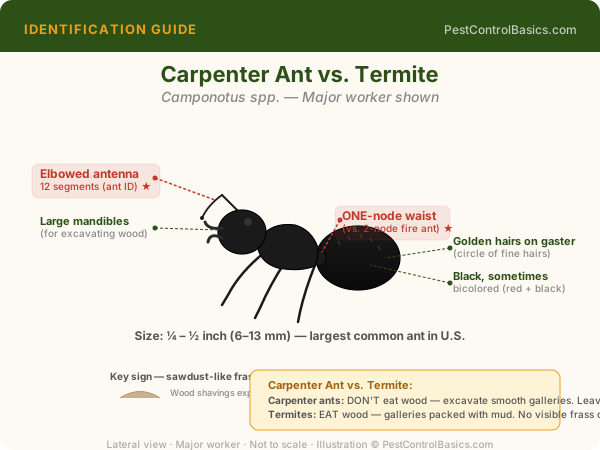
Formosan Termite
Coptotermes formosanus
10 million workers per colony — most destructive on Earth. Gulf Coast states. Now crossbreeding with Asian termite creating a more prolific hybrid species. Swarms May–June evenings. No DIY options.
Extreme✓ 2026 Alert
→
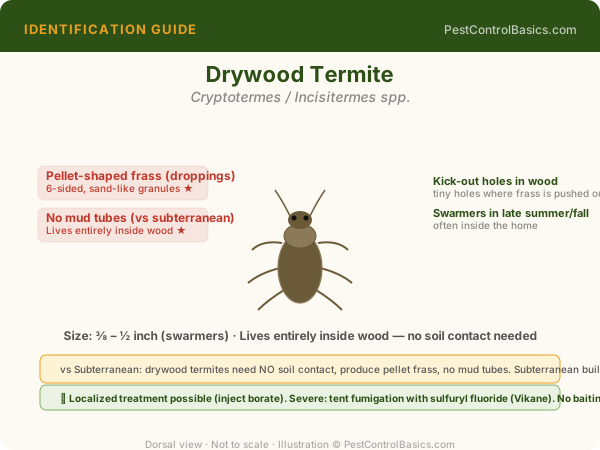
Drywood Termite
Incisitermes minor & species
Lives entirely in wood — no soil contact needed. Produces distinctive hexagonal frass pellets (kick-out holes). Western U.S., Hawaii. Requires whole-structure Vikane gas fumigation. No soil treatment helps.
Structural✓ Termite Hub
→
Dampwood Termite
Zootermopsis species
Largest U.S. termite — requires consistently wet wood to survive. Fix the moisture source and the colony eventually dies. Pacific Northwest coast. No soil treatment needed — it's a plumbing problem.
Moisture-Driven✓ Termite Hub
→
Asian Subterranean Termite
Coptotermes gestroi
Now crossbreeding with Formosan termites in Louisiana. More cold-tolerant than Formosan — expanding range. Established in South Florida. Core of the dangerous 2026 hybrid threat story.
Invasive / Hybrid✓ Hybrid Alert
→
Western Subterranean Termite
Reticulitermes hesperus
Primary subterranean species on the West Coast. Same mud tube behavior as eastern species. Causes significant damage throughout California. Swarms January–March. Termidor treatment same protocol as eastern.
Structural✓ Termite Hub
→
🕷
Spiders & Scorpions
11 species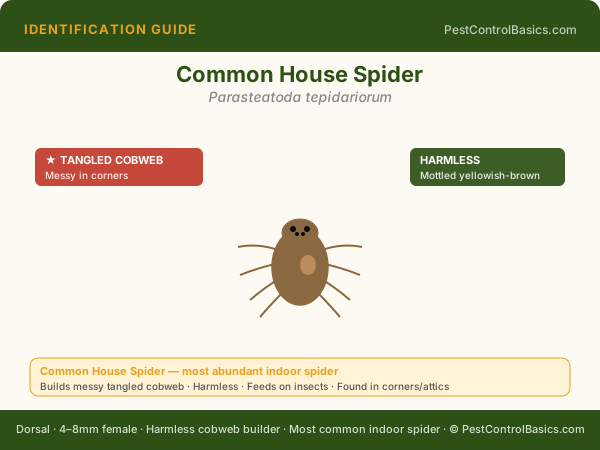
Common House Spider
Parasteatoda tepidariorum
The tan, round-bodied spider behind every corner cobweb. Not dangerous. CimeXa desiccant dust is the most effective control — sprays fail because spiders don't groom themselves like insects do.
Harmless✓ Spider Guide
→
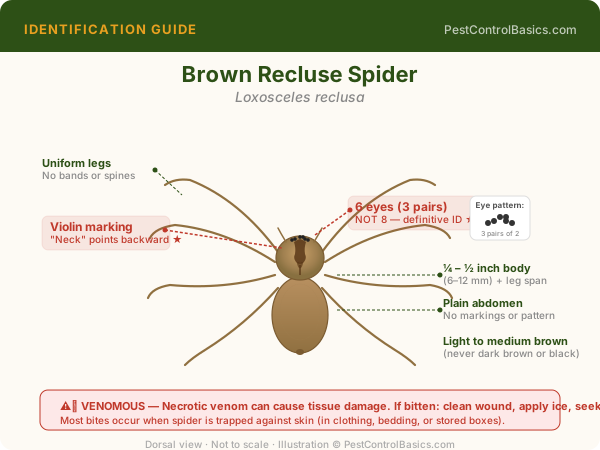
Brown Recluse
Loxosceles reclusa
Necrotic venom. Violin mark on cephalothorax. 60 million estimated in Missouri alone. Found in undisturbed spaces — closets, cardboard boxes, shoes. Six eyes in pairs (not 8). Full treatment guide.
Venomous✓ Full Profile
→
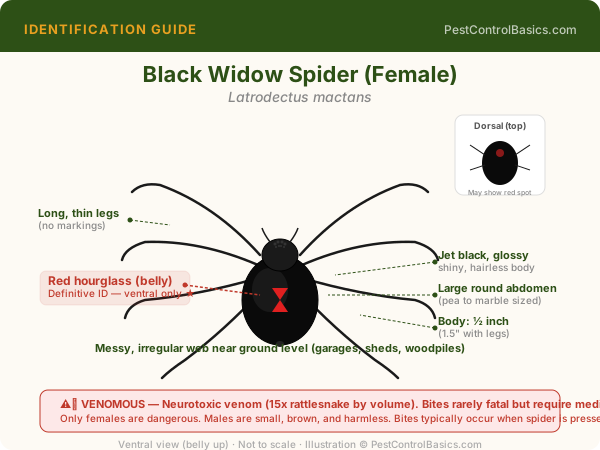
Black Widow
Latrodectus mactans
Shiny black, red hourglass on underside of abdomen. Neurotoxic venom — medically significant. Builds messy, low webs in dark undisturbed spaces: garages, woodpiles. CimeXa dust in harborage areas.
Venomous✓ Spider Guide
→
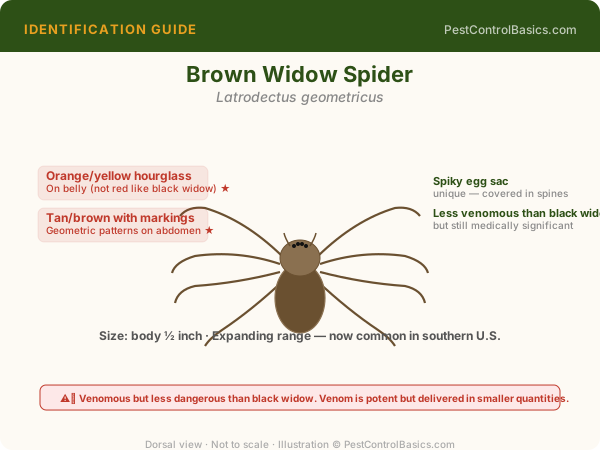
Brown Widow
Latrodectus geometricus
Tan with orange hourglass (not red). Spiky, tan egg sacs are the best ID feature. Found in Florida and Southeast. Less venomous than black widow but medically significant. Same control methods.
Venomous (SE)✓ Spider Guide
→

Wolf Spider
Lycosa species
Large, fast, hairy, intimidating — and harmless. Doesn't build webs; hunts on the ground. Females carry egg sacs and spiderlings on abdomen. One of the most feared harmless spiders in the U.S.
Harmless✓ Spider Guide
→
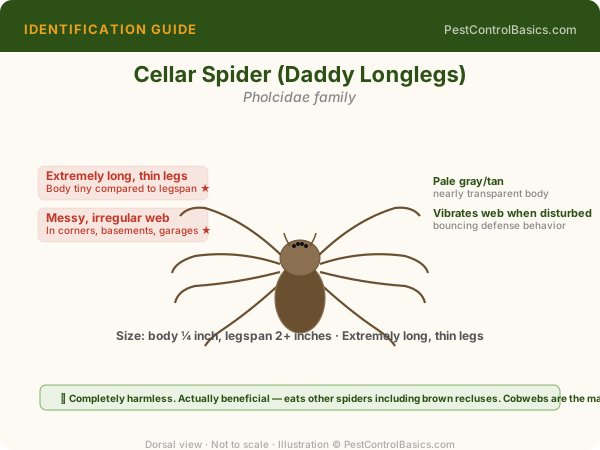
Cellar Spider
Pholcus phalangioides
"Daddy long-legs." Very long thin legs, tiny body. Vibrates rapidly when disturbed. Harmless and actually beneficial — eats mosquitoes, other spiders. No treatment needed; they're helping you.
Beneficial✓ Spider Guide
→
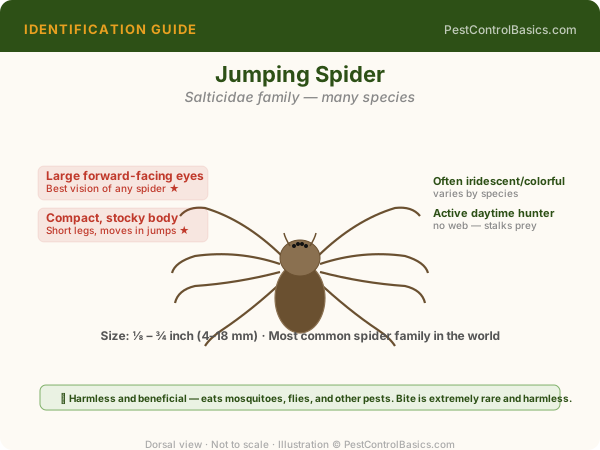
Bold Jumping Spider
Phidippus audax
Large front eyes, bold black with iridescent green chelicerae. Turns to face you. Doesn't build webs — hunts actively. Completely harmless. Most "personable" spider in the U.S. Loves sunny windows.
Harmless✓ Spider Guide
→
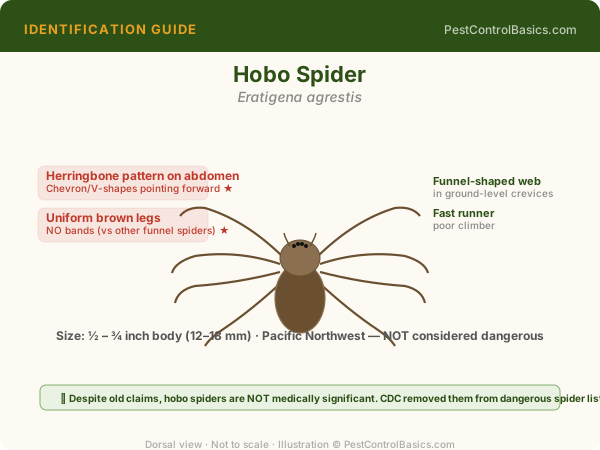
Hobo Spider
Eratigena agrestis
Pacific Northwest funnel-web spider. Horizontal sheet web with funnel retreat at back. Fast-moving, ground-level. Previously thought dangerous — current science shows bite causes minimal local reaction.
Northwest✓ Spider Guide
→
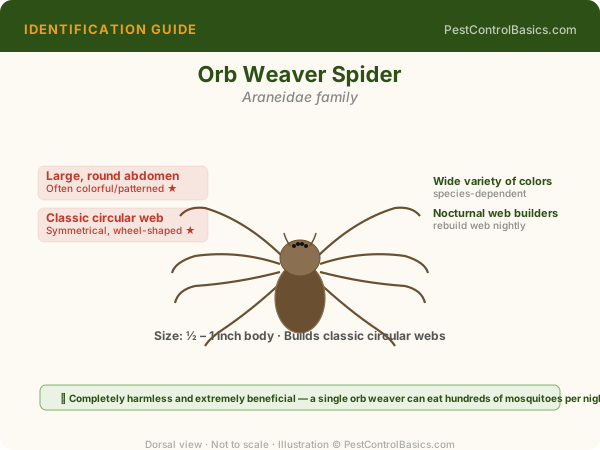
Garden Orb Weaver
Argiope aurantia
Builds large, perfect circular webs with a zigzag "stabilimentum" through the center. Large, striking yellow-black pattern. Outdoor and garden spider. Entirely beneficial — controls other insects.
Beneficial✓ Spider Guide
→
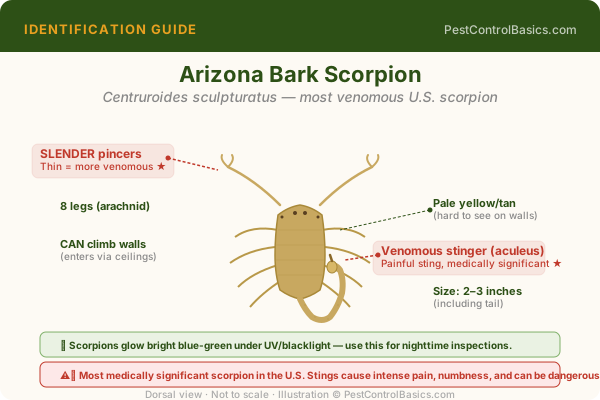
Arizona Bark Scorpion
Centruroides sculpturatus
Only medically dangerous U.S. scorpion. Tan, slender, 2–3 inches. Climbs walls and ceilings — hides in any dark gap. All scorpions fluoresce bright green under a 365nm UV blacklight. Full exclusion guide.
Medical Risk (AZ)✓ Full Profile
→
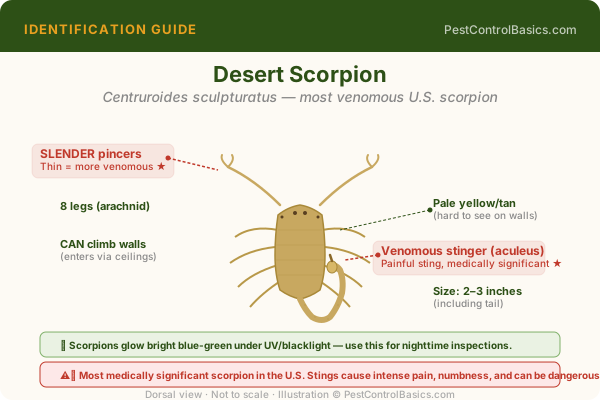
Striped Bark Scorpion
Centruroides vittatus
Two dark stripes on back. Most common scorpion in Texas and Oklahoma. Painful sting but not as medically critical as Arizona bark scorpion. Same UV detection and exclusion methods apply.
Venomous (TX/OK)✓ Scorpion Guide
→
🦟
Flying Insects
13 species
Mosquitoes
Aedes, Culex & Anopheles species
West Nile, Zika, Dengue, and malaria vectors. 6 species profiles with disease tables. Source reduction every 7 days is the #1 control. Bti dunks for standing water. DEET 25%+ for personal protection.
Disease Vector✓ Full Profile
→
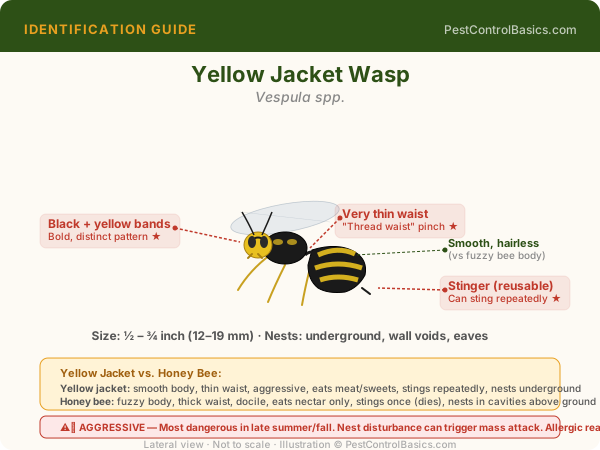
Yellow Jacket
Vespula & Dolichovespula species
Most aggressive stinging insect in the U.S. Underground or aerial nests. Colony peaks in August — maximum size and aggression. Treat at night only with a jet aerosol from 15+ feet. Protocol guide inside.
Very Aggressive✓ Full Profile
→
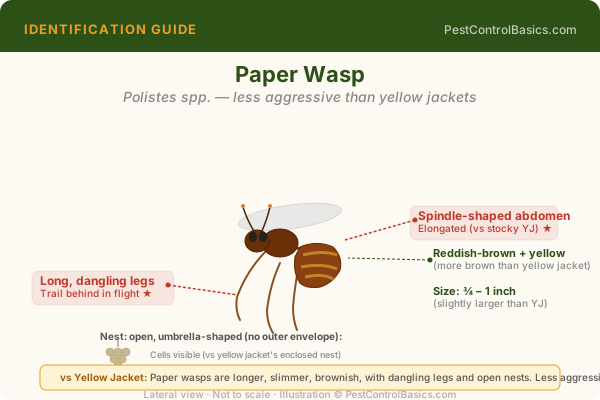
Paper Wasp
Polistes species
Builds open, umbrella-shaped nests under eaves, railings, and door frames. Slender, long-legged. Less aggressive than yellow jackets but stings when nest is threatened. Early-season nests are walnut-sized and easy to treat.
Moderate Risk✓ Wasp Guide
→
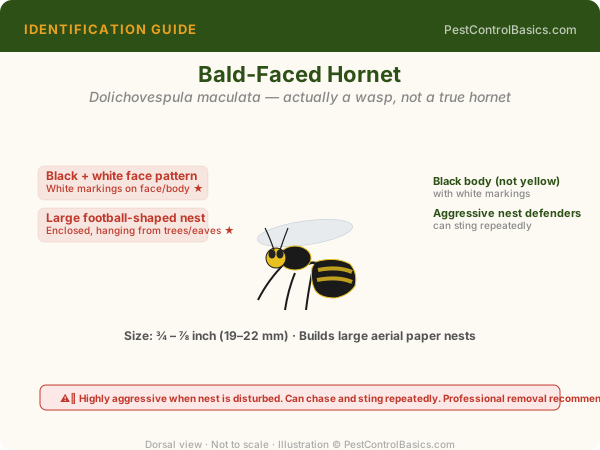
Bald-Faced Hornet
Dolichovespula maculata
Large black-and-white wasp — not a true hornet. Builds large enclosed papery nests in trees and shrubs. Extremely aggressive when disturbed. Attacks in swarms. Professional removal strongly recommended.
Extreme Aggression✓ Wasp Guide
→
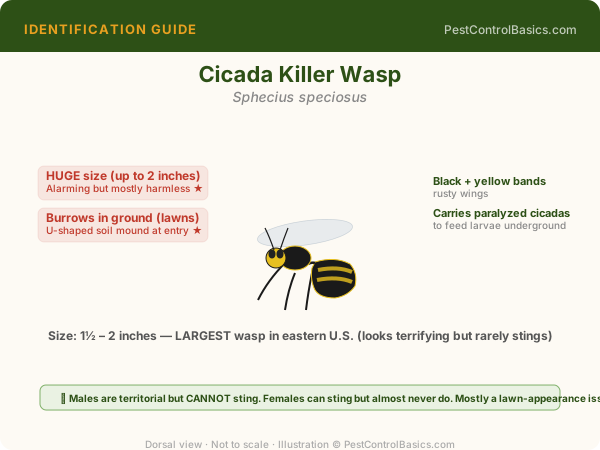
Cicada Killer
Sphecius speciosus
Enormous — 1.5 inches. Terrifying but largely harmless. Solitary wasp; males can't sting, females rarely do. Burrows in lawns to provision nests with paralyzed cicadas. Treat the lawn, not the wasps.
Nuisance✓ Wasp Guide
→
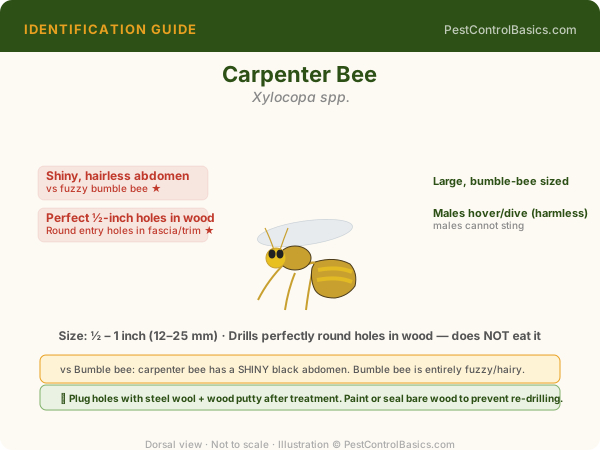
Carpenter Bee
Xylocopa virginica
Large, shiny black abdomen (bumblebees are fuzzy all over). Bores perfect 1/2-inch holes in unfinished wood. Males hover aggressively but can't sting. Paint or stain bare wood to deter boring.
Wood Damage✓ Wasp Guide
→
🐝
Honey Bee
Apis mellifera
Fuzzy gold-and-black; lives in colonies of thousands. If you find a swarm or a wall colony, do NOT spray — call a local beekeeper for free or low-cost removal. Honey bees are protected pollinators in most states.
Pollinator✓ Removal Guide
→
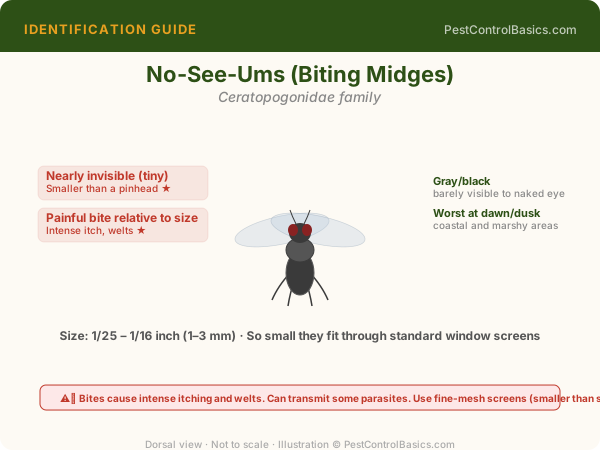
No-See-Ums
Ceratopogonidae — Biting Midges
1–3mm — barely visible with the naked eye. Produce an intensely itchy bite disproportionate to their size. Peak at dawn and dusk near water. 20% DEET or Picaridin effective. Fine-mesh (18×14) screens needed.
Biting✓ Mosquito Guide
→
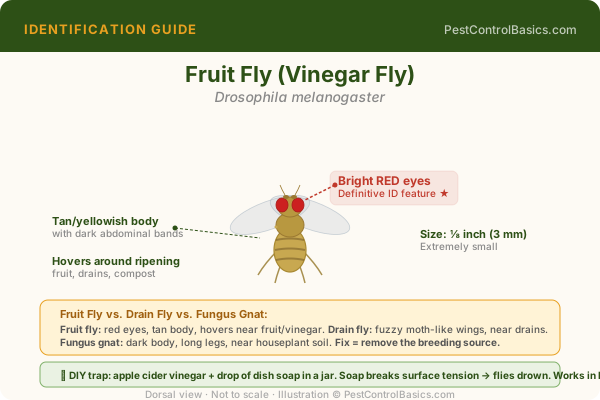
Fruit Fly
Drosophila melanogaster
Tiny red eyes, tan body. Breeds in overripe fruit, drains, garbage, damp mops, and forgotten potatoes. Apple cider vinegar + dish soap trap catches adults. Eliminate the fermentation source — not just the adults.
Nuisance✓ Full Profile
→
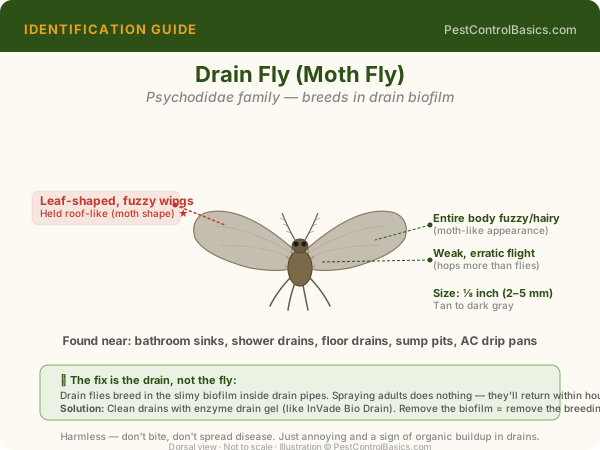
Drain Fly
Psychoda species — Moth Flies
Fuzzy, moth-like wings, slow-flying. Breed exclusively in organic biofilm inside drain pipes. Bleach doesn't dissolve biofilm — only enzymatic drain cleaner works. Tape test over drain to find the source.
Nuisance✓ Full Profile
→
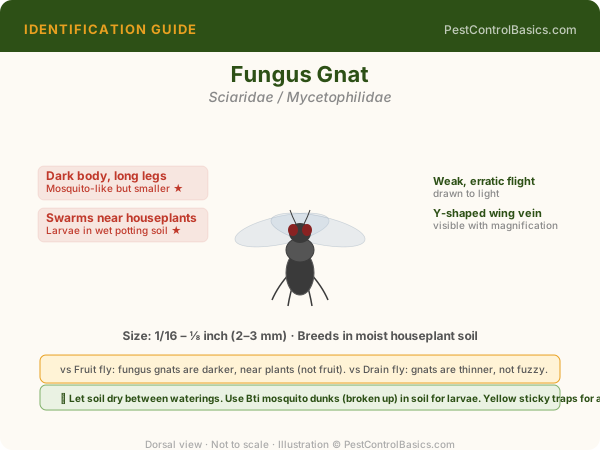
Fungus Gnat
Bradysia species
Long antennae, small dark body — looks like a tiny mosquito. Larvae destroy houseplant roots in overly wet soil. Yellow sticky traps for adults. Bti (Gnatrol) in soil kills larvae. Let soil dry between waterings.
Plant Damage✓ Organic Guide
→
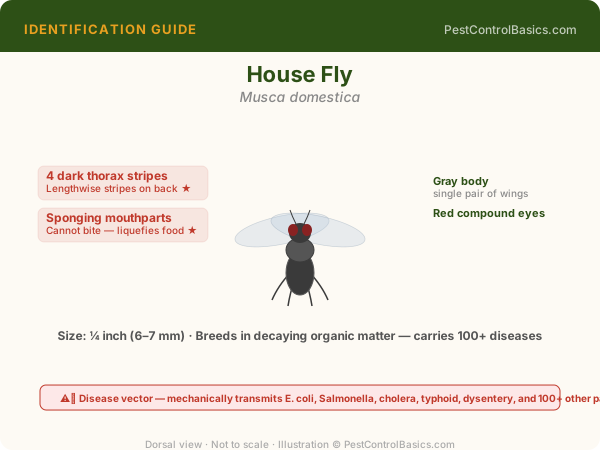
House Fly
Musca domestica
Gray with four dark thorax stripes. Contaminates food on every landing — vomits digestive fluid, picks up pathogens. Breeds in garbage, manure, decaying organic matter. Sealed bins + screens + Spinosad fly bait.
Disease Vector✓ Flying Guide
→
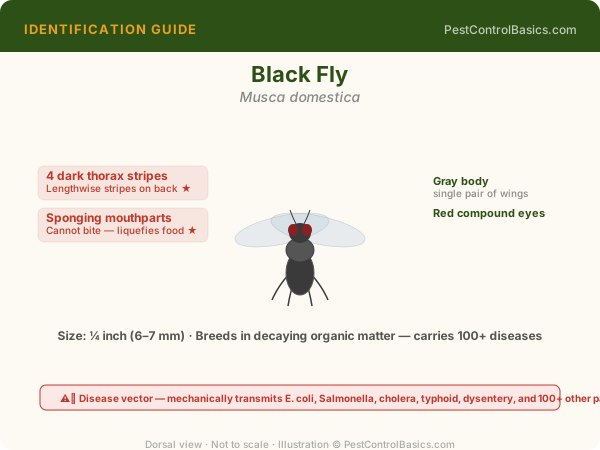
Black Fly (Buffalo Gnat)
Simulium species
Tiny, hump-backed, black. Inflicts a painful bite that bleeds and swells. Breeds in fast-flowing streams — not controllable at source. Protective clothing + DEET is the primary defense during peak season (May–June).
Biting Pest✓ Mosquito Guide
→
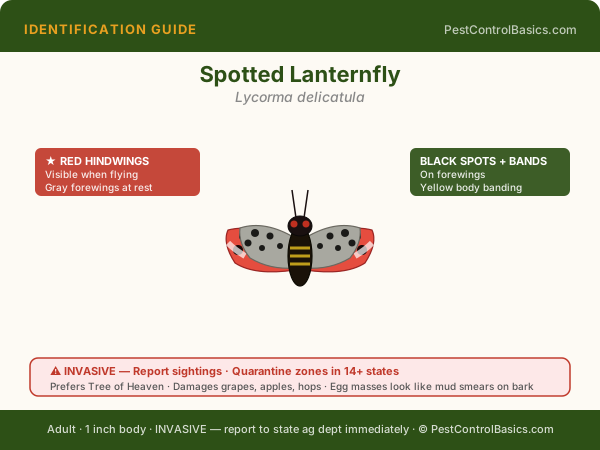
Spotted Lanternfly
Lycorma delicatula
Gray forewings with black spots, brilliant red hindwings visible in flight. Invasive from Asia — devastates vineyards and orchards. Expanding rapidly in Mid-Atlantic. Kill on sight, report to state ag department.
Invasive✓ Full Profile
→
🐰
Rodents
8 species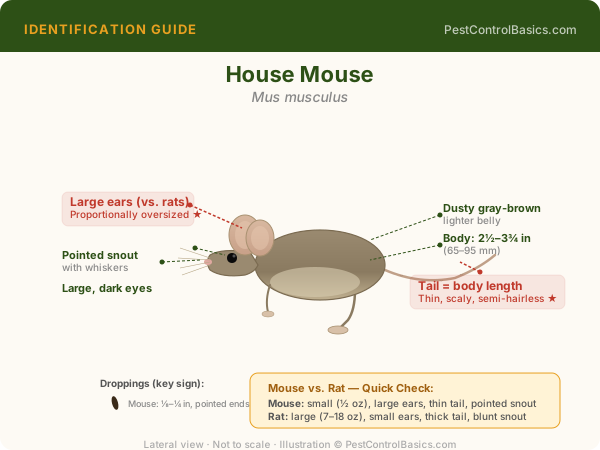
House Mouse
Mus musculus
Most common indoor rodent — 3–4 inches. Droppings like small rice grains. Needs only 1/4 inch to enter. Curious, unlike rats — doesn't need pre-baiting. Run 12+ snap traps simultaneously for effective control.
Disease Vector✓ Rodent Hub
→
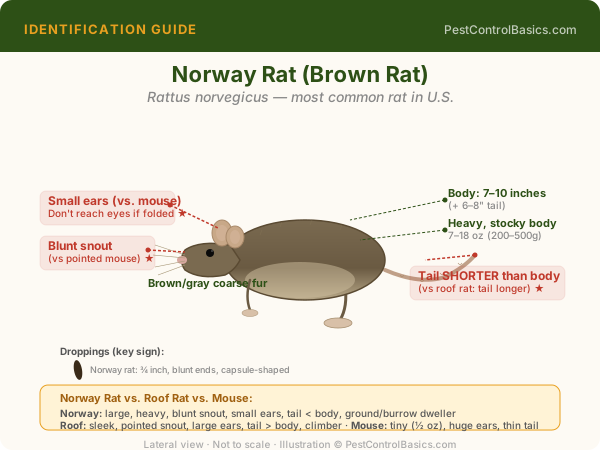
Norway Rat
Rattus norvegicus
Burrowing rat — heavy body, blunt nose, small ears. Lives at ground level. Highly neophobic — new objects trigger avoidance for days. Pre-bait traps for several days before setting them. Hantavirus risk.
Disease Vector✓ Rodent Hub
→
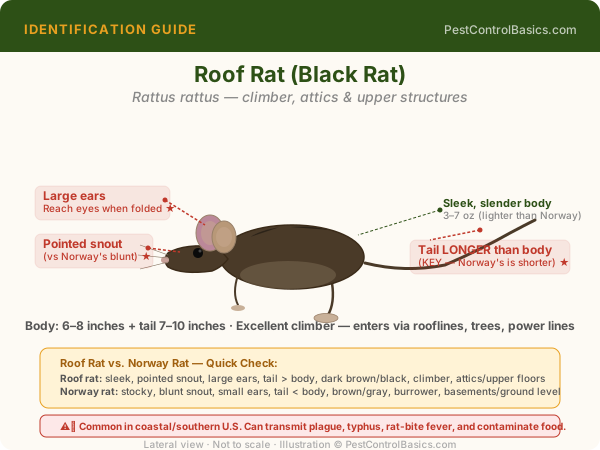
Roof Rat
Rattus rattus
Slender climber — attics, trees, power lines. Pointed nose, large ears, long tail longer than body. Common in coastal southern states and California. Set snap traps elevated in attic and rafters.
Disease Vector✓ Rodent Hub
→
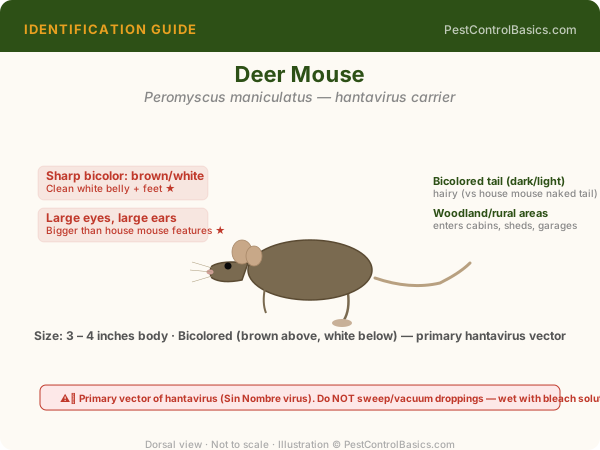
Deer Mouse
Peromyscus maniculatus
Primary hantavirus reservoir. Bicolor — tan/brown above, white below, white feet. Large eyes and ears. Rural and suburban. Never sweep dry droppings — full bleach spray protocol required before cleanup.
Hantavirus Risk✓ Rodent Hub
→
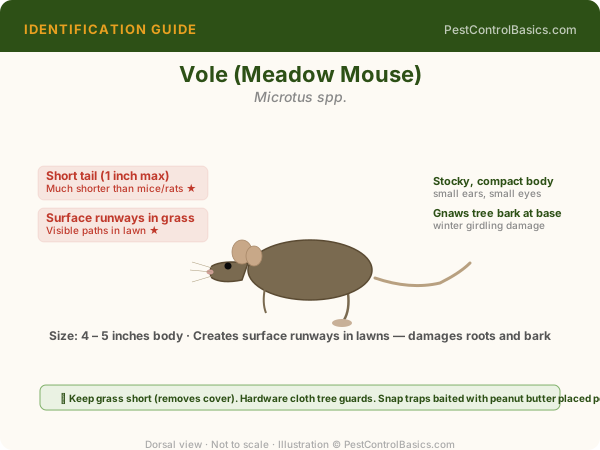
Meadow Vole
Microtus pennsylvanicus
Short tail, small ears, stocky — not a mole. Creates surface runways through lawn. Destroys grass roots, garden bulbs, and girdles tree bark. Snap traps placed in runways; hardware cloth around tree bases.
Garden Damage✓ Rodent Hub
→
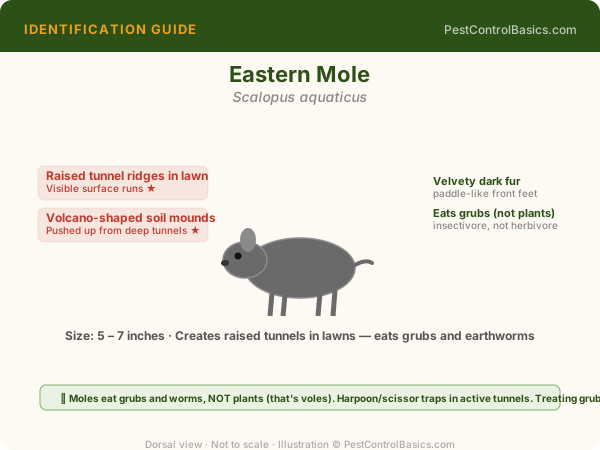
Mole
Scalopus aquaticus & others
Not a rodent — a carnivorous insectivore. Eats grubs and earthworms, not plants. Raised tunnel ridges in lawn are the sign. Trapping (Macabee trap) is most effective. Controlling grubs reduces mole pressure.
Lawn Damage✓ Rodent Hub
→
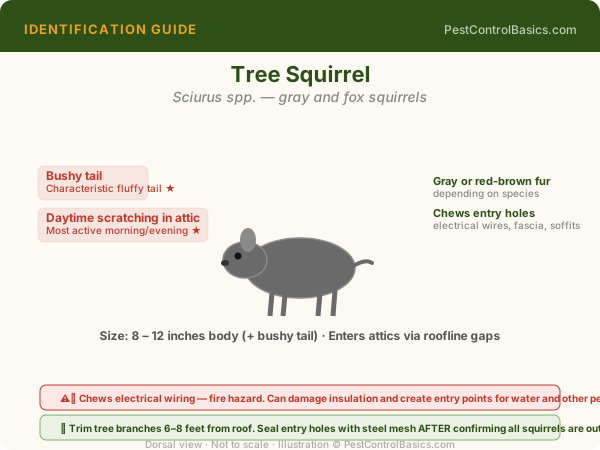
Squirrels (Attic)
Sciurus carolinensis & species
Gray, red, and flying squirrels enter attics through soffit gaps and roof damage. Chew electrical wiring — serious fire hazard. One-way exclusion doors + sealing is the humane, permanent solution.
Fire Hazard✓ Rodent Hub
→
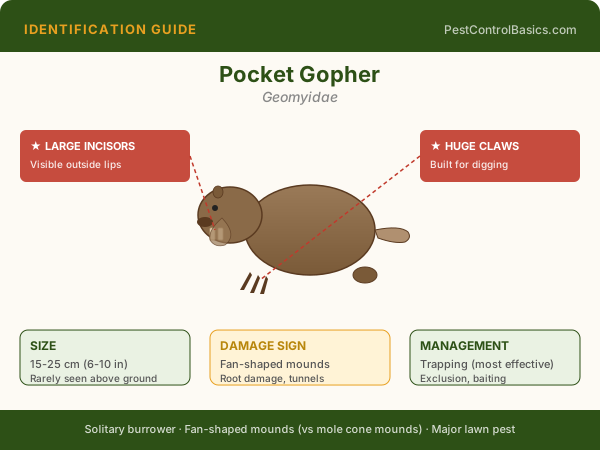
Pocket Gopher
Thomomys & Geomys species
Creates crescent or fan-shaped mounds (distinct from mole's circular ridges). Destroys plant roots from below. Western and central U.S. Macabee traps placed in main tunnel runs are most effective.
Garden/Yard✓ Rodent Hub
→
🪲
Nuisance Pests
14 species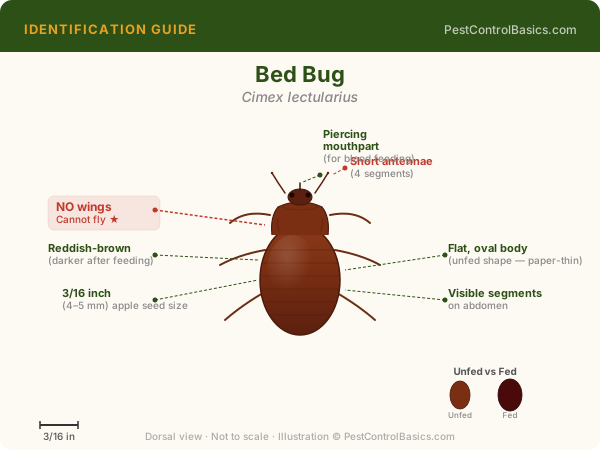
Bed Bug
Cimex lectularius
Apple-seed size, mahogany brown. Bites at night; feeds every 5–10 days. 95% of the infestation is eggs and pupae — immune to contact pesticides. Heat treatment (120°F+) is the only reliable one-shot solution.
High Risk✓ Full Profile
→
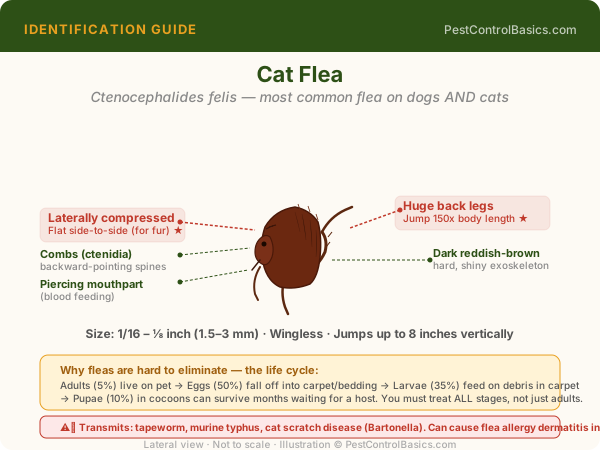
Cat & Dog Flea
Ctenocephalides felis / canis
95% of the infestation is NOT on the pet — it's in the home environment as eggs, larvae, and pupae. Must treat pet + home + yard simultaneously. IGR (Precor) breaks the reproductive cycle.
High Risk✓ Full Profile
→
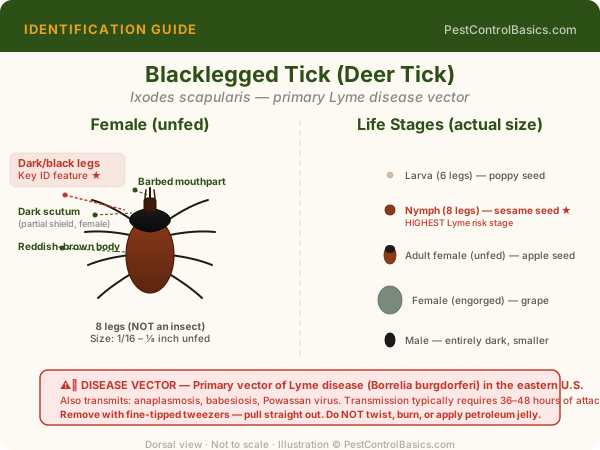
Black-Legged (Deer) Tick
Ixodes scapularis
Primary Lyme disease vector. Nymphs are poppy-seed sized — easily missed. Must be attached 36–48 hours to transmit Lyme. Daily tick checks + permethrin clothing prevents nearly all transmission.
Lyme Vector✓ Full Profile
→
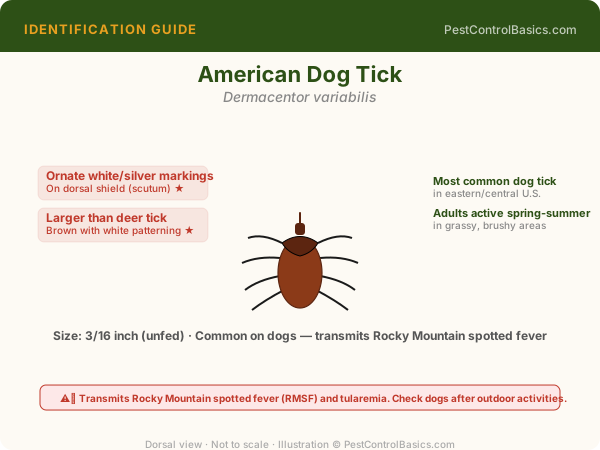
American Dog Tick
Dermacentor variabilis
Larger than deer tick — brown with white/silver markings. Carries Rocky Mountain Spotted Fever and Tularemia. Active April–August. Most common tick in eastern U.S. Found in grass and shrubby vegetation.
RMSF Vector✓ Tick Guide
→
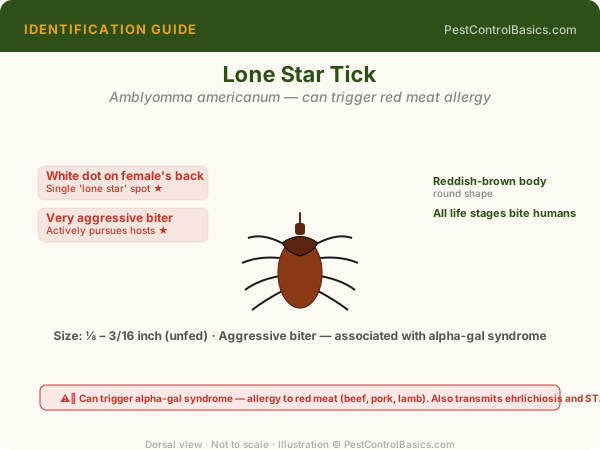
Lone Star Tick
Amblyomma americanum
White spot on back of female. Aggressively hunts hosts — follows movement. Can cause alpha-gal syndrome (red meat allergy). Southeast and Mid-Atlantic. Most aggressive tick species; host-seeking is active.
Alpha-Gal Risk✓ Tick Guide
→
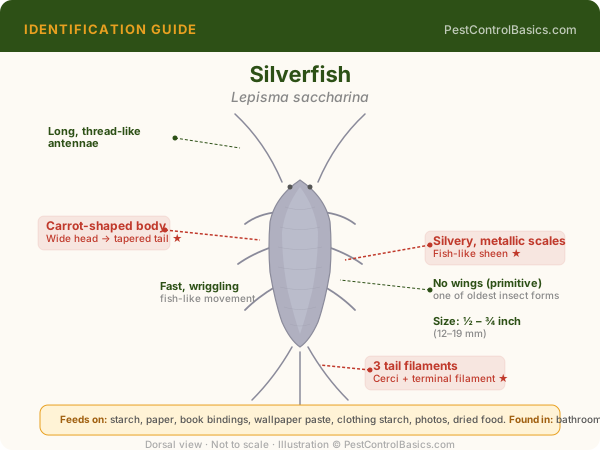
Silverfish
Lepisma saccharinum
Silver, fish-shaped, fast-moving. Destroys books, photos, fabric, and wallpaper. Presence signals excess humidity — a dehumidifier is the first fix. CimeXa dust in cracks and Dekko boric acid packs for bookshelves.
Property Damage✓ Full Profile
→
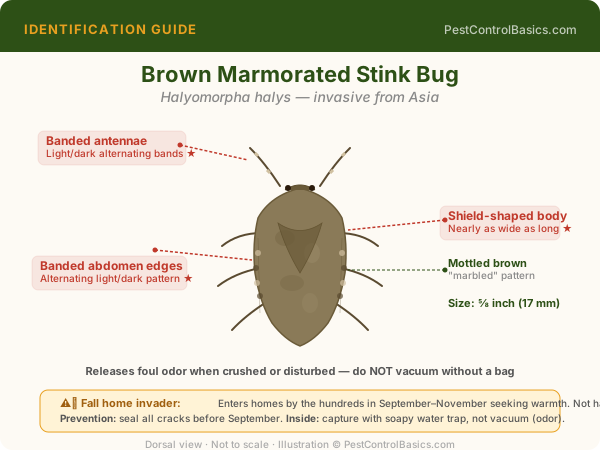
Brown Marmorated Stink Bug
Halyomorpha halys
Shield-shaped, marbled brown. Never squish — releases pheromone attracting more. Seal all gaps before September. Vacuum indoor bugs into a soapy water solution. Bifenthrin on south/west walls in late summer.
Nuisance✓ Full Profile
→
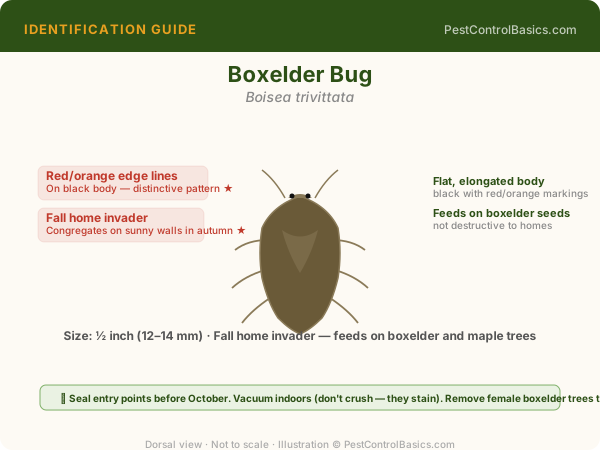
Boxelder Bug
Boisea trivittata
Distinctive red-and-black pattern. Aggregates on south-facing walls in fall before seeking overwintering sites inside. Seal like stink bugs — before September. Bifenthrin on aggregation surfaces kills on contact.
Nuisance✓ Full Profile
→
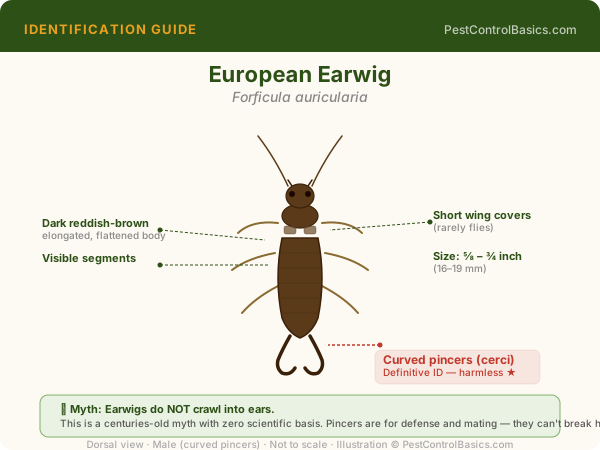
Earwig
Forficula auricularia
The "pincher bug." Rear pincers look menacing but are rarely used on humans. The ear myth is false. Attracted to moist mulch at the foundation. Oil trap in evening, desiccant dust, and mulch removal are the fixes.
Nuisance✓ Full Profile
→
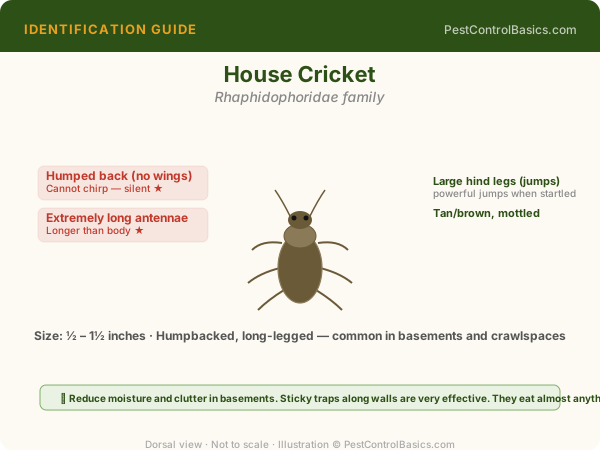
House Cricket
Acheta domesticus & Gryllus species
Chirping males attract females — they need moisture and warmth to breed indoors. Switch porch lights to yellow LEDs (2700K) — reduces attraction by 60–80%. Dehumidify basement below 50% RH. Glue board traps.
Nuisance✓ Full Profile
→
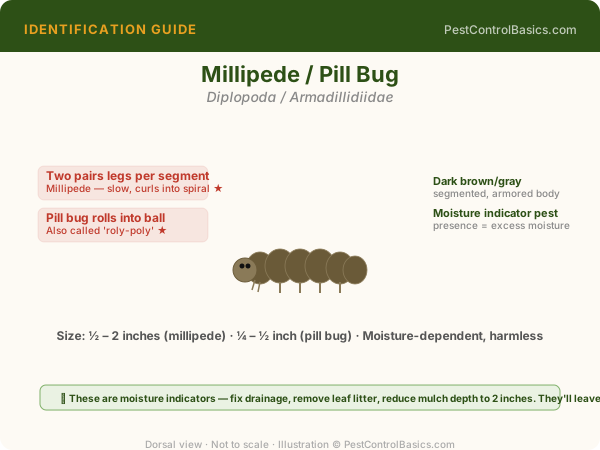
Millipede
Narceus americanus & relatives
Two legs per body segment — curls into a ball when threatened. Invades in mass after heavy rain when soil saturates. Completely harmless and dies indoors within 48hrs. Remove mulch from foundation; improve drainage.
Harmless✓ Full Profile
→
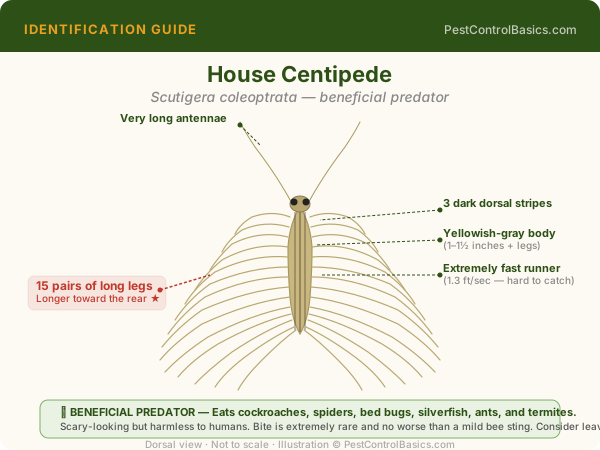
House Centipede
Scutigera coleoptrata
15 pairs of very long legs — fast and alarming. One pair of legs per segment (unlike millipedes). Actually beneficial — eats cockroaches, spiders, flies. Reduce indoor humidity and prey insects to reduce them.
Beneficial✓ Nuisance Guide
→
Scorpion (General)
Multiple U.S. species
All scorpion species fluoresce bright green under a 365nm UV blacklight — hunt at night with one. Seal all gaps and voids; scorpions can compress flat. CimeXa desiccant in wall voids. Sticky traps for monitoring.
Venomous✓ Full Profile
→
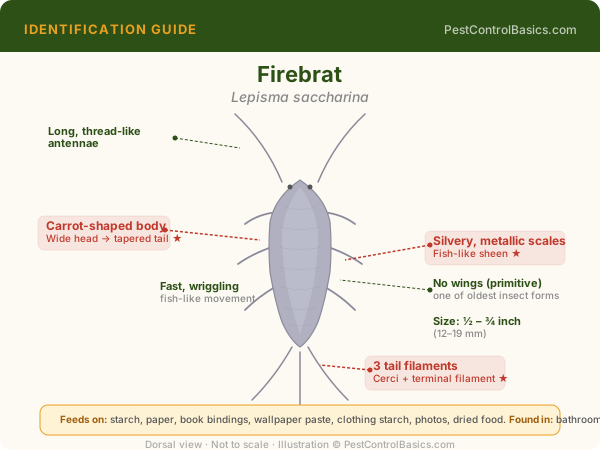
Firebrat
Thermobia domestica
Silverfish relative that prefers heat rather than moisture. Found near boilers, ovens, and hot water pipes. Mottled gray-brown. Same control methods as silverfish — boric acid, desiccants, and sanitation.
Nuisance✓ Silverfish Guide
→
⚡
Health Threat Pests
6 profiles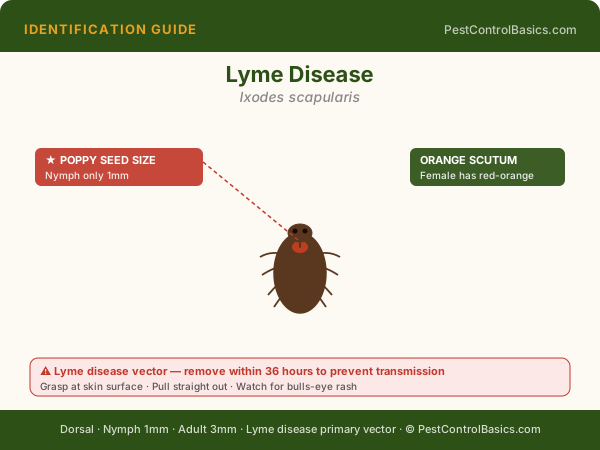
Lyme Disease Prevention
Borrelia burgdorferi via Ixodes ticks
476,000+ diagnosed cases per year. The bullseye rash appears in 70–80% of cases. The 36–48 hour attachment window means daily tick checks prevent nearly all transmission. Full prevention protocol.
476K Cases/Year✓ Full Guide
→
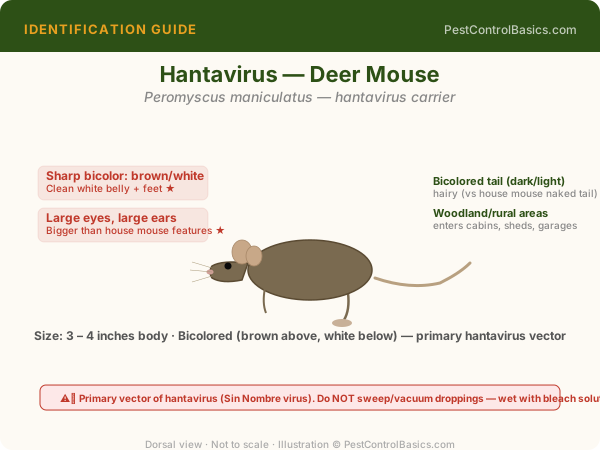
Hantavirus Safety
Sin Nombre Hantavirus via deer mice
35–40% fatality rate. Transmitted by breathing aerosolized particles from rodent droppings — never sweep them dry. Bleach spray protocol, N95 respirator, 30-minute ventilation before entering. Full 8-step guide.
35–40% Fatality✓ Safety Guide
→
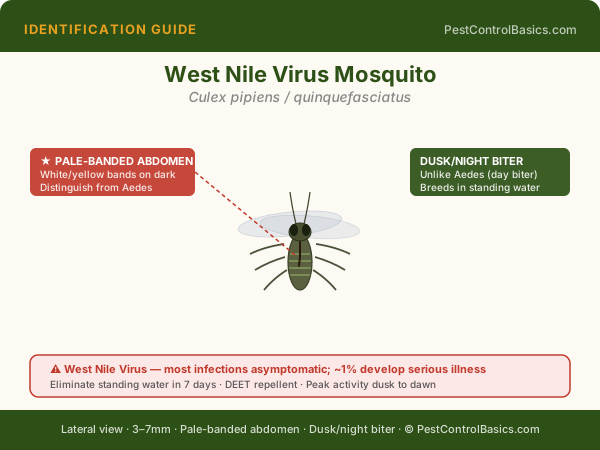
West Nile Virus
Via Culex pipiens mosquitoes
Most common mosquito-borne illness in the U.S. — 2,600+ cases annually. Culex mosquitoes bite dusk to dawn. 80% of infected show no symptoms; 1% develop neurological complications. Source reduction + DEET.
Neurological Risk✓ Mosquito Guide
→
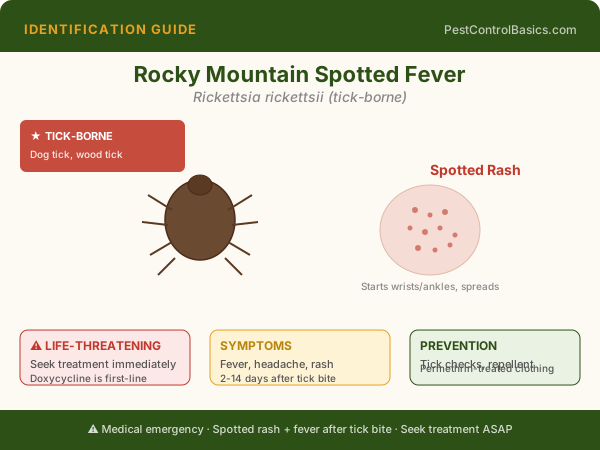
Rocky Mountain Spotted Fever
Rickettsia rickettsii via dog ticks
Most fatal tick-borne illness in the U.S. — rapidly progressive if untreated. Rash begins on wrists and ankles, spreads to palms and soles. Requires doxycycline immediately — don't wait for lab confirmation.
Rapidly Fatal✓ Tick Guide
→
Bed Bug Mental Health Impact
Cimex lectularius — Psychological Effects
Beyond physical bites, bed bug infestations cause documented anxiety, insomnia, and PTSD-like symptoms. Knowing the hotel inspection protocol and encasement strategies prevents the problem entirely.
Mental Health✓ Bed Bug Guide
→
Rodent-Borne Diseases
Salmonella, Leptospirosis, Rat-Bite Fever
Rodents contaminate food and surfaces with urine, droppings, and hair — all major disease vectors. A single mouse produces 50–75 droppings and contaminates 10x the food it eats. Exclusion is the only permanent fix.
Multiple Pathogens✓ Rodent Guide
→
🌿
Garden & Lawn Pests
9 species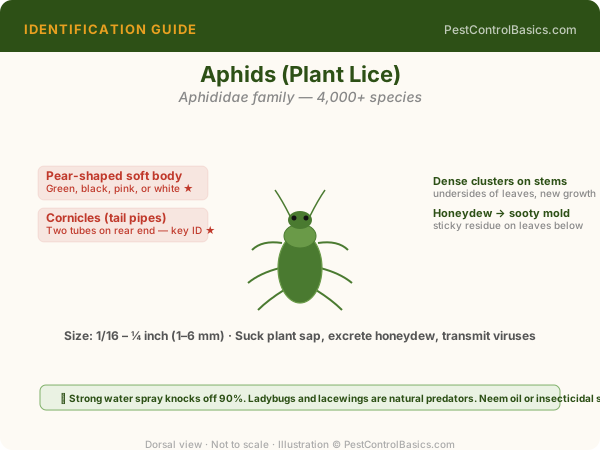
Aphids
Aphididae — Multiple Species
Soft-bodied, pear-shaped, often green or black. Feed on plant phloem; excrete honeydew that grows black sooty mold. Neem oil spray or strong water spray effective. Encourage ladybugs — a single one eats 5,000 aphids.
Garden Pest✓ Organic Guide
→
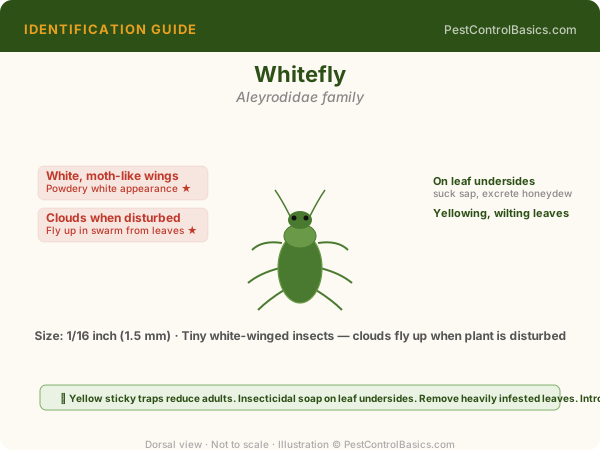
Whitefly
Trialeurodes vaporariorum & species
Tiny white flies on underside of leaves. Cloud of white when plant is disturbed. Weakens plants and spreads viruses. Yellow sticky traps for adults. Spinosad or neem oil for nymph stages. Biological controls work well.
Garden Pest✓ Organic Guide
→
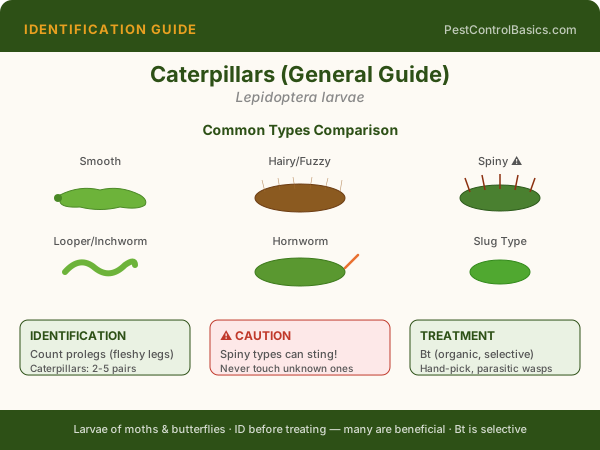
Caterpillars & Worms
Various Lepidoptera larvae
Tomato hornworm, cabbage worm, corn earworm, codling moth larvae. Spinosad spray is the most effective organic treatment — excellent for all caterpillar species. BT (Bacillus thuringiensis) also highly effective.
Garden Pest✓ Organic Guide
→
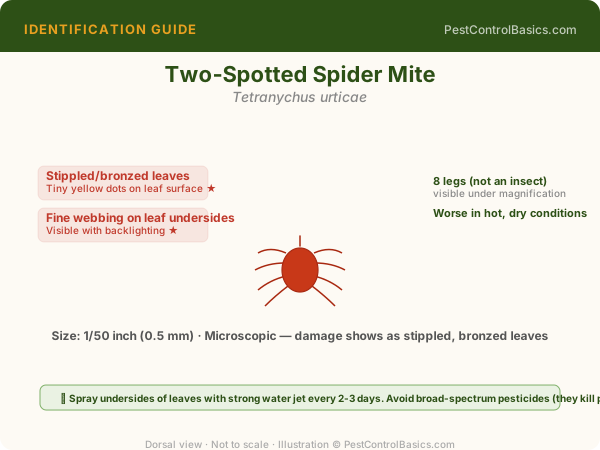
Spider Mites
Tetranychus urticae
Microscopic — stippled yellowing leaves are the sign. Fine webbing on undersides. Thrive in hot, dusty conditions. Strong water spray disrupts colonies. Neem oil or insecticidal soap effective. Avoid broad-spectrum pesticides.
Garden Pest✓ Organic Guide
→
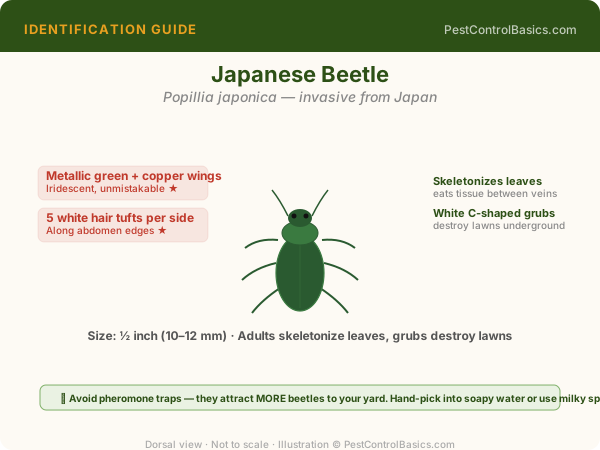
Japanese Beetle
Popillia japonica
Metallic green and copper. Skeletonizes leaves starting from the top. Grub stage destroys lawn roots in August. Pheromone bag traps attract MORE — place them away from the garden. Spinosad spray on adults.
Garden + Lawn✓ Organic Guide
→
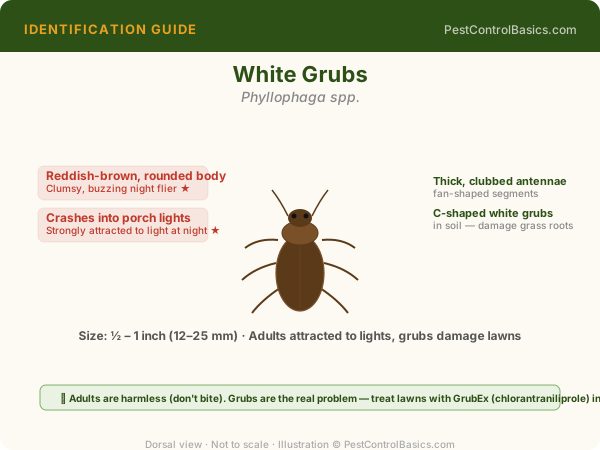
White Grubs
Phyllophaga & Popillia larvae
C-shaped white larvae eating grass roots underground. Lawn rolls back like carpet in patches. Birds and skunks digging = active grubs below. Imidacloprid granules in May–June. Beneficial nematodes are organic option.
Lawn Damage✓ Organic Guide
→
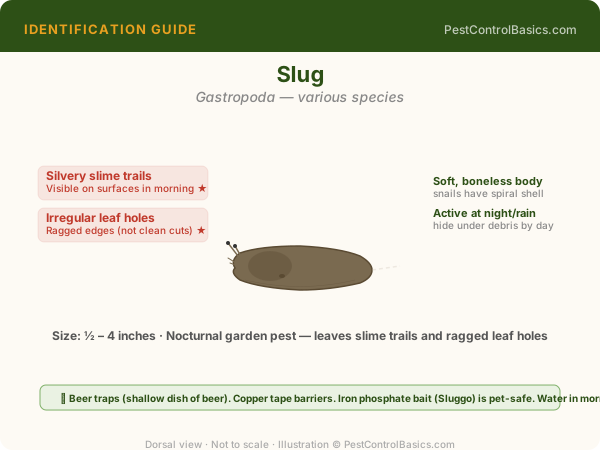
Slugs & Snails
Arion & Cornu species
Leave ragged holes in leaves and a silvery slime trail. Most active at night and after rain. Beer traps catch large numbers. Iron phosphate bait (Sluggo) is organic-certified, pet-safe, and highly effective.
Garden Pest✓ Organic Guide
→
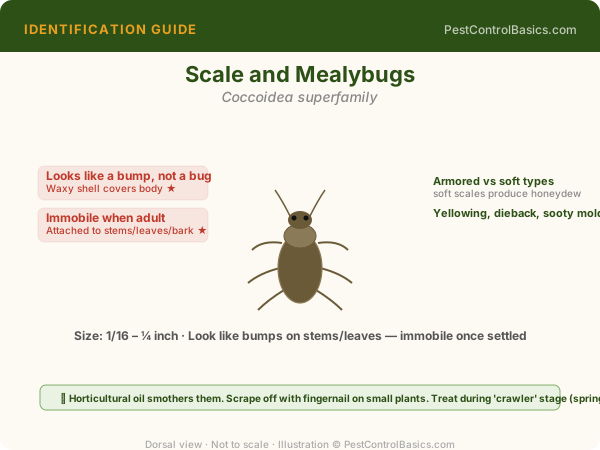
Scale & Mealybugs
Hemiptera — multiple families
Cottony white masses (mealybug) or flat brown bumps (scale) on stems. Tap the white fuzz — if it moves, it's mealybug. Isopropyl alcohol on cotton swab for small infestations. Neem oil or dormant oil spray for larger.
Garden Pest✓ Organic Guide
→
Spotted Lanternfly
Lycorma delicatula — Invasive
Devastating to vineyards, orchards, and ornamental trees. Excretes honeydew that grows sooty mold. No natural U.S. predators. Expanding rapidly from Mid-Atlantic. Kill on sight and report to your state ag department.
Invasive✓ Full Profile
→
🚨
Invasive & Emerging Species
5 profilesSpotted Lanternfly
Lycorma delicatula
From Asia. Gray forewings, red hindwings. Devastating to vineyards and orchards. First U.S. find: Berks County, PA, 2014. Populations escalating in Mid-Atlantic 2025–2026. Kill on sight, report sighting.
Invasive✓ Full Profile
→
Hybrid Termite (2026 Alert)
Coptotermes formosanus × C. gestroi
Formosan and Asian termites crossbreeding in Louisiana — confirmed hybrid produces larger colonies, swarms earlier, and resists cold better than either parent. Expanding beyond original Gulf Coast zone.
2026 Alert✓ Full Alert
→
Tawny Crazy Ant
Nylanderia fulva
Invades electronics and causes short circuits. Moves in erratic masses — billions of ants covering structures in Texas. Displaces fire ants. Expanding across Gulf Coast. Very difficult to control; professional treatment needed.
Invasive (TX/Gulf)✓ Ant Guide
→
Asian Longhorned Tick
Haemaphysalis longicornis
Invasive from Asia — established in northeastern U.S. since 2017. Reproduces via parthenogenesis (no male needed). Can form massive infestations on livestock and wildlife. Expanding range rapidly. New public health threat.
Invasive — Expanding✓ Tick Guide
→

Asian Tiger Mosquito
Aedes albopictus
Aggressive daytime biter — unlike most mosquitoes. Distinctive black-and-white striped legs and body. Invasive — spreading north. Carries Zika, Dengue, Chikungunya. Breeds in tiny water amounts including bottle caps.
Invasive✓ Mosquito Guide
→